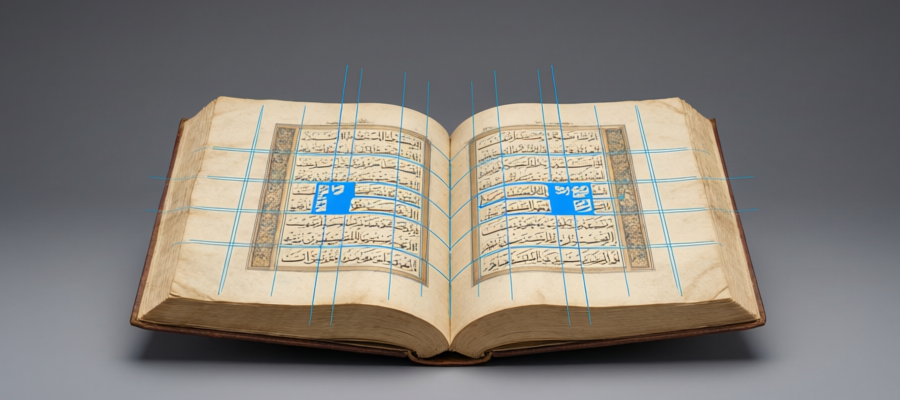
An Objection-Then-Answer Pattern Worth Investigating
This article investigates a structural feature that appears more than once across the Qur'an: a verse states an objection attributed to the Prophet's contemporaries, and the verses immediately following respond to that objection directly. The purpose of this piece is not to declare in advance what that pattern proves. It is to lay out where this happens, present the wording involved with Arabic alongside translation, and let the reader trace the logical relationship between the objection and the response for themselves. Three passages anchor the investigation: 21:5, where critics are quoted describing the revelation as confused dreams, an invention, or the work of a poet, with a response following in 21:6-7; 25:4-5, where the charge is that the message was a lie invented and dictated tales of earlier peoples, answered in 25:6; and 16:103, where the specific claim that a human being was teaching the Prophet is addressed within the same verse on linguistic grounds. Each section below treats one passage at a time, keeping the literal wording distinct from any interpretation of it, and keeping historical framing distinct from textual claims. No conclusion is asserted before the evidence is presented, and no hypothesis about how to explain the pattern is treated as the default simply because it is the most common one in modern discussion.
The Objection in 21:5 and Its Immediate Answer
The first passage under investigation is Qur'an 21:5, where the text records more than one competing explanation offered by the Prophet's contemporaries for what they were hearing: that it was confused dreams, that it was something fabricated, or that it was the product of a poet. What makes this passage worth pausing on is not simply that an objection is present, but that three different and mutually inconsistent explanations are attributed to the same group of critics in a single verse. A dream, a fabrication, and poetry are not the same accusation, and a careful reader should notice that before moving to the response. The verses that follow, 21:6-7, take up the response, and this section presents that response the same way the objection was presented: Arabic first, literal translation next, then a clear separation between what the words say and what might be inferred from them. The aim here is not to tell the reader that the objection has been refuted by assertion. It is to place the objection and the response side by side so the reader can evaluate the logical relationship between them directly, using the same standard of evidence that would be applied to any other historical or textual claim.
The Objection in 25:4-5 and the Reply in 25:6
The second passage is Qur'an 25:4-5, which records a related but distinct charge: that the message was a lie invented by the Prophet, assisted by others, and that what he brought consisted of tales of earlier peoples written down and dictated to him. This is a more specific accusation than the one in 21:5 — it proposes a mechanism, namely written material from earlier sources being read back. This section lays out the literal wording of 25:4-5 before any discussion of meaning, following the same discipline used throughout: Arabic presented first, translation kept separate from interpretation, and no meaning assigned to any word without lexical grounding. The response in 25:6 is then presented on its own terms, without inflating what it claims or minimizing what the objection claimed. Where the response touches on questions of historical transmission — such as the plausibility of the dictation claim given what is known about the Prophet's circumstances — any historical assertion will be flagged as requiring its own citation rather than being treated as self-evident. The goal of this section is the same as the rest of the piece: let the reader see the charge and the reply next to each other and judge the coherence for themselves.
The Objection in 16:103 and Its Linguistic Rebuttal
The third passage, Qur'an 16:103, records a more targeted objection: that a specific human being was teaching the Prophet what he recited. This section investigates how the same verse that reports this claim also answers it, and the answer offered is linguistic rather than circumstantial — it turns on the language attributed to the person named by the critics versus the language of the recitation itself. Because this response depends entirely on a claim about language, this section will be especially careful to separate the literal Arabic wording from any linguistic claim built on it, and to make clear what lexical or grammatical evidence supports that claim rather than asserting it as obvious. This is also the passage where the investigation is most exposed to overreach, since claims about foreign versus clear language are easy to state loosely and hard to state precisely. The section will therefore present the linguistic observation as narrowly as the text supports, note where the evidence is strong and where it would require more than the verse alone to fully settle, and avoid presenting the response as a knockout argument if the wording does not support that framing.
Reading the Pattern Across All Three Passages
The closing section steps back from the three individual passages to examine the pattern itself: in each case, an objection attributed to real people in a real historical setting is stated in the text, and a response follows in close proximity, sometimes in the very same verse. This section resists the temptation to draw a single sweeping conclusion from that observation. Instead it names the range of explanations a careful reader might consider for why this pattern exists, and asks what evidence would distinguish between them, rather than assuming the most familiar explanation by default. It also reiterates what has and has not been established over the course of the piece — which claims rest on the literal wording of the text, which rest on linguistic analysis, and which would require additional historical sourcing beyond the Qur'an itself to confirm. Consistent with the investigative aim of the piece, this section does not hand the reader a verdict. It summarizes the evidence laid out in the three preceding sections side by side and closes by inviting the reader to weigh the objection-and-answer structure against the alternative explanations on their own, ending, deliberately, on the question rather than the answer: you decide.