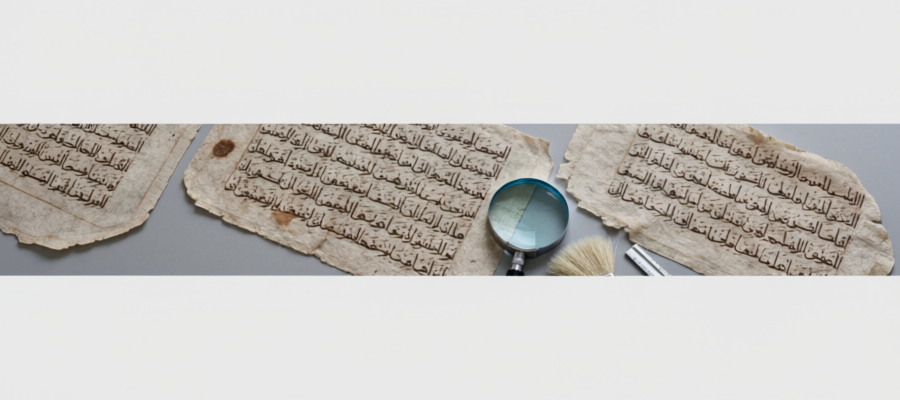
Why Manuscript Evidence Matters
Investigating the Qur'an's textual history starts with a simple question: what physical evidence survives from the earliest period of Islam, and what does that evidence show once it is examined strictly on its own terms - not on the terms of whoever is citing it?
Two manuscript discoveries dominate this discussion: the Birmingham folios, catalogued as Mingana Islamic Arabic 1572a, and the Sana'a palimpsest, catalogued as DAM 01-27.1. Both have been widely reported in the media, sometimes with claims that outrun what the underlying scientific tests actually demonstrate - in both directions. An honest investigation has to separate three distinct categories of claim: first, what a laboratory measurement actually recorded; second, what codicologists and paleographers infer from handwriting style, ink, and manuscript construction; and third, what broader conclusions have been drawn about the Qur'an's text as a whole from that evidence.
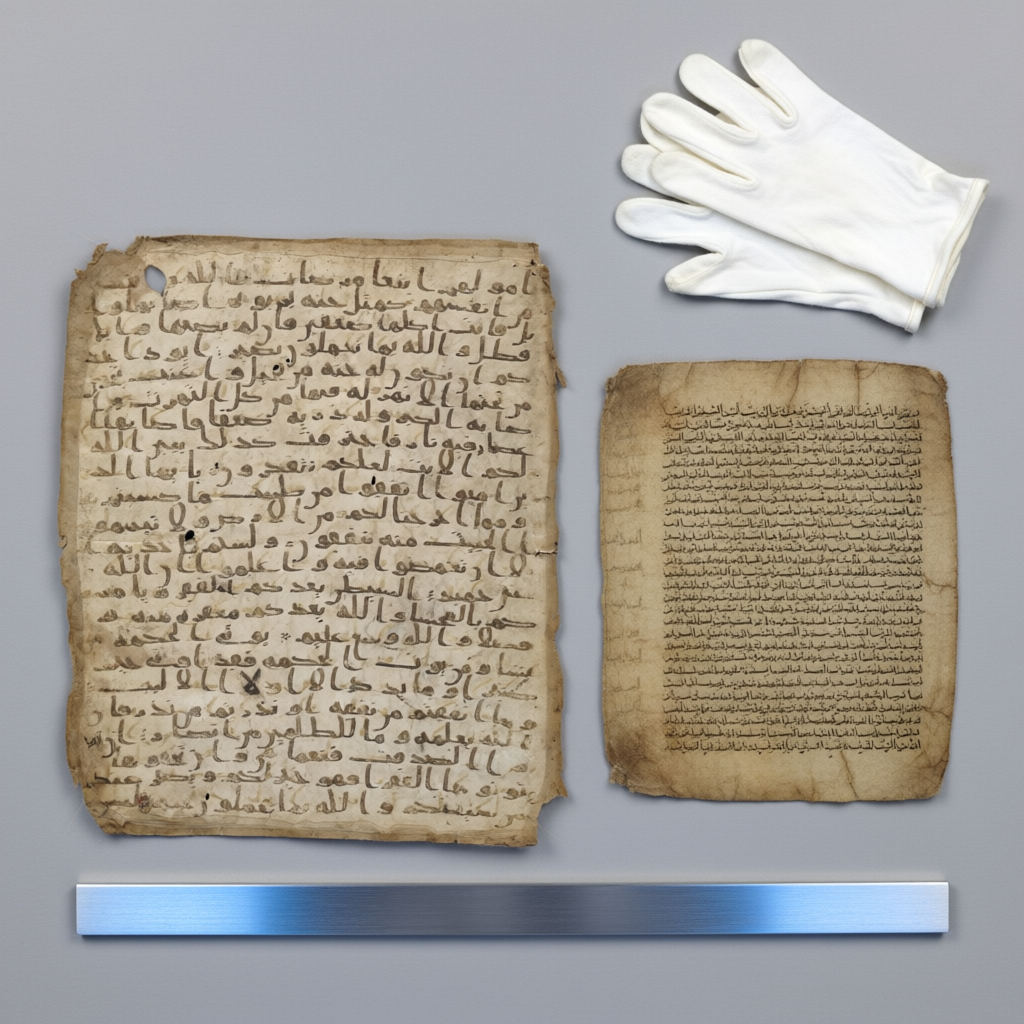
These are not interchangeable categories. Collapsing a radiocarbon date on animal skin into a claim about the date of the ink on that skin is a category error, whether it is done to overstate the manuscript's antiquity or to dismiss it. The same is true of collapsing a documented wording variant in one early manuscript into a claim that the Qur'an's message has been altered in meaning. This article works through what was actually tested, who tested it, what the published results were, and where the physical evidence stops and interpretation begins. The goal is not to defend a conclusion in advance but to let the documented findings speak for themselves, so the reader can weigh them directly.
The Birmingham Folios: What the Radiocarbon Dating Shows
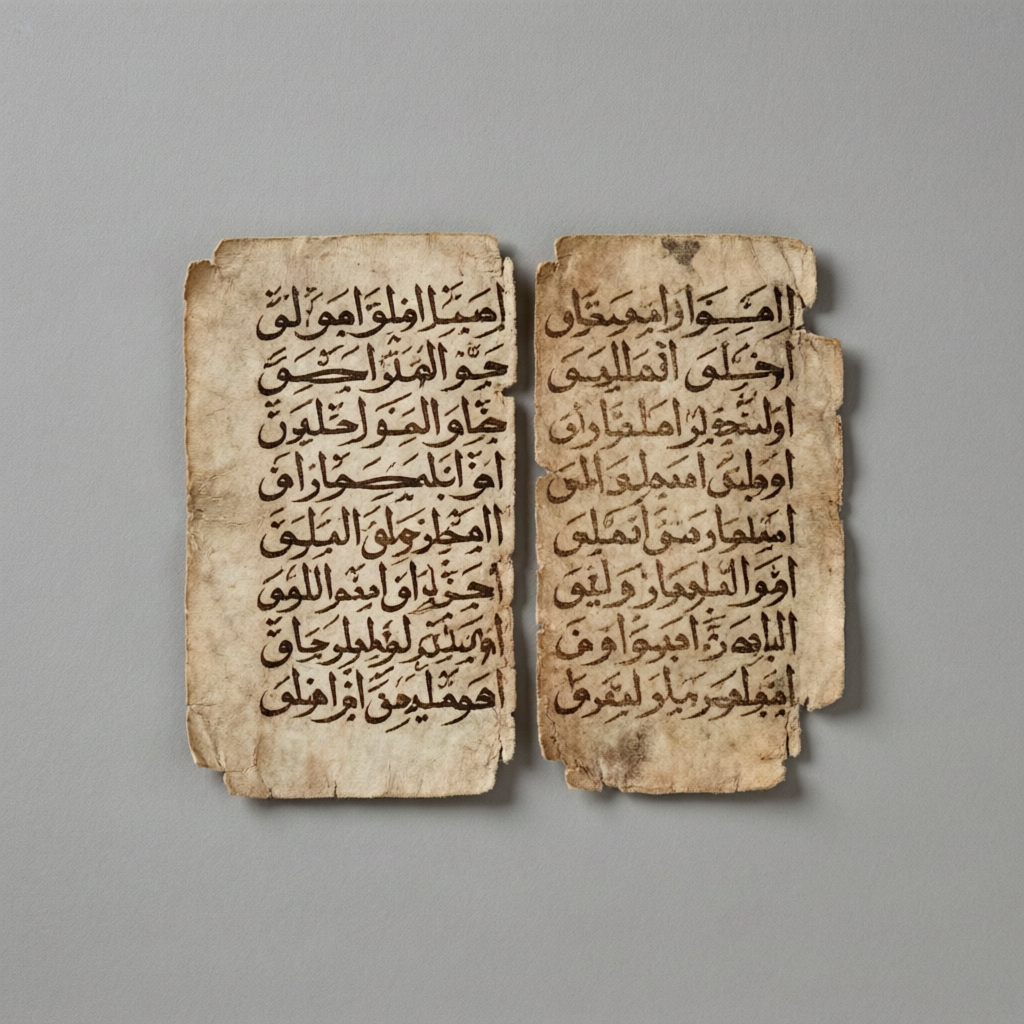
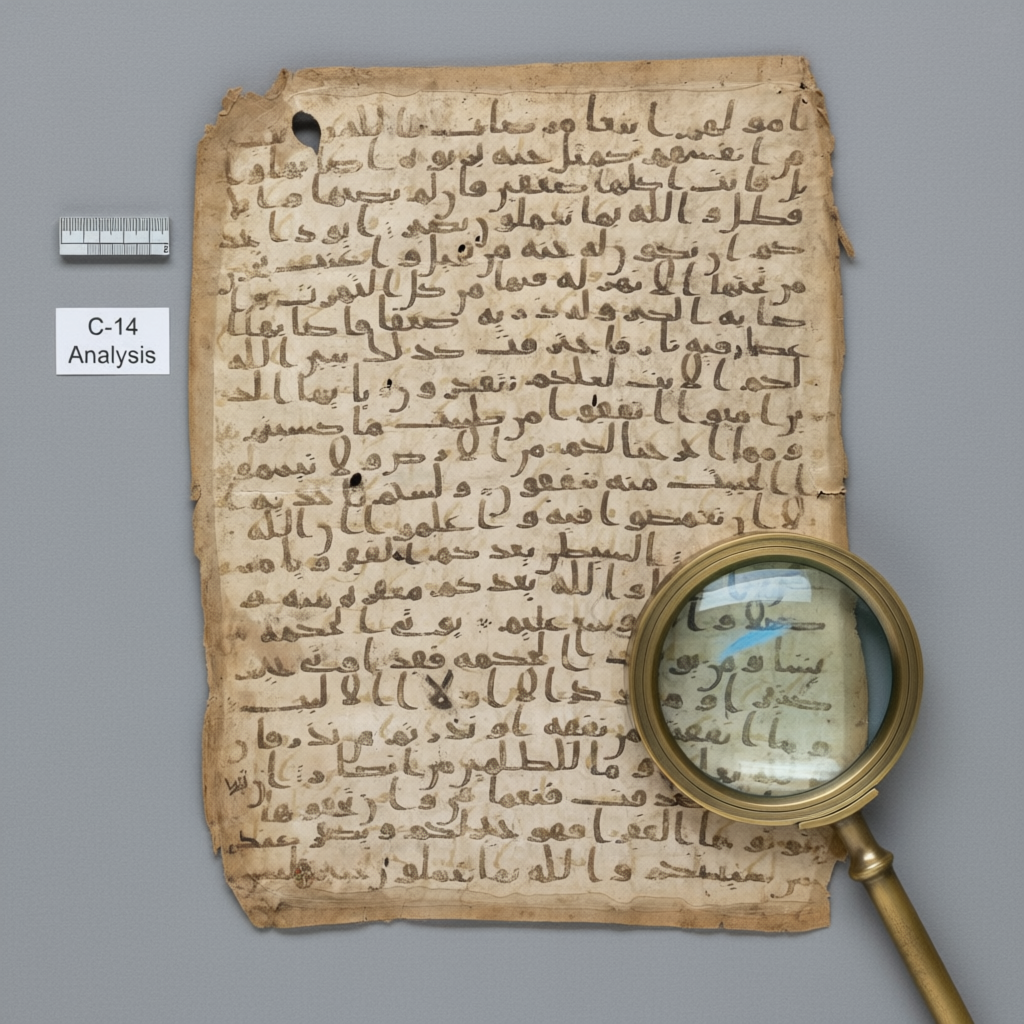
In July 2015, researchers at the University of Birmingham announced that two parchment leaves held in the university's Mingana Collection - catalogued together as Mingana Islamic Arabic 1572a - had been radiocarbon dated. The leaves had been bound for decades with a separate, later manuscript and were identified as belonging together by Alba Fedeli, then a doctoral researcher cataloguing the Mingana collection for her thesis work. The parchment samples were sent to the Oxford Radiocarbon Accelerator Unit, which dated the animal skin with 95.4% probability to between 568 and 645 CE. The finding was announced publicly by David Thomas, Professor of Christianity and Islam at the University of Birmingham, in the university's July 2015 statement.
That is the factual result: a radiocarbon test measured the age of the parchment itself - the point at which the animal whose skin was used had died - and produced that date range. It is not a direct measurement of when the ink was applied to the page. This distinction is not a technicality invented by skeptics of the finding; it was raised publicly by François Déroche, a specialist in early Qur'anic codicology at the Collège de France, who noted that parchment could be stored or reused years or even decades after the animal's death, and that a wide radiocarbon range for the skin does not by itself fix the date of the writing on it. Déroche argued that the folios' script style and orthographic features should be weighed alongside the physical dating rather than read as settling the question on their own.
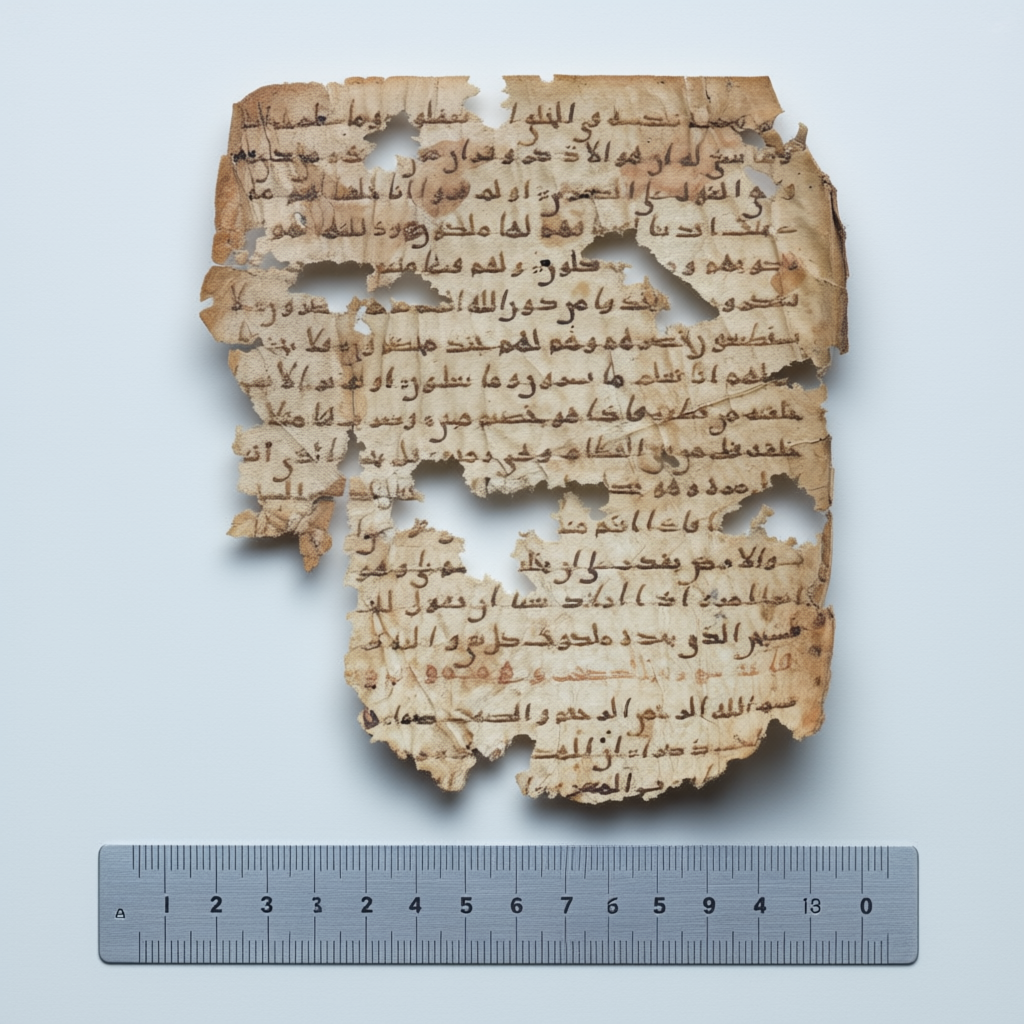
The folios themselves contain portions of Surah 18 (al-Kahf), Surah 19 (Maryam), and Surah 20 (Ta-Ha), written in an early Hijazi-style script consistent with other manuscripts assigned to the first Islamic century. What the evidence establishes as fact: a physical parchment object carrying this Qur'anic text existed within a range beginning before the traditionally cited dates for the Qur'an's compilation into a single codex and extending into the early Uthmanic period. What remains open to further evidence: the precise relationship between the date of the skin and the date of the writing on it. Both the finding and the caveat belong in the record together - reporting one without the other would misrepresent what Oxford's lab and Birmingham's researchers actually established.
The Sana'a Palimpsest: A Lower Text Beneath the Text
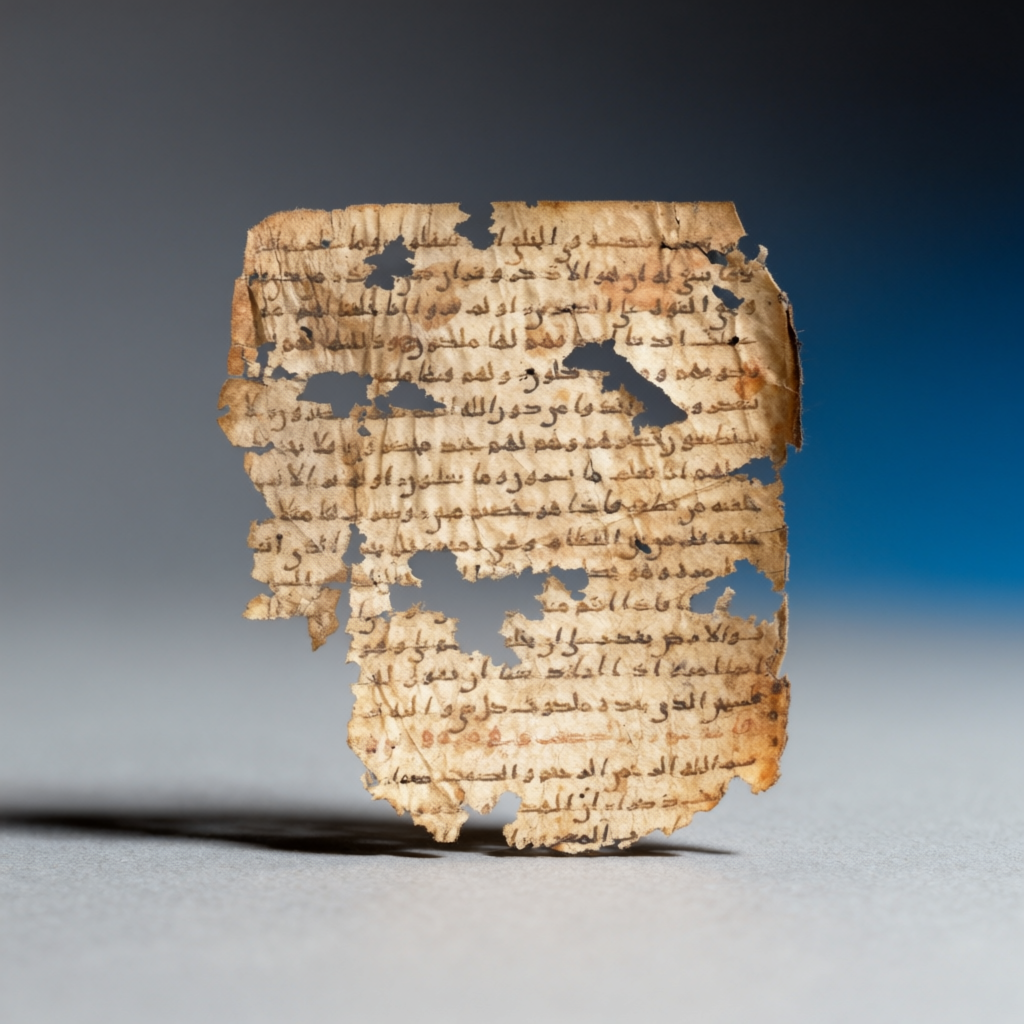
The second manuscript is different in kind. Discovered among a cache of old parchments found in the Great Mosque of Sana'a, Yemen, in 1972, DAM 01-27.1 is a palimpsest - a manuscript in which an earlier text, known as the 'lower text,' was scraped off the parchment so the same skin could be reused to write a later text, the 'upper text.' Using ultraviolet fluorescence photography, Behnam Sadeghi and Uwe Bergmann recovered much of the effaced lower text and published their analysis as 'The Codex of a Companion of the Prophet and the Qur'ān of the Prophet' in the journal Der Islam in 2010. A follow-up study by Sadeghi and Mohsen Goudarzi, 'San'a' 1 and the Origins of the Qur'an,' published in Der Islam in 2012, radiocarbon-dated the parchment itself to before 671 CE with high probability, placing it among the oldest known Qur'anic parchments identified to date.
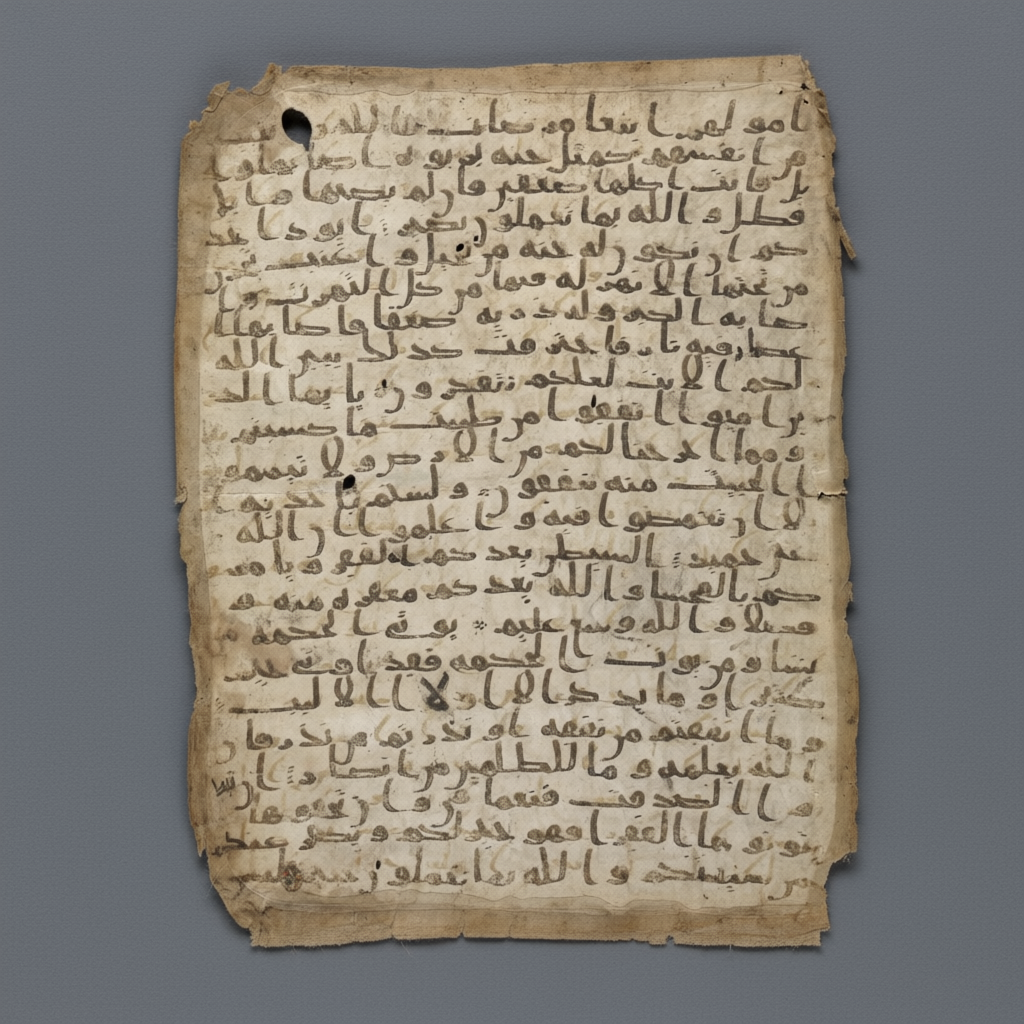
The lower text of Sana'a 1 contains documented differences from the standard Uthmanic consonantal text: variations in word order within individual verses, alternate word choices in places, and a different sequence for some surahs. These differences are real, they are published in peer-reviewed scholarship, and an honest investigation does not minimize or deny them. Denying documented evidence to protect a preferred conclusion would itself violate the standard of evidence this investigation is committed to.
What these variants establish as fact is that at least one early written copy of the Qur'anic text, from the period prior to or contemporaneous with the historical standardization process, contained manuscript-level wording variants relative to the text later fixed as standard. What the variants do not establish, without a great deal of additional argument that has not been made, is any conclusion about the content or meaning of the message being transmitted. Sadeghi and Goudarzi's own published analysis concluded that the pattern of variants in Sana'a 1 is consistent with the existence of multiple early personal codices (mus-hafs) compiled by different companions before a single standardized text was established - a historical process that is itself described in the early Islamic historical record. A wording variant between manuscripts is not automatically a contradiction in the logical or theological sense. Whether any specific variant amounts to a meaningful change requires examining that variant on its own terms in context; that is a narrower and separate question from the simple existence of manuscript variation, and this article does not claim to have resolved every individual variant here.
Separating Fact From Interpretation
Laid side by side, the two manuscripts establish a short list of facts that are not seriously disputed in the specialist literature: a radiocarbon-dated parchment (Birmingham) places skin used for a Qur'anic manuscript within a range beginning in the pre-Uthmanic period; a separately radiocarbon-dated palimpsest (Sana'a) preserves an early, erased layer of Qur'anic text containing documented wording variants alongside a large body of text identical to the standard consonantal skeleton used today. Both of these are observable, tested, published findings, not inferences.
Beyond that point, claims start to diverge sharply from what the evidence supports. Two opposite overclaims appear regularly in public discussion of these manuscripts, and both fail the same standard. One overclaim treats the Birmingham dating as if it were a direct, ink-level proof that the entire Qur'an existed word-for-word in its final form before the traditional account of its compilation - the radiocarbon result does not measure ink, and Déroche's caveat about parchment reuse has not been refuted. The opposite overclaim treats the Sana'a variants as if they proved the text was fabricated or substantially altered in meaning - but the variants documented by Sadeghi, Bergmann, and Goudarzi are a minority of the text, are consistent with a historically attested pre-standardization plurality of codices, and have not been shown, verse by verse, to change the theological content of the passages in question. Neither overclaim survives contact with what was actually published.
The historical record itself, independent of the manuscripts, describes a process of textual standardization under the third caliph, Uthman, in which existing personal codices were compared against a reference text and variant copies were retired in favor of a single standard - an account referenced here only as historical context, not as proof of the Qur'an's content, since tradition and consensus are not themselves evidence. What is notable is that the manuscript evidence - a plurality of early wordings converging toward a stable consonantal skeleton - is consistent with that historical account rather than contradicting it. Consistency between independent lines of evidence (a historical record on one hand, physical manuscripts on the other) is itself a form of evidence, though it is corroborative rather than conclusive on its own.
What the Evidence Points Toward
So what can a reader honestly take from this manuscript evidence? Not a metaphysical proof that the Qur'an is the literal word of God - radiocarbon dating and paleography are physical-science tools; they can date parchment and describe scripts, but they cannot adjudicate a claim about divine origin. Any article claiming that manuscript age by itself proves revelation is overstating what a carbon-dating lab can tell you, and this investigation will not make that claim either.
What the evidence does support is narrower and more defensible: the physical manuscript record for the Qur'an is unusually early and unusually well corroborated compared to many ancient texts, with independently dated parchments from two separate collections converging on the first Islamic century, and with the documented variants that do exist falling within a range consistent with the text's own historical account of its transmission rather than pointing to wholesale fabrication or later invention. That is a fact pattern worth taking seriously on its own terms, without inflating it into more than it is.
The Qur'an itself makes a claim about the preservation of its own text, commonly identified with Surah al-Hijr (15:9) - the precise Arabic wording and its translation should be checked directly against the verified text rather than taken from memory or secondhand summary, and readers are encouraged to look it up and read it in its own context rather than accept a paraphrase. What can be said here is only this: the manuscript evidence examined above is consistent with, and does not contradict, a claim of careful transmission. Consistency is not the same as proof, and this investigation has tried throughout to keep that distinction explicit rather than blur it for rhetorical effect.
The invitation, in keeping with an investigative rather than persuasive aim, is for the reader to go further than this article: read the Birmingham and Sana'a studies cited here directly, read the relevant surahs in the verified Qur'anic text, and weigh the physical evidence against the text's own claims about itself. That process - evidence first, conclusions second - is the same standard this article has tried to apply throughout, and it is the standard by which any claim about the Qur'an's origin and preservation should ultimately be judged.