
The Verse in Context: A Financial Transaction, Not a Courtroom
To understand 2:282 correctly, you must first see where it sits in the Surah. The verse is the longest in the entire Quran, and it deals exclusively with documenting debt transactions. It begins: 'O you who have believed, when you contract a debt for a specified term, write it down.' The entire context is commercial, not judicial. The verse goes on to say: 'And bring to witness two witnesses from among your men. And if there are not two men [available], then a man and two women from those whom you accept as witnesses — so that if one of them errs [tadhalla], then the other can remind her.' This is not about a court case or a criminal matter; it's about writing down loans so that rights are preserved. The word 'tadhalla' (تَضِلَّ) means 'to stray' or 'to forget.' It applies to any witness, male or female, but the verse anticipates that in a largely illiterate commercial society, a woman might be less familiar with financial documentation. The backup is a practical measure to ensure accurate testimony, not a statement about her intellectual capacity.
Critics often lift this verse out of its context and apply it to all testimony — in family law, criminal cases, or matters of religious observance. But the Quran itself does not do that. Elsewhere, the testimony of a woman alone is accepted in certain contexts, such as in Surah An-Nur 24:6-9 for marital accusations. The specificity of 2:282 shows that the ruling is tied to the nature of the transaction, not the gender of the witness. The verse is about preserving property rights in a society where women generally did not engage in commercial contracts. The Quran's solution is pragmatic: if only two women are available, they can testify together as a safeguard against forgetfulness. This is not an insult; it is a recognition of social reality at the time.

Moreover, the verse places the same burden of honesty on all witnesses: 'And let not the witnesses refuse when they are called upon.' There is no suggestion that a woman's testimony is inherently suspect. The Quran repeatedly emphasizes justice and equity, and this verse is one of many that aim to protect the vulnerable. The debt contract must be written down, and witnesses must be fair. The presence of women as witnesses is explicitly permitted — a progressive step in a society where women's participation in public life was minimal. To reduce this verse to a claim about women's inferiority is to ignore the clear context and purpose.
Some may ask: does the Quran contradict itself if elsewhere it accepts a woman's sole testimony? No, because the contexts are different. In financial matters, two women serve as a check against forgetfulness, while in other matters, one woman's testimony suffices. The Quran does not impose a single rule for all testimony. This is consistent with its practical, case-by-case approach. For example, in inheritance, women receive half the share of men in some cases, but that is based on financial responsibility, not testimony. These are distinct rulings with distinct rationales.
Understanding the context is the first step. The verse is about safeguarding people's property in a specific historical setting. It does not define women's worth or their capability as witnesses in general. The Quran's guidance is timeless in its principles, but its applications are tailored to the circumstances. We must read it as it is, not as a polemic caricature demands.
The Arabic Word 'Tadhalla': Forgetting Is Human, Not Gendered
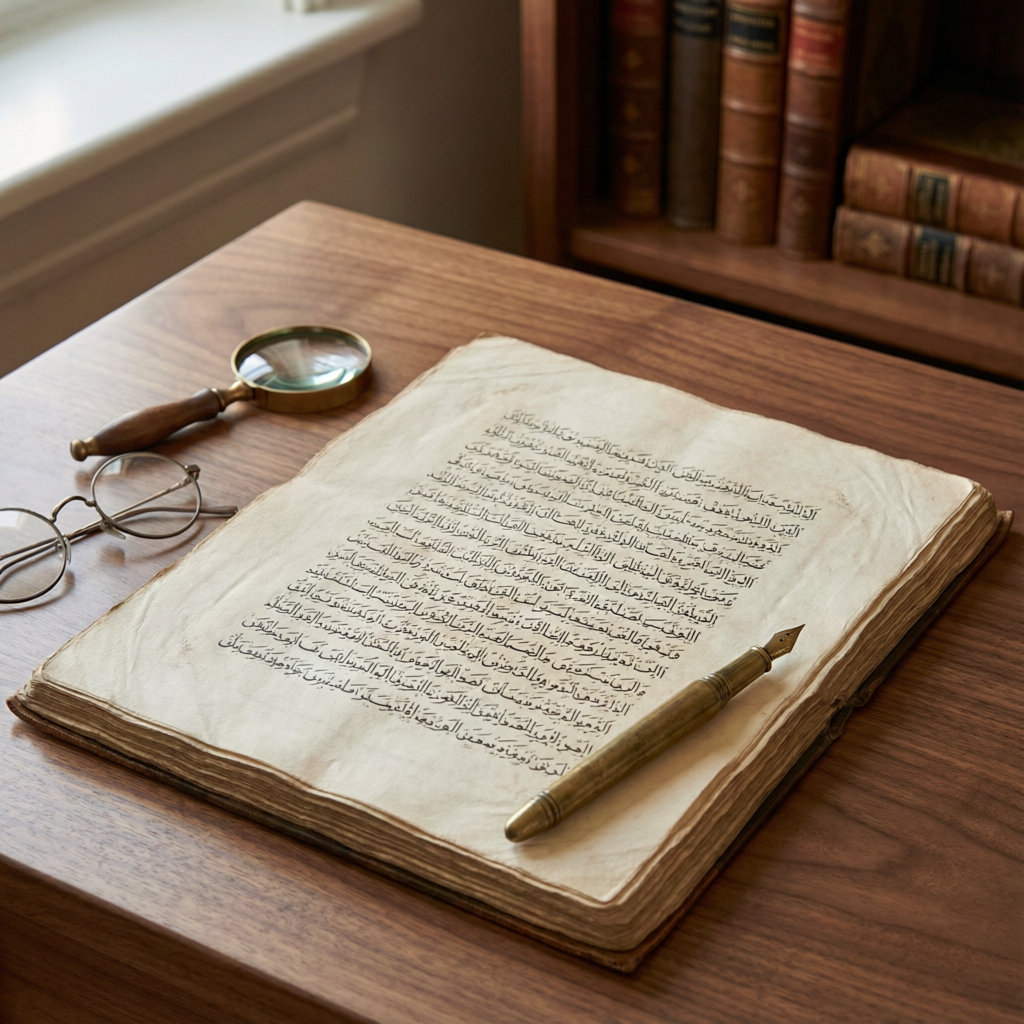
The pivotal word in the verse is 'tadhalla' (تَضِلَّ), from the root ض-ل-ل (ḍ-l-l), which means 'to stray, go astray, forget, or err.' In the context of testimony, it refers to a lapse in memory or accuracy. The verse says: 'an tadilla ihdahuma fatudhakkiru ihdahuma al-ukhra' — 'so that if one of them errs, then the other can remind her.' There is no implication that women are more prone to forgetfulness or that they are less intelligent. The word is gender-neutral in its root; the verb is conjugated in the feminine singular because the subject is a woman, but the concept applies to any human. In fact, the Quran elsewhere describes the human condition as prone to forgetfulness: 'And indeed We had made a covenant with Adam before, but he forgot; and We did not find in him determination' (20:115). Forgetfulness is a human trait, not a female one.
Lexically, 'tadhalla' can also mean 'to be uncertain' or 'to err in judgment.' In a financial transaction, where accuracy is critical, the presence of a second woman serves as a mutual check. This is not about inferiority but about reliability. The verse is a mechanism for ensuring that the testimony is as accurate as possible, given social conditions. If we apply the same logic to a modern context, the principle would be to have multiple witnesses to any complex transaction, regardless of gender. The Quran addresses the seventh-century Arabian context; the underlying principle is caution in documentation.
Some critics argue that the Quran says a woman's testimony is half a man's. But the verse does not say that. It says that if two men are not available, then one man and two women suffice. There is no quantitative comparison of testimony value. The ratio of witnesses is a practical solution to a social reality: women at that time were less likely to be literate and experienced in commerce. The verse does not say 'the testimony of two women equals that of one man.' It says that two women can serve as witnesses when a man is not present. The numerical difference is a concession to circumstances, not a theological statement about gender.
This interpretation is supported by the fact that the Quran does not require two women in other situations. For instance, in Surah An-Nur 24:4, the testimony of a single man or woman is accepted in cases of slander: 'And those who accuse chaste women and then do not produce four witnesses — lash them with eighty lashes.' Here, four witnesses are required, but they can be men or women. No gender distinction is made. Similarly, the oath of a woman alone can be accepted in marital disputes (24:6-9). So the notion that a woman's testimony is inherently half is not consistent with the Quran as a whole.
Scholars of Arabic grammar note that the construction 'an tadilla' uses the subjunctive mood, expressing purpose: 'so that if she errs, the other reminds her.' It is a precautionary clause, not a judgment on female cognition. The verse assumes both women are moral and capable; it simply acknowledges human fallibility. The remedy is mutual support, not exclusion. This is a compassionate approach that respects women's participation while ensuring accuracy.

Thus, the Arabic word 'tadhalla' reveals the true intent: to guard against human error in a critical matter. It is not about women's testimony being less valuable; it is about creating a system that works given the limitations of the time. The Quran's language is precise, and reading it carefully dispels the misinterpretation.
Why This Matters: The Quran's Consistency on Justice
The misinterpretation of 2:282 often fuels broader questions: Does the Quran contradict itself? Is it unfair to women? But when we examine the verse in its full context and in light of the whole Quran, we find a consistent message of justice. The Quran repeatedly commands fairness in dealings: 'And when you speak, be just, even if it concerns a relative' (6:152). The testimony rule in 2:282 is a specific application of justice in financial matters, not a universal devaluation of women. The Quran treats women as full spiritual and moral agents: 'And whoever does righteous deeds, whether male or female, while being a believer — those will enter Paradise' (4:124). There is no gender hierarchy in salvation or moral responsibility.
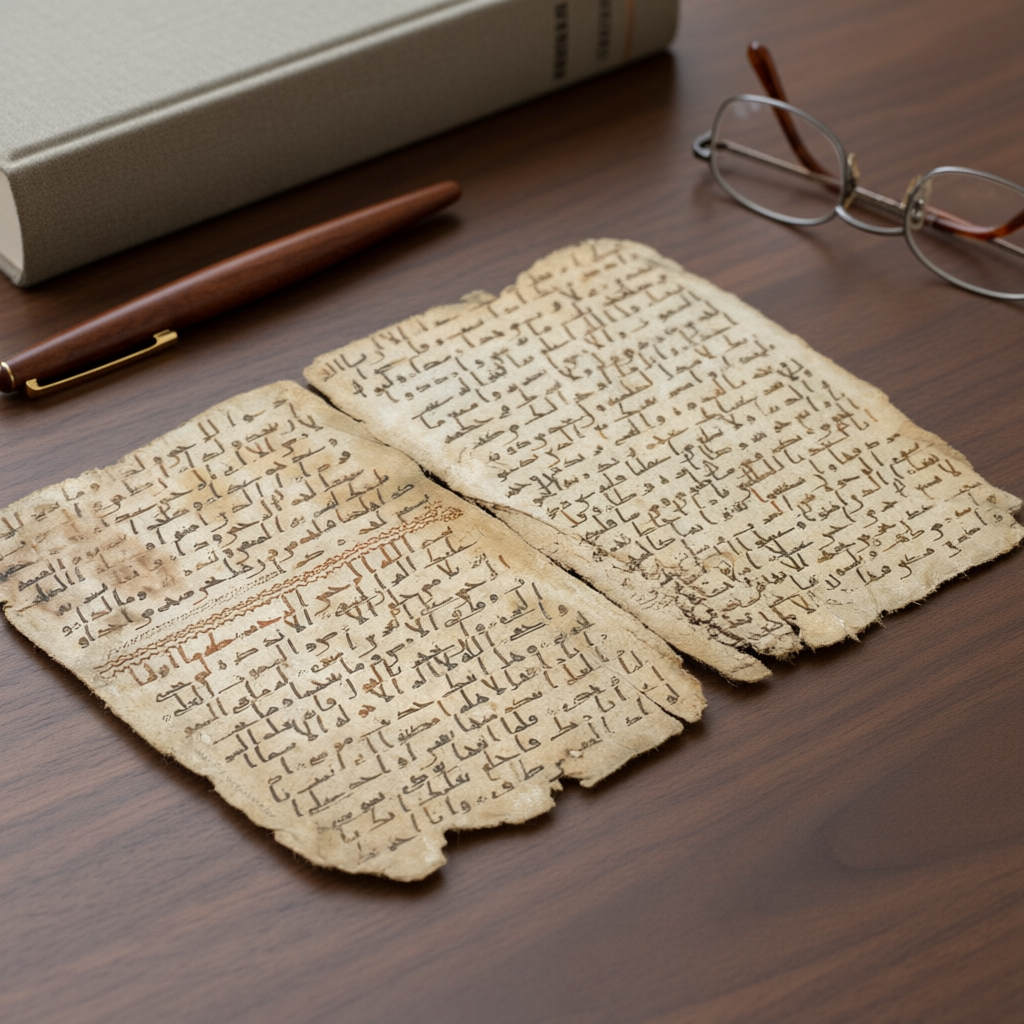
Another related question is how the Quran was preserved historically. The oldest Quran manuscript evidence, such as the Birmingham Quran manuscript, shows that the text has been transmitted with remarkable precision. The words of 2:282 we have today are the same as those revealed. This textual integrity means that the verse cannot be dismissed as a later addition or corruption. The Quran's preservation ensures that its rulings, including the testimony verse, are authentic. This gives us confidence that the meaning we derive is the intended one.
For those seeking a complete understanding — 'quran full information' — it is essential to read verses in their historical and linguistic context. Isolating one verse without its background leads to confusion. The Quran addresses specific situations with specific solutions, and generalizing them beyond their scope is a methodological error. The book itself warns against selective reading: 'Then do you believe in part of the Scripture and disbelieve in part?' (2:85). Consistency demands that we take all relevant verses together.
Finally, this investigation shows that the Quran does not contradict itself. The testimony ruling is perfectly coherent with other verses on testimony. There is no inherent bias against women; rather, there is a practical adjustment to social reality. The Quran's instructions are designed to achieve justice within the framework of the society it addressed. The same principles can be applied today by focusing on the underlying purpose: reliable testimony and fairness. The verse is not a problem for women's rights; it is a solution for documenting debts and protecting rights.
In conclusion, the question 'does the Quran contradict itself' regarding women's testimony is answered by a careful reading of the Arabic. The verse in 2:282 is about financial contracts, not about women's inferiority. The word 'tadhalla' refers to human forgetfulness, and the two-witness system is a practical safeguard. The Quran's overall message of justice remains intact. For those who want to investigate further, the primary source — the Arabic Quran — is open for examination. It rewards honest inquiry with clarity. The truth is there, waiting to be discovered.