The Alleged Contradiction: Preservation vs. Abrogation
A common challenge raised against the Qur'an is that it contradicts itself on the matter of divine preservation. Critics point to two sets of verses. First, verses like 85: 21-22 state. بَلْ هُوَ قُرْآنٌ مَّجِيدٌ فِي لَوْحٍ مَّحْفُوظٍ، meaning 'Nay, it is a glorious Qur'an, in a preserved tablet.' This suggests that the Qur'anic text is fixed and protected from change. Second, verses like 2. 106 declare. مَا نَنسَخْ مِنْ آيَةٍ أَوْ نُنسِهَا نَأْتِ بِخَيْرٍ مِّنْهَا أَوْ مِثْلِهَا, which translates as 'Whatever verse We abrogate or cause to be forgotten, We bring one better than it or similar to it.' This appears to imply that verses can be replaced or altered.
The apparent tension is straightforward: how can the Qur'an be eternally preserved in a 'Preserved Tablet' if some verses are abrogated or replaced? The objection is not trivial and deserves a careful, evidence-based investigation. To resolve it, we must examine the Arabic of both passages, their immediate contexts, and the broader Qur'anic framework. Only then can we determine whether there is a genuine contradiction or a coherent system.
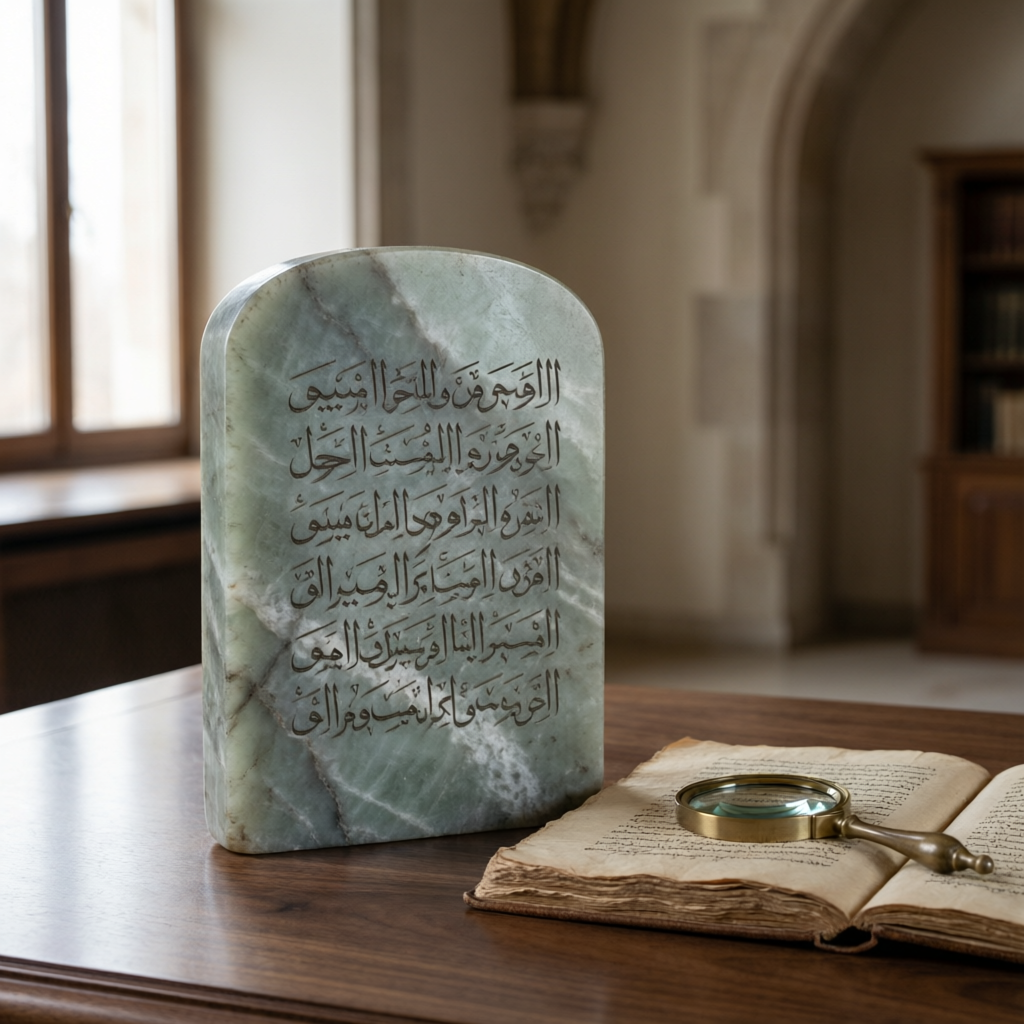
Let us begin with the 'Preserved Tablet' verse. Surah Al-Buruj, verses 21-22, read: 'Nay, it is a glorious Qur'an, in a preserved tablet.' The word لَوْح (lawḥ) means a tablet, slab, or board, something upon which writing is inscribed. The word مَّحْفُوظ (maḥfūẓ) is derived from the root ح-ف-ظ (ḥ-f-ẓ), which carries the meanings of guarding, preserving, protecting, and keeping safe. The phrase لَوْحٍ مَّحْفُوظٍ literally means 'a tablet that is guarded' or 'well-protected.' The verse does not explicitly say that the tablet contains every verse currently recited; it describes the Qur'an as being in a protected source.
Now examine 2: 106. The verb نَنسَخْ (nansakh) comes from the root ن-س-خ (n-s-kh), which has several related meanings. To copy, transcribe, abrogate, or replace. In the context of this verse, it refers to superseding or replacing a previous ruling or verse. The word نُنسِهَا (nunsihā) means 'We cause it to be forgotten.' The verse speaks about abrogation or replacement of certain verses, but it does not specify which verses or the mechanism. The key point is that the verse addresses the process of revelation over time, not the eternal source.
Also, the two verses address different aspects: 85. 22 speaks of the heavenly source (the Preserved Tablet), while 2. 106 deals with the temporal process of revelation to humanity. There is no immediate contradiction because the former is about the unchanging origin, and the latter is about how that origin dispenses guidance incrementally. However, this is only a preliminary observation; we must go deeper.
Examining the Arabic: The Preserved Tablet and Abrogation
To resolve any apparent contradiction, we must examine the Arabic word by word. In 85: 22, the phrase لَوْحٍ مَّحْفُوظٍ uses the indefinite (a tablet) with the adjective preserved/guarded. This tablet is not necessarily a physical object; it is a metaphor for the divine source from which revelation comes. The Qur'an elsewhere calls it أُمَّ الْكِتَاب (Umm al-Kitāb, 'Mother of the Book') in 13. 39, and also the كِتَاب مَّكْنُون (kitāb maknūn, 'a well-guarded book') in 56. 78. These terms all point to an unchangeable heavenly archetype.
Now, 2:106 uses the verb نَنسَخ (nansakh). Lexically, nasakha means to copy, transcribe, or replace. In Islamic exegesis, it is understood as abrogation, where a later verse supersedes an earlier one in terms of ruling or sometimes wording. The verse states that when such abrogation occurs, God brings something better or similar. This is not an indication of error or change in the divine will; rather, it reflects the gradual nature of legislation and the wisdom of tailoring guidance to circumstances.
Critics often assume that abrogation implies textual corruption or inconsistency. However, the Qur'an itself explains that abrogation is part of a deliberate process. For example, in 16: 101, it says. وَإِذَا بَدَّلْنَا آيَةً مَّكَانَ آيَةٍ ۙ وَاللَّهُ أَعْلَمُ بِمَا يُنَزِّلُ, meaning 'And when We substitute a verse in place of a verse, and God knows best what He sends down.' This substitution occurs within the revelation process, not in the Preserved Tablet itself. The Preserved Tablet contains the complete and final form of the revelation, while the earthly recitation was revealed gradually, with some verses superseding others in application.
Therefore, the 'Preserved Tablet' represents the eternal, complete record of God's word. The abrogation spoken of in 2: 106 refers to the temporal sequence of revelation. There is no contradiction because the abrogated verses are not removed from the Preserved Tablet; they were always part of the divine plan and were revealed for a specific period and wisdom. The earthly text that was abrogated in ruling still remains in the Qur'an as a recited verse, providing context and meaning. For instance, the verses on gradual prohibition of alcohol (2. 219, 4. 43, 5:90-91) are not contradictory; they show progressive guidance.
Evidence from the Qur'an's Own Framework: Consistency Across Verses
To confirm that the Qur'an does not contradict itself, we can examine how it consistently uses the concept of the 'Preserved Tablet' and abrogation within its broader framework. The Qur'an states in 13: 39. يَمْحُو اللَّهُ مَا يَشَاءُ وَيُثْبِتُ ۖ وَعِندَهُ أُمُّ الْكِتَابِ, meaning 'God effaces what He wills and establishes (what He wills), and with Him is the Mother of the Book.' Here, 'Mother of the Book' is synonymous with the Preserved Tablet, the original source. God may cancel or confirm certain rulings on earth, but the ultimate source remains unchanged.
Similarly, 43: 4 reads. وَإِنَّهُ فِي أُمِّ الْكِتَابِ لَدَيْنَا لَعَلِيٌّ حَكِيمٌ, 'And indeed it is in the Mother of the Book with Us, surely sublime and wise.' This confirms that the Qur'an's essence is in a protected, sublime source. The abrogation of specific laws does not affect this essence; it only affects the temporal application of the law. Therefore, the 'Preserved Tablet' is not a static text that includes every minute detail of legislation; it is the source of the revelation's core truths and principles.
Now, what about the claim that the Qur'an contradicts itself on historical preservation? Critics argue that if the Qur'an is preserved, how can there be variations in readings (qira'at) or the famous incident of the collection of the Qur'an under Caliph Uthman? The answer lies in the distinction between the heavenly preserved record and the earthly transmission. The Qur'an itself says in 15: 9. إِنَّا نَحْنُ نَزَّلْنَا الذِّكْرَ وَإِنَّا لَهُ لَحَافِظُونَ, 'Indeed, it is We who sent down the Reminder (the Qur'an), and indeed, We will be its guardian.' This promise of preservation applies to the message, not necessarily to every single recitation dialect. The Uthmanic standardization was to unify the written text based on the majority of the companions' recitations, ensuring the core text remained intact.
Also, the oldest Quranic manuscript evidence, such as the Birmingham Quran manuscript (dating to the 7th century), closely matches the text in use today, supporting the claim of preservation. The variations in qira'at are minor differences in pronunciation or reading that do not affect the meaning. Also, the historical evidence aligns with the Qur'an's own claim of preservation.
Resolving the Apparent Tension: A Coherent System
When we put the verses about the Preserved Tablet and abrogation side by side, a coherent picture emerges. The Preserved Tablet (85: 22) is the eternal, unchangeable source of the Qur'an. The abrogation mentioned in 2. 106 applies to the revealed verses during the 23-year period of revelation. The Preserved Tablet contains the final knowledge of all that was, is, and will be revealed; the abrogated verses were part of the divine wisdom for specific times, and their rulings were superseded by better or similar ones.
One might ask: if a verse is abrogated in ruling but still recited, does that create inconsistency? No, because the Qur'an itself includes abrogated verses as part of its text, and they serve as historical records, lessons, or contexts. For instance, the verse about 'the bequest for parents and relatives' (2. 180) was abrogated by the inheritance verses (4. 11-12), yet it remains in the mushaf. This is not a contradiction but a demonstration of the gradual legislative process.
Also, the claim that the Qur'an contradicts itself on preservation is resolved through careful linguistic and contextual analysis. The Preserved Tablet ensures the integrity of the revelation's source, while abrogation reflects the dynamic nature of divine guidance. The Qur'an does not claim that every single verse recited today is identical in ruling to what was initially revealed; it claims that the revelation as a whole is protected from corruption.
For skeptics investigating the Qur'an, this is a crucial distinction. The question 'does the quran contradict itself' can only be answered by examining the text thoroughly. The evidence shows that the Qur'an presents a consistent framework where the Preserved Tablet and abrogation are complementary, not contradictory. The reader is encouraged to verify these claims by reading the verses in Arabic and their translations, and by studying the lexicons.
Conclusion: The Evidence Speaks for Itself
The allegation that the Qur'an contradicts itself on divine preservation is based on a superficial reading of isolated verses. When we investigate the Arabic word by word, examine the context, and consider the broader Qur'anic framework, we find a coherent system. The Preserved Tablet is the eternal source, and abrogation is the temporal process of legislation. There is no contradiction.
The Qur'an invites its readers to investigate: أَفَلَا يَتَدَبَّرُونَ الْقُرْآنَ ۚ وَلَوْ كَانَ مِنْ عِندِ غَيْرِ اللَّهِ لَوَجَدُوا فِيهِ اخْتِلَافًا كَثِيرًا (4. 82), meaning 'Do they not then reflect on the Qur'an? Had it been from other than God, they would have found in it much discrepancy.' The absence of genuine contradiction is a strong internal evidence for the Qur'an's divine origin.
For those asking 'how was the quran preserved historically,' the answer lies in the combination of divine promise and careful human transmission. The oldest manuscripts confirm the text's preservation. For those studying 'quran embryology verses explained' or seeking 'arabic quran word by word meaning,' the methodology is the same: return to the primary source. Use tools like Quran.com or the Japanese iPhone app to explore the Arabic directly. The Qur'an is its own best witness.
Ultimately, the investigation vindicates the text. The Qur'an's claim of being from a Preserved Tablet is consistent with its own description. The reader is left with a choice: accept the evidence or dismiss it. The evidence is here, laid out transparently. The decision is yours.