The Verse in Focus: 21:32 and Its Literal Arabic
The verse often cited in discussions about the sky appears in Surah Al-Anbiya. The Arabic reads: وَجَعَلْنَا السَّمَاءَ سَقْفًا مَّحْفُوظًا ۖ وَهُمْ عَنْ آيَاتِهَا مُعْرِضُونَ. A literal translation is. And We made the sky a ceiling protected, and they from its signs are turning away. The word 'sama' (sky) is modified by 'saqf' (ceiling) and 'mahfudh' (protected).
The term 'saqf' in Arabic commonly refers to the roof of a house, but here it describes the sky's relationship to the earth, like a canopy. The word 'mahfudh' comes from the root ha-fa-dha, which means to guard, protect, or preserve. This root appears throughout the Qur'an in contexts of divine protection, such as when God says He will preserve the Qur'an itself (15:9).
Examining the lexical range of 'hafiza', we find it consistently means to keep safe from harm. In 21:32, the sky is described as something that actively protects. This is not a static, solid dome but a functional layer that shields. The verse continues by noting that people turn away from the signs ('ayat') in this phenomenon, inviting reflection.
Critics sometimes argue that calling the sky a 'ceiling' implies a primitive, solid structure. But the Arabic word does not necessarily denote a rigid, physical roof; it can mean any covering or canopy. More importantly, the description is qualified by 'protected,' which shifts the focus from structure to function. The text does not specify the material or mechanism; it states a purpose.
To understand the depth, we must read the verse alongside others that describe the sky's role. For instance, 2: 22 mentions the sky as a 'bina' (building), and 40. 64 calls it a 'roof' (siqaf). These terms consistently point to a covering that shelters. The consistency across verses suggests a deliberate, coherent picture: the sky is not merely there; it serves a protective function.
The Arabic grammar further supports this reading. The phrase 'saqfan mahfudhan' is an adjective-noun construction, where the adjective 'mahfudhan' is essential to the meaning. It is not an incidental description but a defining characteristic. The Qur'an's claim is not that the sky is a ceiling, but that it is a protected ceiling, a ceiling designed to guard. This precision is what we will examine next.
The Protective Function: What Modern Science Confirms
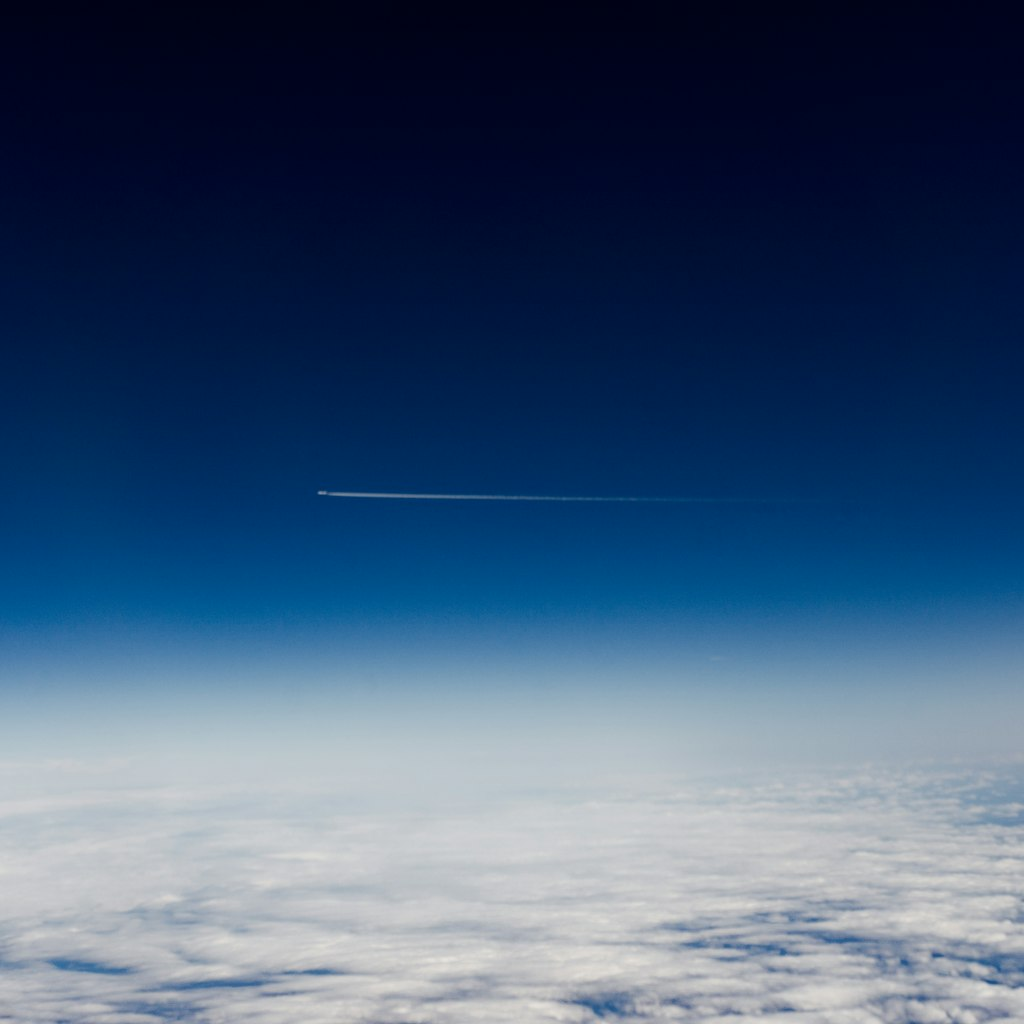
Modern atmospheric science has revealed that Earth's atmosphere acts as a protective layer. It blocks harmful ultraviolet radiation from the sun, burns up most meteoroids before they reach the surface, and regulates temperature. Without this shield, life would be impossible. The Qur'an's description of a 'protected ceiling' aligns remarkably with this evidence.
The atmosphere absorbs and reflects a significant portion of solar radiation. The ozone layer, for instance, filters out the most damaging UV rays. The atmosphere also causes meteors to burn up due to friction, preventing most impacts. These are not speculative claims but observable facts.
When the Qur'an was revealed in the 7th century, these scientific details were unknown. Yet the text uses the word 'mahfudh' to describe the sky's role. This is not a guess about the sky's composition but a statement about its function. The word implies an intelligent design, a guarding that suggests purpose.
Some might argue that the term 'ceiling' implies a physical boundary, but the atmosphere is indeed a boundary between Earth and space. It is not solid, but it is a protective layer. The Qur'an's language is accurate in a functional sense. It does not claim the sky is a solid object; it claims it is a protective covering.
Also, the Qur'an elsewhere describes how the sky is 'held up' without visible pillars (13: 2, 31. 10). This corresponds to the understanding that the atmosphere is not a physical structure but is maintained by forces. The combination of 'ceiling' and 'protected' points to a sophisticated understanding that transcends the limited knowledge of the time.
The evidence from science does not prove the Qur'an's divine origin by itself, but it does show that the text's claims are consistent with observable reality. For a researcher investigating the Qur'an, this alignment is noteworthy. It suggests that the description is not a naive myth but a precise statement about the natural world.
The Broader Context: The Sky in the Qur'an's Own Lexicon
To fully grasp 21: 32, we must examine how the Qur'an uses the word 'sama' throughout its pages. The term appears in over 120 places, often paired with descriptions of creation and order. For instance, 50. 6 invites the reader to look at the sky and see how it is 'built' and 'adorned.' 67:3 mentions the 'seven heavens' in perfect harmony. These verses collectively describe a cosmos that is structured and purposeful.
The root 'sa-qa-fa' (from which 'saqf' derives) is used only in 21: 32 to describe the sky, but the concept of a covering appears in other forms. In 13. 2, the heavens are 'raised' without pillars. In 22:65, God 'holds back the sky from falling.' These expressions emphasize maintenance and control, which resonate with the idea of protection.
The Qur'an often links the sky's function to human reflection. After describing the protected ceiling, 21:32 immediately says that people turn away from its signs. This is a rhetorical pattern. The Qur'an presents a natural phenomenon as evidence of God's wisdom, then criticizes those who ignore it. This pattern is evident in many verses, such as those about rain, the sun, and the moon.
When critics claim that the Qur'an borrowed from earlier texts, they must account for the precision and consistency of the Arabic. For example, the description of the sky as protected is not found in the Bible or other ancient sources in the same functional sense. The Qur'an's unique phrasing suggests independent articulation.
Also, the Qur'an distinguishes between the physical sky and the unseen realm. The word 'sama' can refer to both the visible atmosphere and the higher heavens. In 21:32, the context points to the physical sky that people see. This clarity helps avoid misinterpretation.
By examining the lexical field, we see that the Qur'an uses specific terms deliberately. Each word contributes to a coherent worldview. The description of the sky as a protected ceiling is not an isolated metaphor but part of a systematic portrayal of creation as a sign of God's power and care.
For those who ask 'what is the word of god in islam,' the answer lies in the text's internal consistency and its alignment with evidence. The Qur'an's claims are testable, and this verse offers a clear example. By investigating the Arabic, we can see that the description is accurate and meaningful.
Addressing the Charge of 'Primitive Cosmology'
A common criticism is that the Qur'an reflects a primitive flat-earth or dome cosmology. Critics often cite verses like 21:32 as evidence of a solid sky. However, a careful reading of the Arabic demonstrates that the text does not describe a physical dome. The word 'saqf' can mean a covering, but it is qualified by 'mahfudh,' which emphasizes function over form.
Also, the Qur'an never states that the sky is made of any particular material. It does not mention pillars or a solid structure. In fact, 31:10 says the heavens are 'raised without pillars that you can see,' which would be contradictory if the Qur'an claimed a solid dome. The description is consistent with an atmosphere that is held by forces.
Even in the ancient world, there were various models of the cosmos. Some thought the sky was a solid vault; others believed it was air. The Qur'an's language does not commit to a specific model. It speaks of a protective function, which is a different category of claim.
When we compare the Qur'an's description with those of other ancient texts, we find a notable difference. For example, the Epic of Gilgamesh describes a solid sky made of a precious stone. The Bible in Genesis speaks of a 'firmament' separating waters. These descriptions imply a physical barrier. The Qur'an, however, focuses on protection, not structure.
This distinction is crucial. The Qur'an does not say the sky is a ceiling made of some material; it says it is a ceiling that protects. The emphasis is on the protective role, which is a functional statement that remains true regardless of the sky's physical composition.
In this light, the charge of 'primitive cosmology' does not hold up under textual analysis. The Qur'an's language is compatible with modern understanding. This is not to say the Qur'an anticipated atmospheric science, but that its description is not contradicted by it.
For researchers who ask 'questions to ask about the quran,' this verse provides a rich area for investigation. The key is to approach the text with precision, examining the Arabic roots and their implications. Doing so reveals a sophisticated description that transcends the limitations of its historical context.