The Claim and the Method
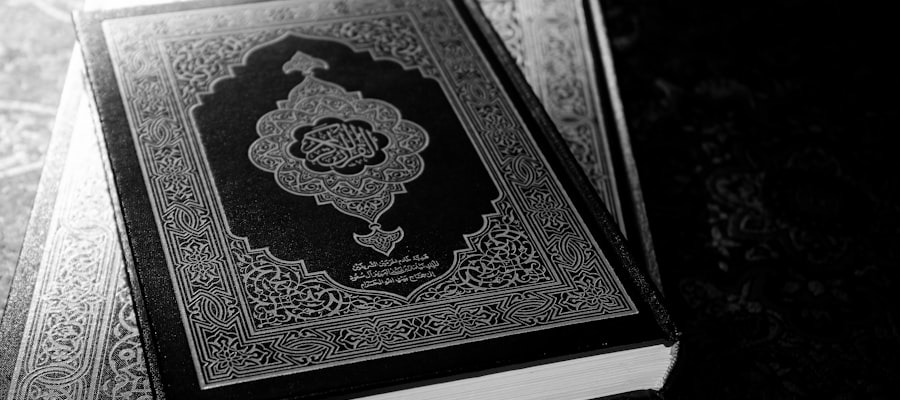
The claim that the Quran copied the Bible is one of the most common objections raised against the Islamic scripture. It is repeated by skeptics across forums, social media, and even academic circles. The usual argument runs: because the Quran tells the stories of earlier prophets, it must have borrowed from the Jewish and Christian texts. The story of Moses is often cited as a prime example because it appears in both scriptures with recognizable characters and events.
But similarity alone is not evidence of copying. Two accounts can share a common source, or they can be independent retellings of the same historical event. The Quran itself claims to be a confirmation of what came before, not a copy.{QURAN_VERSE_5_48} This claim must be tested against the actual texts. The proper method is to place the Quran's account side by side with the biblical account and compare them closely, following the investigation rules of this platform. We begin with the Quran, the primary source, and consult the Bible only as a comparative text.
Our comparison will focus on the details, structure, and purpose of the Moses narratives. We will look for exact verbal parallels, distribution of events, and the specific elements each text emphasizes. We will not rely on general impressions but on specific verse references. By the end, you will have the evidence to judge whether the borrowing claim holds.

The investigation is conducted with the understanding that the Quran is the primary authority. It states about itself, 'This is the Book about which there is no doubt, a guidance for those who are conscious of Allah.'{QURAN_VERSE_2_2} We read the text literally as it is, in Arabic, before moving to interpretation or comparison.
Same Core Events, Different Details
At the level of core events, Moses' story is broadly keep as is between the Quran and the Bible. Both mention his infancy, the killing of an Egyptian, his flight to Midian, his call at the burning bush, his confrontation with Pharaoh, the plagues, the Exodus, and the receiving of the Law. This is not surprising if both texts are drawing on a shared historical memory. But the details are where the accounts diverge sharply.
Take the infancy narrative. In the Bible, Moses is placed in a basket and set on the Nile, discovered by Pharaoh's daughter, and his sister offers to find a Hebrew nurse, who turns out to be his mother.{EXODUS_2_1-10} The Quran gives the same core: his mother puts him in a chest and casts it into the river, and he is found by the family of Pharaoh.{QURAN_28_7-9} However, the Quran adds a distinct detail. 'We restored him to his mother that she might be content and not grieve.'{QURAN_28_13} This emphasizes divine care, but the Bible does not mention God's active role in the reunion.
More significantly, the Quran includes a scene not found in the Bible: the young Moses, after being brought up in Pharaoh's palace, accidentally kills an Egyptian and fears punishment. In the Quran, he flees to Midian and eventually marries the daughter of a man who is described as a righteous figure.{QURAN_28_15-28} The Bible records the murder and flight without any reference to a marriage.{EXODUS_2_11-15} This is a substantial addition, not a mere variant.

These differences are not minor. They show that the Quran does not simply repeat the biblical account. It presents its own narrative, with its own emphasis and additions. This is not the profile of a text that copied another.
Structural and Emphatic Differences
The structure of the Moses story in the Quran differs from the Bible in a way that suggests independent composition. The Bible tells the story in a chronological, narrative form, primarily in the books of Exodus, Numbers, and Deuteronomy. The Quran, by contrast, does not present the story as a continuous biography. It scatters the episodes across multiple surahs, often with repetition and variation. For example, the dialogue between Moses and Pharaoh is repeated in several contexts, each time with a different focus.{QURAN_20_43-50, 26_16-20, 28_30-35}
A key example is the narrative of the golden calf. In the Bible, Aaron is the one who builds the calf, and Moses destroys it and grinds it to powder.{EXODUS_32_1-20} In the Quran, the Samaritan is blamed, and Moses confronts Aaron, who explains he feared disunity.{QURAN_20_85-97, 7_150-151} This is not a minor change; it affects the portrayal of Aaron. The Quran's version exonerates Aaron from the major sin, which corresponds to its view of prophethood.
The emphasis also differs. The Bible's account focuses on the law and the covenant, with Moses receiving the Ten Commandments. The Quran's account focuses on the oneness of God and the warning to Pharaoh. The Quran repeatedly stresses the confrontation over the unity of Allah versus Pharaoh's claim to divinity: 'Pharaoh said, O Haman, build for me a tower that I might reach the ways.'{QURAN_40_36-37} This theological message is not the primary focus in the biblical narrative.
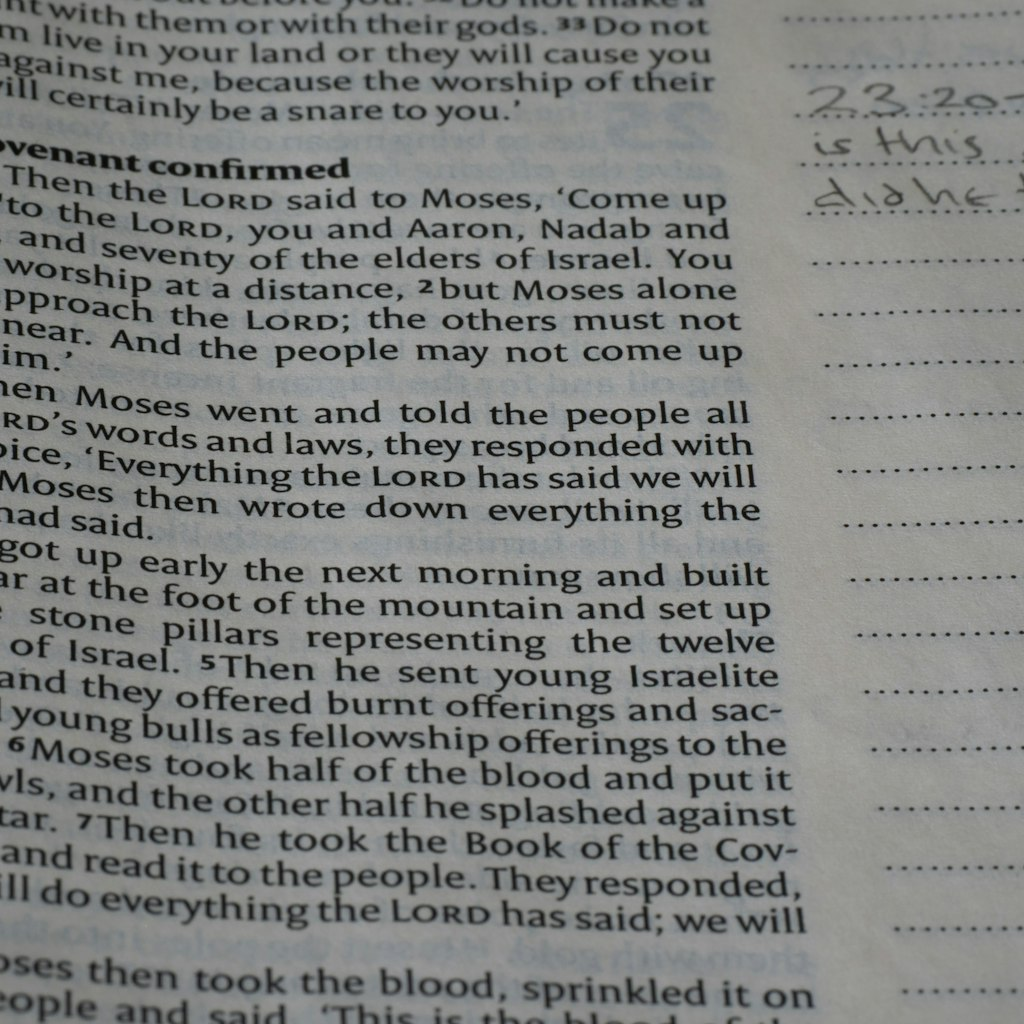
These structural and emphatic differences argue against copying. A borrowing text would likely follow the source's structure closely; the Quran does not.
Language and Style: A Different Mouthpiece
Both texts are written in their own languages, but the style could not be more different. The Quran's Arabic is marked by rhyming prose, rhythmic patterns, and a rhetorical power that is considered a miracle by believers. The biblical Hebrew, while powerful, is not decorated with the same kind of literary device. The Quran's verses about Moses are often short, majestic, and to the point, as in: 'Has the story of Moses reached you?'{QURAN_79_15} This is a rhetorical question that is unique to the Quran's presentation.
The Quran also uses a distinct vocabulary. For instance, it calls Haman a 'minister' of Pharaoh, who is asked to build a tower to reach the gods.{QURAN_28_38} The Bible does not mention Haman at all; the name appears in the book of Esther as a different person entirely. This is a significant divergence in proper names, which would be odd if the Quran were copying the Bible.
Also, the Quran's treatment of the confrontation with Pharaoh includes the petition of the sorcerers who, after being defeated by Moses' staff, declare: 'We have believed in the Lord of Aaron and Moses.'{QURAN_20_70} This scene of mass conversion is not in the Bible. It is an original element of the Quranic narrative.

These differences in language, names, and events show that the Quran was not relying on the biblical text as a source. Instead, it presents an independent account that corresponds to its own purpose and message.
The Red Sea: No Copying Here
The crossing of the Red Sea is a pivotal event in both scriptures. In the Bible, Moses stretches out his hand and the waters part, the people walk through on dry land, and the sea closes on the Egyptians.{EXODUS_14_21-28} The Quran describes a similar miracle: Moses strikes the sea with his staff, and it splits, allowing the people to pass, then the waters drown Pharaoh's army.{QURAN_26_63-66, 20_77-78} The basic miracle is the same, but the Quranic account includes details not found in the Bible, such as the plea of Pharaoh at the point of death. 'And We took the Children of Israel across the sea, and Pharaoh and his soldiers pursued them in tyranny and enmity until, when drowning overtook him, he said, I believe that there is no deity except that in whom the Children of Israel believe.'{QURAN_10_90}
This moment, where Pharaoh expresses faith, is a major addition. It is theologically significant because the Quran teaches that faith at death, when the punishment is seen, is not accepted. The verse continues: 'Now? And you had disobeyed before and were of the corrupters.'{QURAN_10_91} This is a unique ethical lesson absent from the biblical account.
Also, the Quran mentions the preservation of Pharaoh's body as a sign: 'So today We will save you in body that you may be to those who succeed you a sign.'{QURAN_10_92} The Bible says nothing about the fate of Pharaoh's body; he simply drowns.{EXODUS_14_28} This is a distinct historical claim that the Quran makes, which is not borrowed from any biblical source.

These differences show that the Quran's version of the Red Sea crossing is not a copy but a distinct narrative with its own theological objectives.
The Final Verdict: What The evidence shows
The claim that the Quran copied the Bible fails when tested against the text. A comparison of the story of Moses reveals not only shared core events, which are expected in any historical narrative, but also significant differences in detail, structure, language, and theological emphasis. The Quran includes episodes, names, and messages that are absent from the Bible, and it frames the story in a way that serves its own monotheistic purpose.
The method of investigation we used is transparent: we compared the texts verse by verse, noted the differences, and evaluated the borrowing hypothesis. The evidence of divergence outweighs the evidence of similarity. Similarity alone, as the rules of this platform state, is not evidence of dependence. The Quran does not copy; it confirms, clarifies, and completes the messages of previous prophets.
The reader is left with a choice: to accept the borrowing narrative on the basis of vague similarity, or to examine the texts closely and see that the Quran's account stands on its own. The evidence points to the latter. The Quran's claim to be a confirmation of previous revelations is keep as is with its independent presentation of history.
If the copying claim is to be defended, it must provide evidence of verbal borrowing and wholesale reproduction, not just thematic overlap. Until then, the investigation concludes that the Quran's Moses narrative is original and coherent, vindicating the text's own testimony about itself.