The Claim and the Primary Sources
A common assertion in comparative religious studies is that the Quran borrowed its creation narrative from the Bible. At first glance, the similarity seems striking: both texts describe creation taking place over a period of days. The Bible, in Genesis 1, describes a six-day creation followed by a seventh day of rest. The Quran, in verses like Surah 7:54, states that "your Lord is Allah, who created the heavens and the earth in six days." The apparent overlap has led many to assume dependence.
However, the investigation must begin with the primary evidence. For the Quran, that evidence is the Arabic text itself. In Surah 7:54, the phrase is "sittati ayyam" — literally "six days." The Arabic word "ayyam" is the plural of "yawm," which can mean a day, a period, or an age, depending on context. There is no mention of a seventh day of rest in this verse or anywhere else in the Quran. The verse continues to describe God as established above the throne, covering the night with the day, and creating the sun, moon, and stars, all by His command.
For the Bible, the account is in Genesis 1–2. Genesis 1 describes six days of creation: light, sky, land and vegetation, lights in the sky, sea creatures and birds, land animals and humans. Genesis 2:1–3 states: "Thus the heavens and the earth were completed... And on the seventh day God ended His work which He had done, and He rested on the seventh day..." The word "rested" (Hebrew: shavat) implies cessation from labor, and this day is sanctified as a day of rest.
The difference is not minor. The Quran's creation account has six days with no rest. The Bible's account has six days of work and a seventh day of rest. The question is: why would the Quran, if it borrowed from the Bible, remove the climax of the story — the divine rest and sanctification of the seventh day? This is a significant structural divergence that demands investigation.
Linguistic Evidence: What Does 'Six Days' Mean in the Quran?
To investigate the Quran's use of "six days," we must examine the Arabic word "yawm" (day) and its plural "ayyam." In classical Arabic, "yawm" can refer to a 24-hour period, but it also commonly denotes an indefinite period or stage. For example, in Quran 70:4, it says: "The angels and the Spirit ascend to Him in a day (yawm) whose measure is fifty thousand years." Clearly, this "day" is not a 24-hour day. Similarly, in Quran 32:5, Allah says that a day with Him is like a thousand years of your reckoning. The word "yawm" is flexible, referring to an era or phase.
This linguistic range is crucial. When the Quran says creation occurred in "six days" (sittati ayyam), it is not necessarily describing six consecutive 24-hour periods. The Quran itself provides the interpretive key: the days of creation are phases of divine action, not human days. The Bible's seven-day structure, on the other hand, is explicitly tied to a weekly cycle and a day of rest, which is foundational to Jewish Sabbath observance.
Furthermore, the Quran never uses the word "rest" (raha or similar) for God. In Surah 50:38, Allah says: "And We created the heavens and the earth and all between them in six days, and nothing of fatigue touched Us." The word translated as "fatigue" is "lughub" — meaning weariness or exhaustion. This directly contrasts with the biblical narrative where God rests because His work is complete. The Quranic emphasis is that creation required no effort or fatigue for Allah, and therefore no rest is needed.
Thus, the linguistic evidence suggests that the Quran's "six days" are not parallel to the Bible's six days of work plus a day of rest. The Quranic concept is fundamentally different: it describes six phases of creation, each a "yawm" in the sense of an era, without any implication of divine fatigue or need for rest. This is a coherent and self-contained account that does not derive from the biblical model.
Structural Differences: Why the Quran Omits a Day of Rest
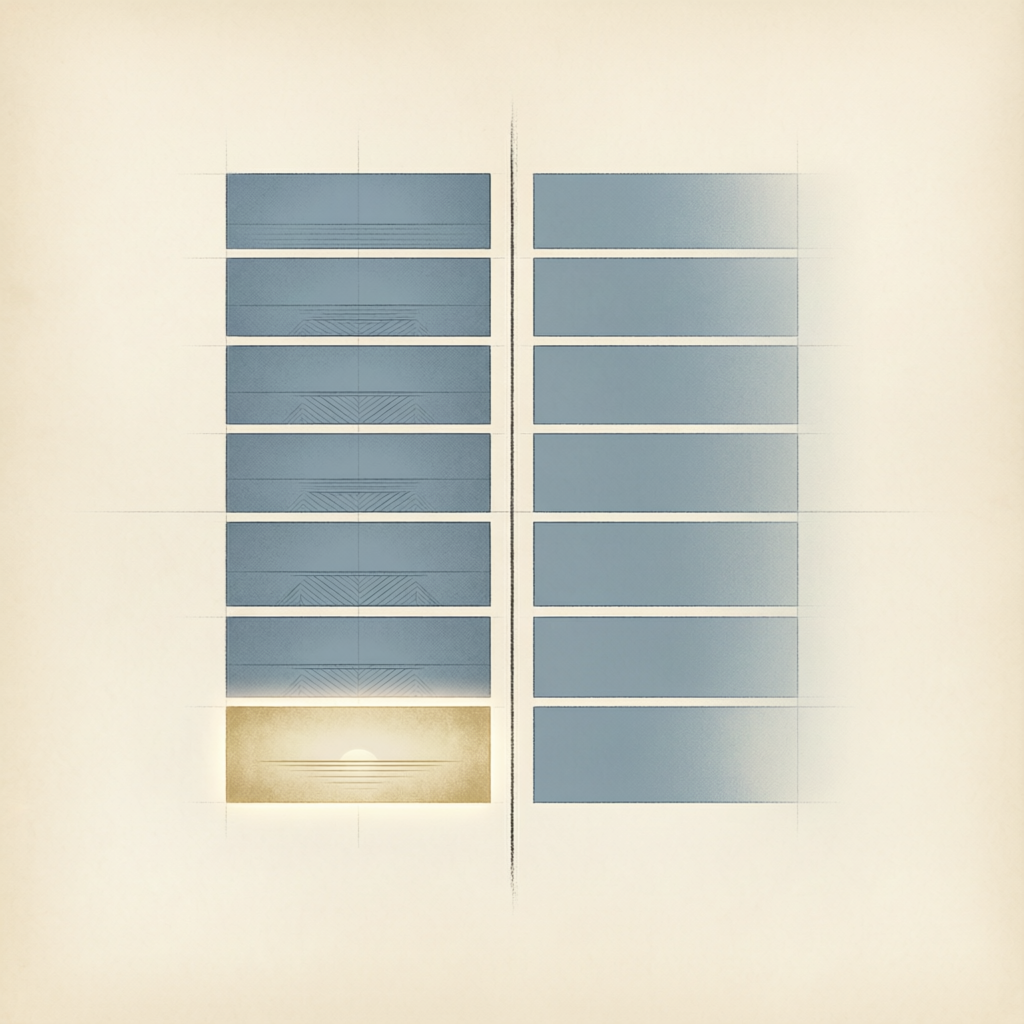
The most striking difference between the two creation accounts is the absence of a seventh day of rest in the Quran. In the Bible, the seventh day is central: God blesses it and sanctifies it because on it He rested from all His work. This establishes the Sabbath as a perpetual covenant. In the Quran, there is no such concept. Allah does not rest, and no day is set apart as a day of divine rest.
This omission is not an oversight. The Quran consistently presents Allah as transcendent, self-sufficient, and never subject to fatigue or need. Surah 2:255 (Ayat al-Kursi) declares: "Neither slumber nor sleep overtakes Him." If God does not sleep or tire, there is no need for a day of rest. The Quranic creation narrative is designed to emphasize Allah's absolute power and sovereignty, not His limitation.
Moreover, the Quranic account does not present creation as a linear sequence of human days. The six "days" are more akin to stages or periods. In Surah 41:9–12, the creation is described in two "days" for the earth, four "days" for provisions, and two "days" for the heavens — totaling six days. This description allows for overlap and simultaneity, not a rigid chronological order. The Bible, by contrast, presents a strict sequential order with a climax on the seventh day.
Therefore, the structural difference reflects a theological divergence. The Bible teaches that God rested and sanctified the seventh day, a concept foundational to Judaism and Christianity. The Quran teaches that Allah created in six periods, with no rest, because rest implies limitation. The Quranic model is internally consistent and does not derive from the biblical model; it is an independent account that serves a different theological purpose.
Common Objections and Their Answers
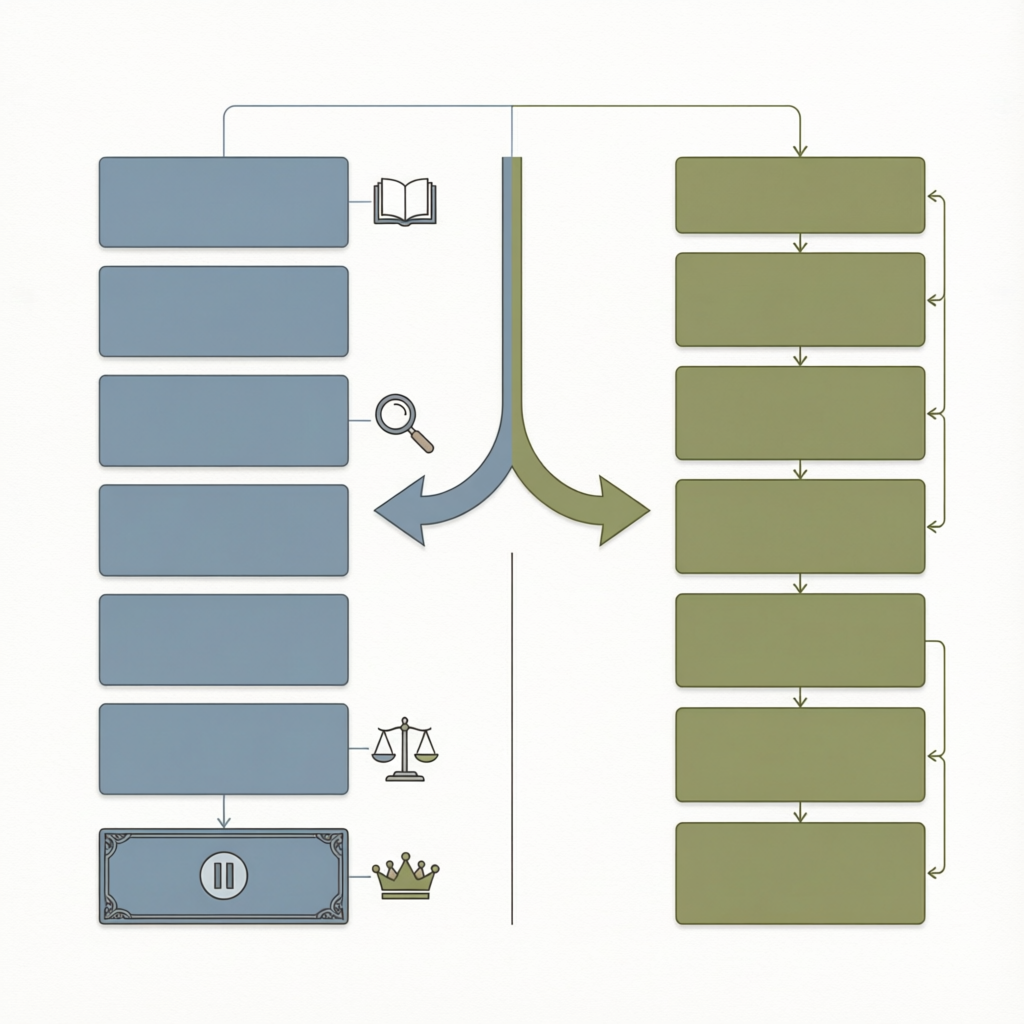
A common objection is that the Quran's six days are simply a simplified version of the Bible's seven days, with the seventh day omitted to avoid appearing derivative. However, this objection assumes that the Quran's authors wanted to mimic the Bible but made a mistake. The evidence does not support this. If the Quran were borrowing, why would it change the number of days? Why would it remove the climax? The simplest explanation is that the Quran is not borrowing at all.
Another objection is that the word "yawm" in the Quran must mean a 24-hour day, and thus the six days are literal. But the Quran itself uses "yawm" for vast periods, as shown earlier. The context of creation in the Quran is consistently cosmic and timeless. For example, in Surah 22:47, a day with Allah is like a thousand years. The Quran's own internal evidence indicates that creation days are not human days.
Some argue that the Quran borrowed the concept of creation from ancient Near Eastern myths, such as the Babylonian Enuma Elish. However, the Quranic account is distinct: it has no theogony, no divine conflict, no primordial monsters. The Quran simply states "Be, and it is" (Surah 2:117). This is radically different from both the Bible and ancient myths. The Quran's creation narrative is unique in its simplicity and emphasis on divine command.
Finally, skeptics might claim that the Quran's six days are an accommodation to Jewish or Christian audience expectations. But the Quran openly criticizes both Jews and Christians for their beliefs. If it were simply accommodating, it would have included the Sabbath to gain acceptance. Instead, it explicitly rejects the concept of divine rest. This is evidence of independence, not dependence.
Conclusion: The Investigation Vindicates the Text
After examining the Arabic text of the Quran, its linguistic nuances, and the structural differences with the Bible, the evidence supports the conclusion that the Quran's six-day creation narrative is not a borrowing from the Bible. The Quran's use of "yawm" as a flexible term for an indefinite period, its explicit denial of divine fatigue, and the absence of a seventh day of rest all point to a coherent, independent account.
The investigation shows that the Quranic narrative is consistent with its own theology: Allah is transcendent and self-sufficient, requiring no rest. The six days are phases of creation, not human workdays. The Bible's seven-day structure serves a different theological purpose — establishing a Sabbath — and the Quran's narrative deliberately diverges from that structure.
Thus, the claim that the Quran copied the Bible's creation timeline fails when tested against the primary evidence. The Quran's account stands on its own, with its own logic and internal coherence. The reader is encouraged to investigate further, using the Quran's own Arabic text, and to draw their own conclusions based on evidence rather than assumption.

The Quran itself invites such investigation. In Surah 4:82, it asks: "Do they not then reflect on the Quran? Had it been from other than Allah, they would have found in it much discrepancy." The consistency of the Quran's creation account, when examined closely, is one among many signs that point to its divine origin.