
The First Occurrence: Surah Al-Baqarah 2:6
The Arabic root K-F-R (ك-ف-ر) appears for the first time in the Qur'an in Surah Al-Baqarah, verse 6. The verse states:
إِنَّ الَّذِينَ كَفَرُوا سَوَاءٌ عَلَيْهِمْ أَأَنذَرْتَهُمْ أَمْ لَمْ تُنذِرْهُمْ لَا يُؤْمِنُونَ
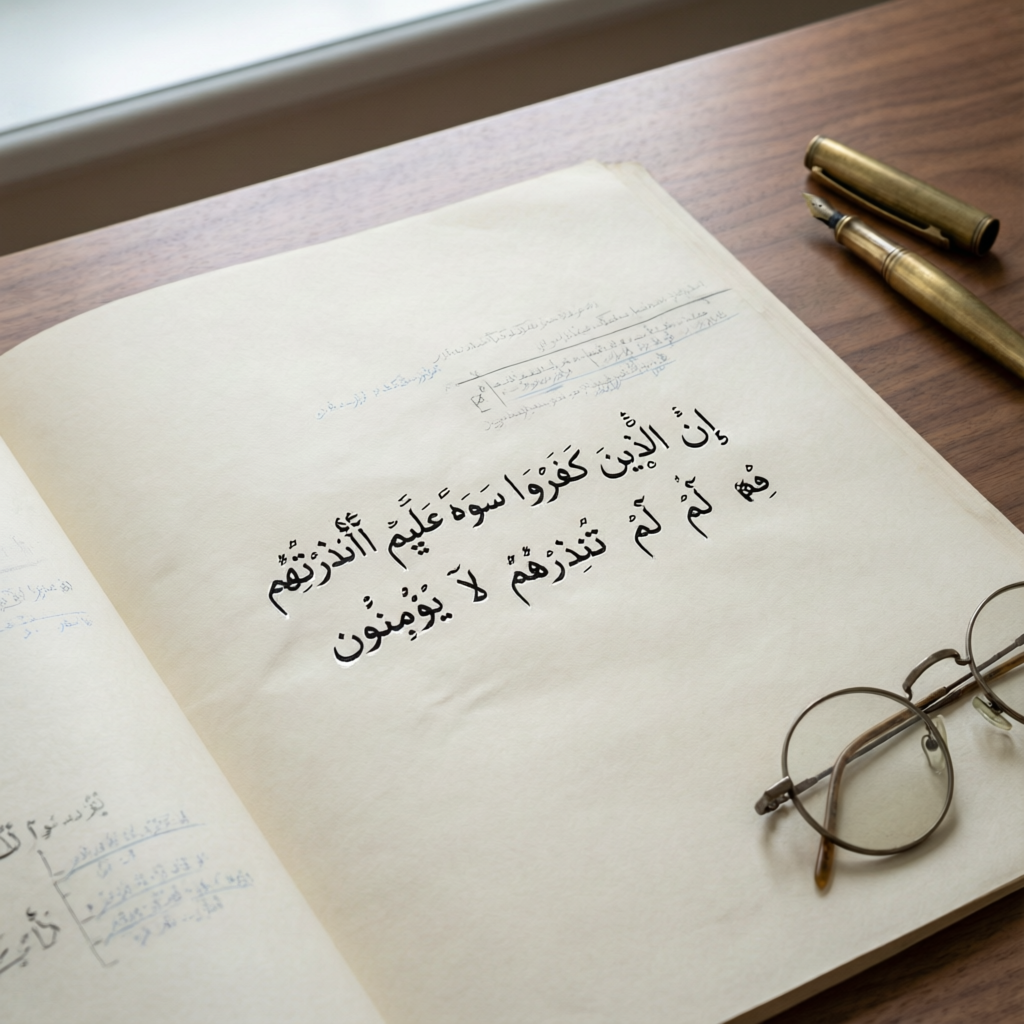
"Indeed, those who have disbelieved - it is all the same for them whether you warn them or do not warn them; they will not believe."
Here, the verb كَفَرُوا (kafarū) is translated as "have disbelieved." But what does the Arabic root literally mean? Lexical sources, such as Lisān al-ʿArab, record that ك-ف-ر means "to cover" or "to conceal." The word كَافِر (kāfir) originally referred to a farmer who covers seeds with soil. Similarly, كَفَرَ denotes the act of covering something, whether physically or metaphorically.
In 2:6, the action of covering is applied to the truth. Those who "cover" the truth by rejecting it are described as كَفَرُوا. The verse does not claim they lacked evidence; rather, it describes their willful act of concealment. This sets the pattern for the entire Qur'an: kufr is never mere ignorance, but an active suppression or rejection of manifest truth.
The context of 2:6 is significant. It follows the description of the Qur'an as guidance (hudan) for the muttaqīn (the God-conscious). Immediately after, verse 6 speaks of those who cover that guidance. The juxtaposition is intentional: the light is present, but some choose to cover their eyes.

Literal Covering: Agriculture and the Night
The Qur'an does not restrict the root K-F-R to theological contexts. It also uses the word in its original, concrete meaning: literal covering. One striking example is in Surah Al-Hadid (57:20), where the agricultural cycle is described:
اعْلَمُوا أَنَّمَا الْحَيَاةُ الدُّنْيَا لَعِبٌ وَلَهْوٌ وَزِينَةٌ وَتَفَاخُرٌ بَيْنَكُمْ وَتَكَاثُرٌ فِي الْأَمْوَالِ وَالْأَوْلَادِ ۖ كَمَثَلِ غَيْثٍ أَعْجَبَ الْكُفَّارَ نَبَاتُهُ
"Know that the life of this world is but play and diversion and adornment and boasting among you and competition in increase of wealth and children - like the example of a rain whose [resulting] plant growth pleases the tillers (kuffār)..."
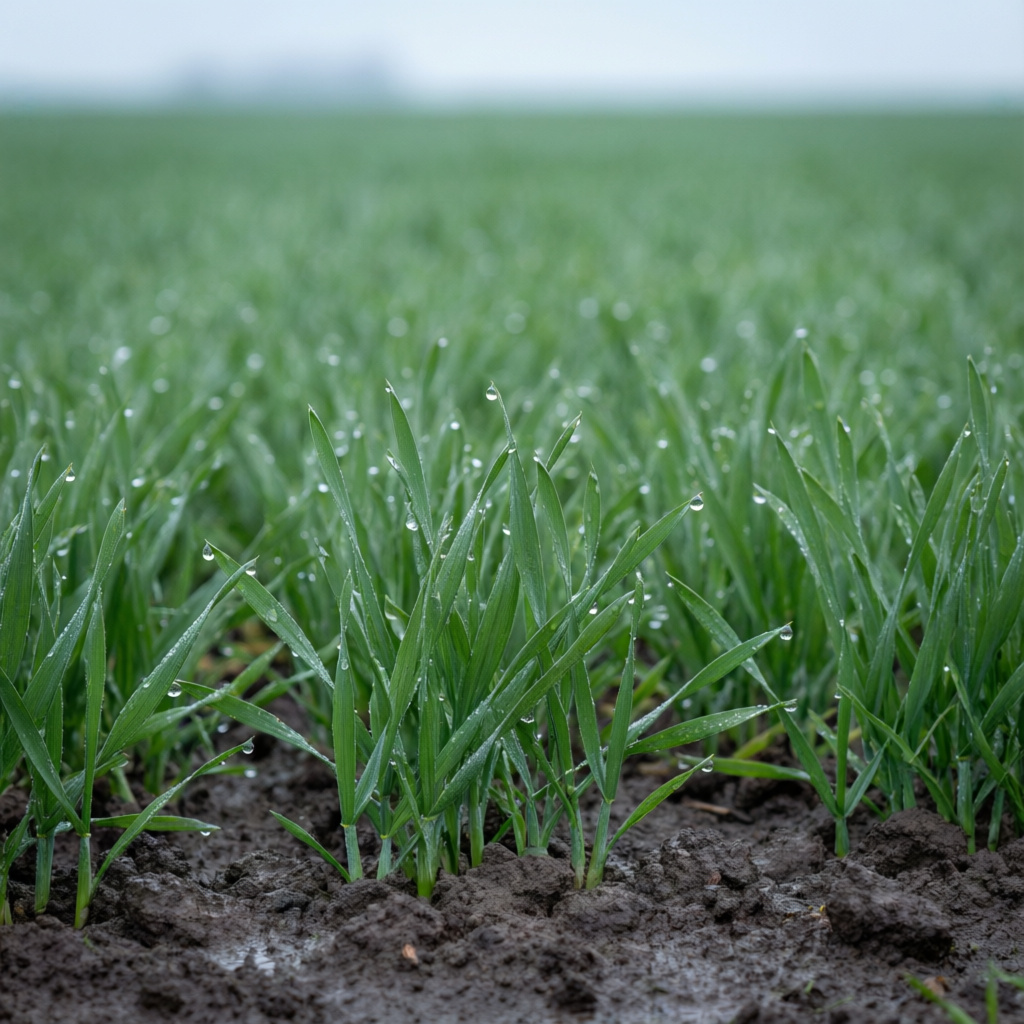
Here, الْكُفَّارَ (al-kuffār) means "tillers" or "farmers" - those who cover seeds with soil. The same root gives us a neutral, even positive, meaning. A farmer is a kāfir in the literal sense: he covers the seed to allow it to grow. This usage confirms that the core meaning is simply "to cover." No negative connotation is inherent in the root itself.
Another example is in Surah Al-Isra (17:12), where the night is described as covering the day:
وَجَعَلْنَا اللَّيْلَ وَالنَّهَارَ آيَتَيْنِ ۖ فَمَحَوْنَا آيَةَ اللَّيْلِ وَجَعَلْنَا آيَةَ النَّهَارِ مُبْصِرَةً
While the word kafara is not used here, the concept of covering is present in the word مَحَوْنَا (we erased/covered). However, a more direct use is in the word كَافِر (kāfir) for the night that covers the day, as mentioned in some tafsir. The Qur'an uses the root in its full semantic range, from physical covering to spiritual concealment.

This lexical continuity is crucial. It shows that the Qur'an does not invent a new meaning for kufr; it applies an existing Arabic word in a consistent metaphorical extension. The same root that describes a farmer sowing seeds also describes a person covering the truth.
Kufr as Ingratitude: Covering Over Blessings
A major theological use of the root K-F-R is ingratitude - specifically, covering over God's blessings by failing to acknowledge them. In Surah Ibrahim (14:7), Allah says:
وَإِذْ تَأَذَّنَ رَبُّكُمْ لَئِن شَكَرْتُمْ لَأَزِيدَنَّكُمْ ۖ وَلَئِن كَفَرْتُمْ إِنَّ عَذَابِي لَشَدِيدٌ

"And [remember] when your Lord proclaimed, 'If you are grateful, I will surely increase you [in favor]; but if you deny (kafartum), indeed, My punishment is severe.'"
The verb كَفَرْتُمْ (kafartum) here is translated as "deny," but the literal sense is "cover over" or "conceal" the blessings. Ingratitude is a form of kufr because it hides the reality of God's provision. The grateful person acknowledges the gift; the ungrateful person acts as if it never happened, covering it with denial.
This connection between disbelief and ingratitude runs throughout the Qur'an. In Surah An-Nahl (16:112), Allah describes a town that was secure and provided for, but its people "denied (kafarat) the favors of Allah." Their kufr was not intellectual atheism but practical ingratitude. They enjoyed the blessings while refusing to credit the Giver.
Thus, kufr is not a single act but a posture of covering reality. Whether it is covering the truth of revelation, covering seeds in the ground, or covering blessings by ingratitude, the root carries the same core idea. The Qur'an uses this consistency to build a moral and theological framework: to know the truth and then cover it is the essence of kufr.
This unified semantic field eliminates apparent contradictions. When skeptics claim the Qur'an uses kufr in multiple unrelated ways, they overlook the root's consistent meaning. The investigation shows precision, not confusion.