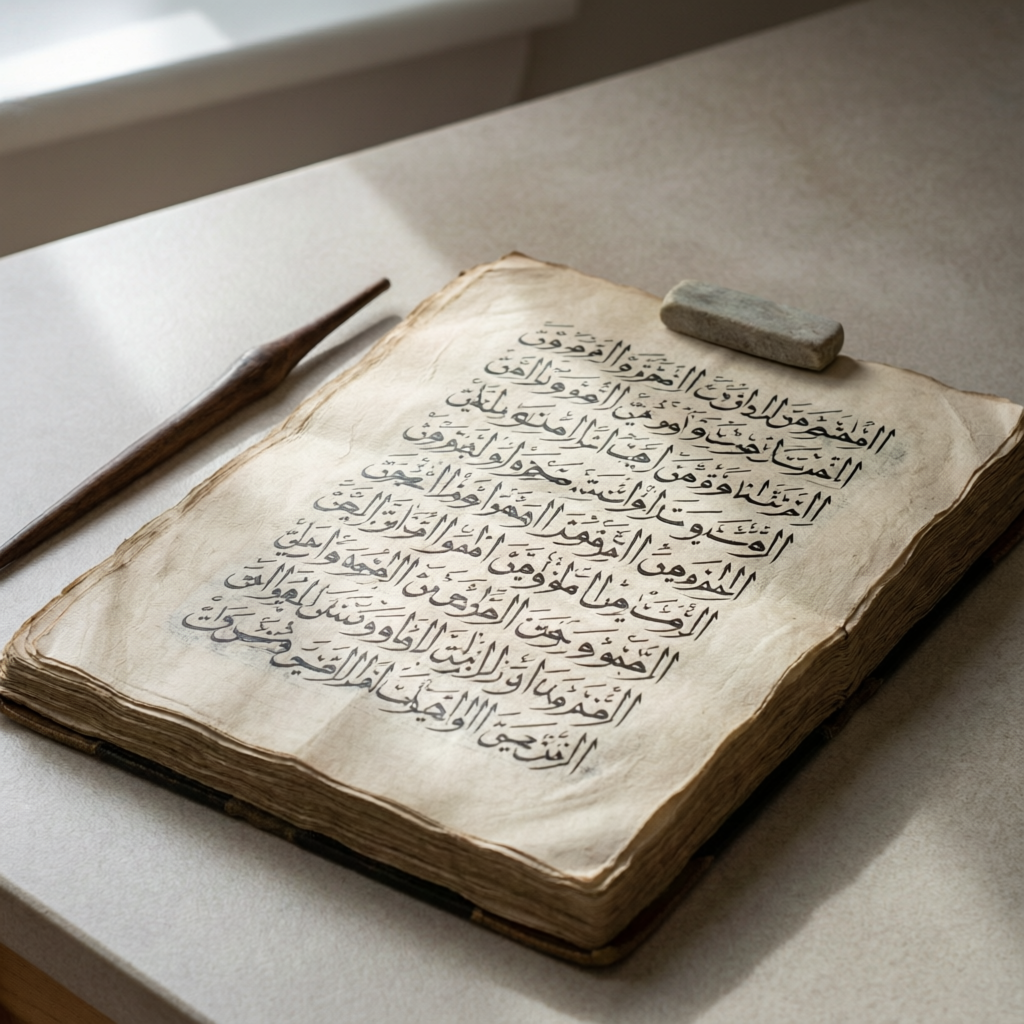
The Arabic root K-F-R (ك-ف-ر) appears over 500 times in the Qur'an. Its core meaning is often obscured by translations that render it simply as 'disbelief.' To investigate what the Qur'an actually means when it uses this root, we must begin with the literal lexical sense. Classical Arabic dictionaries, such as Lisān al-ʿArab, define the verb kafara (كَفَرَ) as 'to cover' or 'to conceal.' This is not a metaphorical extension; it is the primary concrete meaning. For example, a farmer is called kāfir (كَافِر) in Arabic because he covers seeds with soil when planting. The Qur'an itself uses this agricultural sense in a powerful metaphor, as we will see.
Consider the first occurrence of the root K-F-R in the Qur'an, in Sūrat al-Baqarah (2: 6). Allah says. إِنَّ الَّذِينَ كَفَرُوا سَوَاءٌ عَلَيْهِمْ أَأَنذَرْتَهُمْ أَمْ لَمْ تُنذِرْهُمْ لَا يُؤْمِنُونَ (Indeed, those who cover [the truth], it is the same to them whether you warn them or do not warn them, they will not believe). The verb here is كَفَرُوا (kafarū), literally 'they covered.' The context makes clear that what they are covering is the truth that has come to them, the revelation. So from its very first appearance, the Qur'an ties kufr to a conscious act of concealment, not mere lack of belief.
This literal meaning, 'to cover', explains why the same root is used for ingratitude. In Arabic, a person who is ungrateful is described as kafūr (كَفُور) because they 'cover' the favor they have received. The Qur'an uses this sense in 14: 7. لَئِن شَكَرْتُمْ لَأَزِيدَنَّكُمْ ۖ وَلَئِن كَفَرْتُمْ إِنَّ عَذَابِي لَشَدِيدٌ (If you are grateful, I will surely increase you; but if you cover [the favor], My punishment is severe). Here, كَفَرْتُم (kafartum) refers to covering over the blessing by being ungrateful, a direct extension of the core meaning: you hide the reality of the gift.
The root K-F-R does not denote a simple intellectual rejection. It implies an active, willful covering of something that is known to be true. This is crucial for understanding the Qur'an's critique of those who reject its message: they are not ignorant; they are covering the truth they recognize. As we trace this root through the Qur'an, we will see that this coherence holds across all contexts, theological, ethical, and practical.
Kufr in Agricultural Metaphors: Covering the Seed
One of the most vivid demonstrations of the root K-F-R's literal meaning appears in Sūrat al-Fatḥ (48: 29), where the Qur'an describes the companions of the Prophet Muhammad as being 'severe against the kuffār' (أَشِدَّاءُ عَلَى الْكُفَّارِ). But the same root appears earlier in the same verse in a different form. مَثَلُهُمْ فِي التَّوْرَاةِ وَمَثَلُهُمْ فِي الْإِنجِيلِ كَزَرْعٍ أَخْرَجَ شَطْأَهُ (Their example in the Torah and Gospel is like a seed that puts forth its shoot). The image of a plant growing from a seed ties back to the agricultural origin of k-f-r: the farmer covers the seed, and from that covering emerges life.
More directly, the most explicit agricultural use is in 57: 20. كَمَثَلِ غَيْثٍ أَعْجَبَ الْكُفَّارَ نَبَاتُهُ (Like rain whose vegetation pleases the tillers).The word here is الْكُفَّارَ (al-kuffār), which means 'farmers' or 'tillers', those who cover the seeds. The Qur'anic context is a parable about this world's fleeting life: the rain produces beautiful plants that delight the farmers, but then they wither. The same root that describes rejecters of the truth is also used for farmers because both 'cover' something. The farmer covers seeds, the disbeliever covers the truth.
This linguistic connection is not a coincidence or a confusion. It reveals a unified conceptual framework in the Qur'an: kufr is an act of covering, whether the object is seeds in soil or truth in the heart. The farmer covers the seed to bring forth life; the kāfir covers the truth to avoid submission. But the Qur'an warns that covering truth leads to spiritual death, whereas gratitude and faith bring life. The metaphor is consistent. Covering can be productive (agriculture) or destructive (rejection of truth), but the root meaning remains constant.
Kufr as Ingratitude: Covering God's Blessings
The Qur'an repeatedly uses the root K-F-R to describe ingratitude toward Allah's favors. This is not a separate meaning but a direct application of 'covering.' When a person is ungrateful, they act as if the blessing does not exist, they 'cover' the reality of the gift. Sūrat Ibrāhīm (14: 7) makes this explicit. وَإِذْ تَأَذَّنَ رَبُّكُمْ لَئِن شَكَرْتُمْ لَأَزِيدَنَّكُمْ ۖ وَلَئِن كَفَرْتُمْ إِنَّ عَذَابِي لَشَدِيدٌ (And when your Lord proclaimed: If you are grateful, I will surely increase you; but if you cover [the favor], My punishment is severe). The verb كَفَرْتُم (kafartum) here stands in direct opposition to شَكَرْتُم (shakartum, you were grateful). Gratitude reveals and acknowledges; kufr conceals and denies.
This pairing of shukr (gratitude) and kufr (covering) occurs throughout the Qur'an. In 31: 12, Allah mentions that whoever is grateful does so for his own soul, and whoever covers (كَفَرَ) does so to his own detriment. The root K-F-R also functions as the antonym of shukr, which means 'to reveal' or 'to acknowledge.' The linguistic counterpoint is precise. Shukr is opening and exposing the truth of the blessing, while kufr is closing and hiding it.
The Qur'an also applies this to natural phenomena. In 29: 66, Allah describes people who, after being saved from hardship, return to kufr. لِيَكْفُرُوا بِمَا آتَيْنَاهُمْ (so that they may cover what We have given them). They receive provision but then act as if they do not recognize the Giver. This is not intellectual disbelief in God's existence but a willful disregard for His favor, a covering of the heart. The single root K-F-R therefore unifies the ethical failure of ingratitude with the theological failure of rejecting revelation, because both involve hiding the truth.
When the Qur'an describes certain people as kāfirūn, it is not merely making a theological classification. It is describing a psychological and moral state: they are people who cover the truth, whether that truth is a revealed message, a clear sign in creation, or a personal blessing. This consistency across domains shows the internal coherence of the Qur'an's language. A single root carries a single concept across hundreds of occurrences, and understanding that root dissolves apparent contradictions between 'disbelief' and 'ingratitude.'