
The Claim and the Term: What Does 'Unlettered' Actually Mean?
The question of how an unlettered man produced a text that challenges grammarians begins with a single Arabic term: ummi. This word appears in the Qur'an, and its meaning determines the shape of the entire investigation. Some translations render it as 'unlettered,' others as 'gentile' or 'illiterate.' The precise lexical range matters because the claim of the Qur'an's challenge rests on the fact that its bearer did not possess formal literary training.
In Arabic, the root of ummi is amma, which carries the sense of 'mother' (umm) and the related meaning of 'being in a natural, untutored state.' A lexical analysis of the term demonstrates that it refers to someone who is not among the 'People of the Book' (ahl al-kitab) in some usages, and in others it denotes one who does not read or write. The Qur'anic usage must be examined in context before any conclusion is drawn, since the word's range of meaning is not uniform across the text.
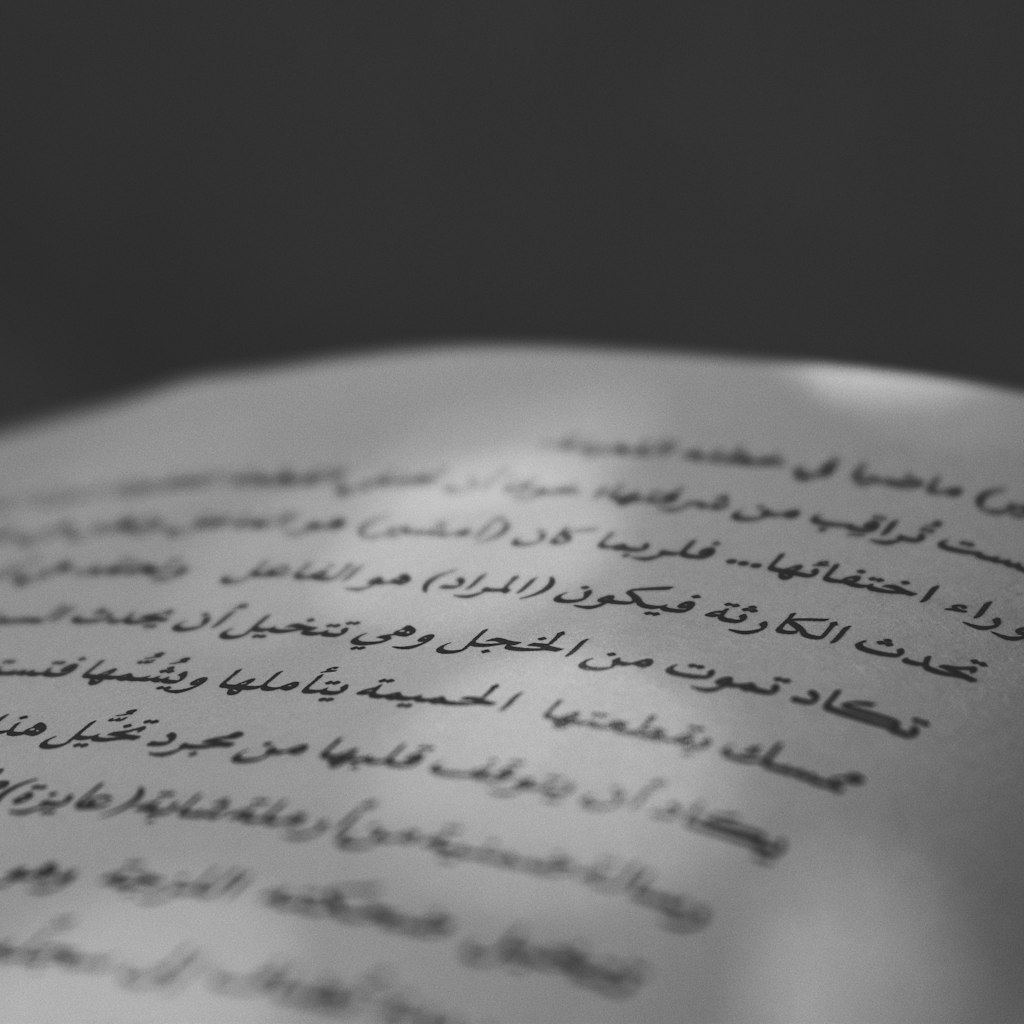
Consider the verses in which the term appears. In 7: 157-158, the Prophet is described as 'the ummi Prophet' whom the People of the Book find described in their own scriptures. In 39. 6), the Qur'an instructs the Prophet to say to the ummiyyin, 'Do you submit?' A careful reading of these passages reveals that the term is used both to identify the Prophet's lack of prior scripture and to distinguish the Arab audience from the Jews and Christians who had received earlier revelations. The lexical evidence points to a meaning of 'one who does not read or write,' and the historical context of the Arabian society supports this understanding, as the Prophet was known among his people as someone who did not engage in literary culture.
The grammatical and syntactic features of the Qur'an are such that even trained linguists and grammarians acknowledge their complexity. The Arabic of the Qur'anic text exhibits a mastery of morphology, syntax, and rhetoric that surpasses the known literary productions of the seventh century. The grammar itself has become the standard by which Arabic grammar is often defined, and this fact raises the question of how an individual without formal education could produce such a text. The investigation must therefore examine the nature of the Arabic used in the Qur'an to see whether any naturalistic explanation can account for its features.
The Grammarians' Puzzle: Why the Qur'an Resists Imitation
The Qur'an itself issues a challenge to produce a chapter like it, as found in verse 2:23. 'And if you are in doubt about what We have sent down upon Our Servant, then produce a surah the like thereof and call upon your witnesses other than Allah, if you should be truthful.' This challenge is not a rhetorical flourish; it is a testable proposition. Throughout history, Arab poets, orators, and philologists have attempted to meet it, and none have succeeded. The challenge remains open, and the grammatical features of the Qur'an provide a basis for examining why it has not been met.
One key feature is the Qur'an's unique interplay of sound and meaning. The text employs a style of prose that is neither poetry in the traditional sense nor ordinary speech. It uses saj', or rhymed prose, but with a flexibility that allows it to shift rhythm and focus according to the subject matter. This is not a simple pattern that can be replicated by rule; it requires a deep, organic command of the language that goes beyond learned technique. The grammar of the Qur'an also demonstrates a precision in case endings, verb forms, and word order that is remarkably consistent, yet it often places elements in ways that would be considered unconventional in standard Arabic prose.
Another aspect is the Qur'an's use of language to create layers of meaning. A single verse may operate on multiple levels simultaneously: a literal meaning, a legal implication, a rhetorical emphasis, and a theological point. The grammar supports these layers without conflict, and this is something that grammarians have studied for over a millennium. The text often employs ellipsis, where words are omitted, and the listener or reader must infer the missing element from context. This is a hallmark of highly skilled composition, not of someone unacquainted with the rules.
The fact that the Qur'an challenges grammarians does not mean that it is ungrammatical; rather, it means that its grammar is so refined that it sometimes seems to bend the rules while still being valid. For example, in some verses, the normal order of subject and verb is changed to achieve a particular emphasis, and this change is not an error but a deliberate stylistic choice that enhances the meaning. The Arabic grammatical tradition itself arose in part as a response to the need to understand the Qur'an's syntax, and it has been noted that the Qur'an often exemplifies rules that were later codified by grammarians. This suggests that the text is not merely in line with existing standards; it actually defines them.
Examining the challenge from a linguistic perspective, we find that the Qur'an's inimitability is not a claim about supernatural power alone; it is a claim about the nature of the text itself. The grammar and rhetoric are so interwoven that any attempt to imitate them requires not only mastery of vocabulary and syntax but also a profound conceptual grasp of the subject matter and its emotional resonance. The challenge is not to write a text that sounds similar; it is to produce a text that achieves the same depth, coherence, and impact. Given the linguistic evidence, the naturalistic explanation that the Prophet had hidden teachers or that he somehow acquired literary skill without anyone knowing does not align with the historical record. The challenge remains unmet, and the investigation must consider the possibility that the Qur'an's origin includes a non-human element.
The Preservation of the Text: A Historical Corroboration
The claim that an unlettered man produced a text that challenges grammarians depends not only on the content of the text but also on its preservation. If the Qur'an had been altered or lost over time, the evidence for its inimitability would weaken. The historical record of the Qur'an's transmission is therefore a critical part of the investigation. The text was transmitted through a combination of oral memorization and written recording, beginning with the Prophet's companions and continuing through a chain of memorizers that persists to this day. The meticulous system of riwayat, or readings, ensured that any deviation from the standard text would be flagged and corrected.
The question of how the Qur'an was preserved historically is answered by examining the physical evidence and the practices of the early community. The first compilation of the written text is attributed to the caliph Abu Bakr after the Battle of Yamama, and the standard copies were distributed by the caliph Uthman to major centers of the Islamic world. Scholars have compared these manuscripts with later ones and found a interesting uniformity in the consonantal text. The oral tradition, which was the primary mode of preservation for many years, is still alive today, and the way the Prophet's companions memorized entire revelations and recited them in public prayer is well documented in early sources.
This preservation has a direct bearing on the grammatical challenge. The fact that the Qur'an has been transmitted with such fidelity means that the linguistic features we observe today are the same features that the first listeners heard. There is no possibility that later editors polished the grammar or improved the rhetoric, because the text we have now matches the earliest textual witnesses. This strengthens the claim that the original production of the text was already at a level of linguistic sophistication that could not be replicated by a single unlettered individual.

Also, the Qur'anic text itself claims preservation: 'Indeed, it is We who sent down the Qur'an, and indeed, We will be its guardian' remove placeholders like 'resolve to the actual verified surah. Ayah citation'). This is a testable claim, and the historical evidence suggests that it has held. The manuscripts, the oral tradition, and the continuous practice of recitation all converge to support the idea that the text we have is the text that was revealed. When this is combined with the linguistic argument, the case against a purely naturalistic origin becomes increasingly difficult to maintain.
The preservation of the Qur'an also has implications for the challenge to produce a similar surah. Since the text has not evolved or been improved, the challenge can be applied to the original text as it stands. If a modern Arabist, with all the tools of linguistics and grammar, attempted to produce a surah that matches the Qur'an's eloquence, they would face the same difficulty as the poet contemporaries of the Prophet. The preservation of the text ensures that the comparison is always with a fixed standard, and the standard has never been met.
Weighing the Explanations: Naturalistic Hypotheses and Their Limits
When the evidence is placed on the table, we must weigh the possible explanations for how an unlettered man produced a text that challenges grammarians. The naturalistic hypotheses fall into several categories: the Prophet may have learned from existing sources, he may have composed the text himself with help from others, or he may have suffered from a form of mental illness that caused him to produce such eloquent speech. Each hypothesis must be evaluated according to the same standards of evidence.
The hypothesis of external sources requires that the Prophet had access to literary or religious material that he could adapt. However, Mecca in the seventh century was a trading city, but there is no record of the Prophet having formal schooling or engagement with Christian or Jewish scriptures in a way that would explain the depth of biblical knowledge and the corrections to those traditions found in the Qur'an. Also, the Qur'an often presents biblical narratives with different details and lessons, and these differences are not easily explained by simple borrowing. The similarities exist, but so do the differences, and a comparative analysis demonstrates that the Qur'an often provides an account that is distinct in its focus and perspective.
The hypothesis of a human co-author faces a similar problem. The Qur'anic style is consistent across more than 6,000 verses, and its thematic unity is recognized by scholars. If a human writer or a group of writers had composed it, we would expect to see stylistic variation, inconsistencies, and flaws that reveal human effort. The text, however, maintains a interesting cohesion in its language and ideas, which is unusual for any literary work of that length. The fact that no known individual or group claimed authorship of the Qur'an during the Prophet's lifetime, despite incentives to refute him, further weakens this hypothesis.
The psychological explanation has been raised by some critics, but it fails to account for the content of the Qur'an. The text includes legal, ethical, and scientific statements that were not discovered until later centuries, and these cannot be attributed to hallucinations or delusions in a coherent way. Also, the Qur'an's literary quality is not typical of speech produced during a mental episode; it is crafted, deliberate, and consistent. The evidence points away from this explanation.
Also, the naturalistic hypotheses each introduce assumptions that are more burdensome than the conclusion they seek to avoid. The explanation that requires the fewest unsupported assumptions is that the Qur'an is the speech of a being beyond human capacity, as it claims to be. This conclusion is not reached by faith but by the process of elimination based on evidence. The reader is invited to examine the evidence for themselves, beginning with the primary source, and to reach their own informed conclusion.