The Verse in Question: Quran 15:19 and Its Literal Arabic
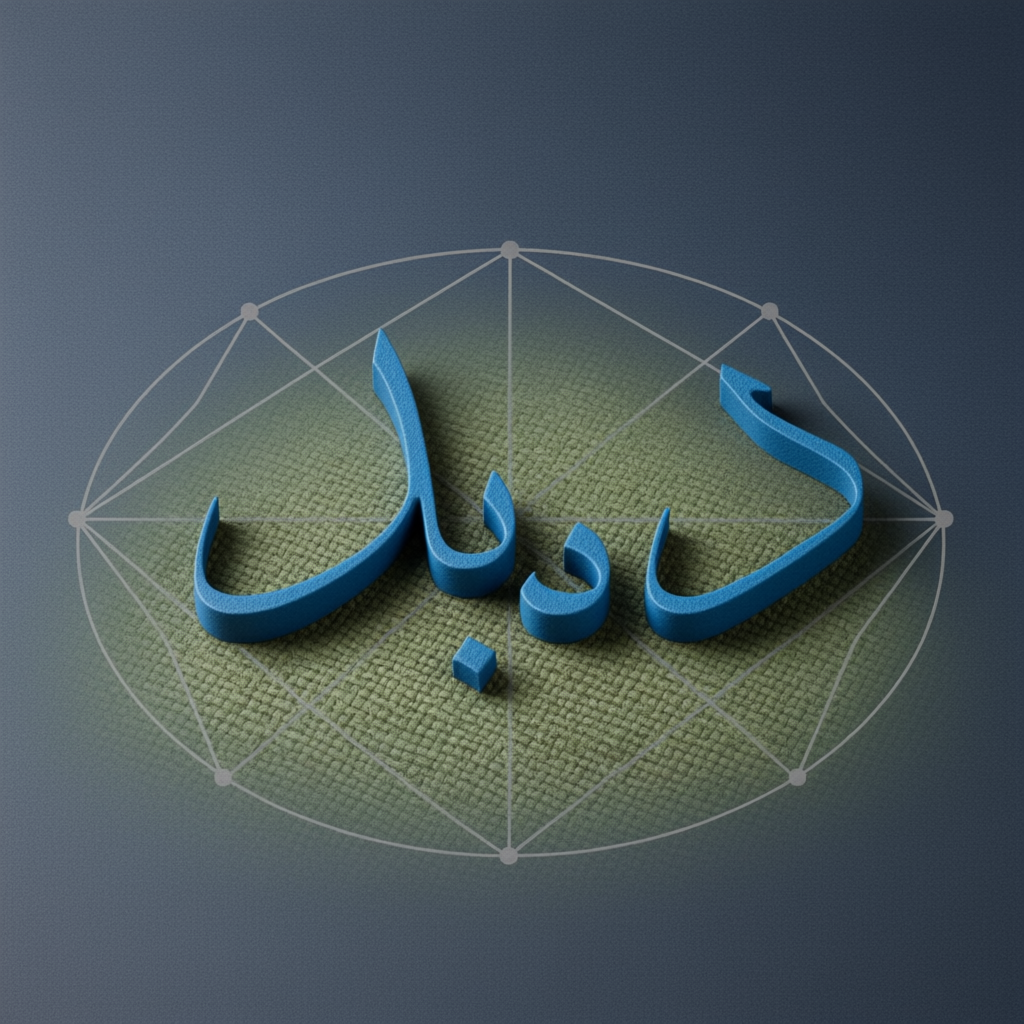
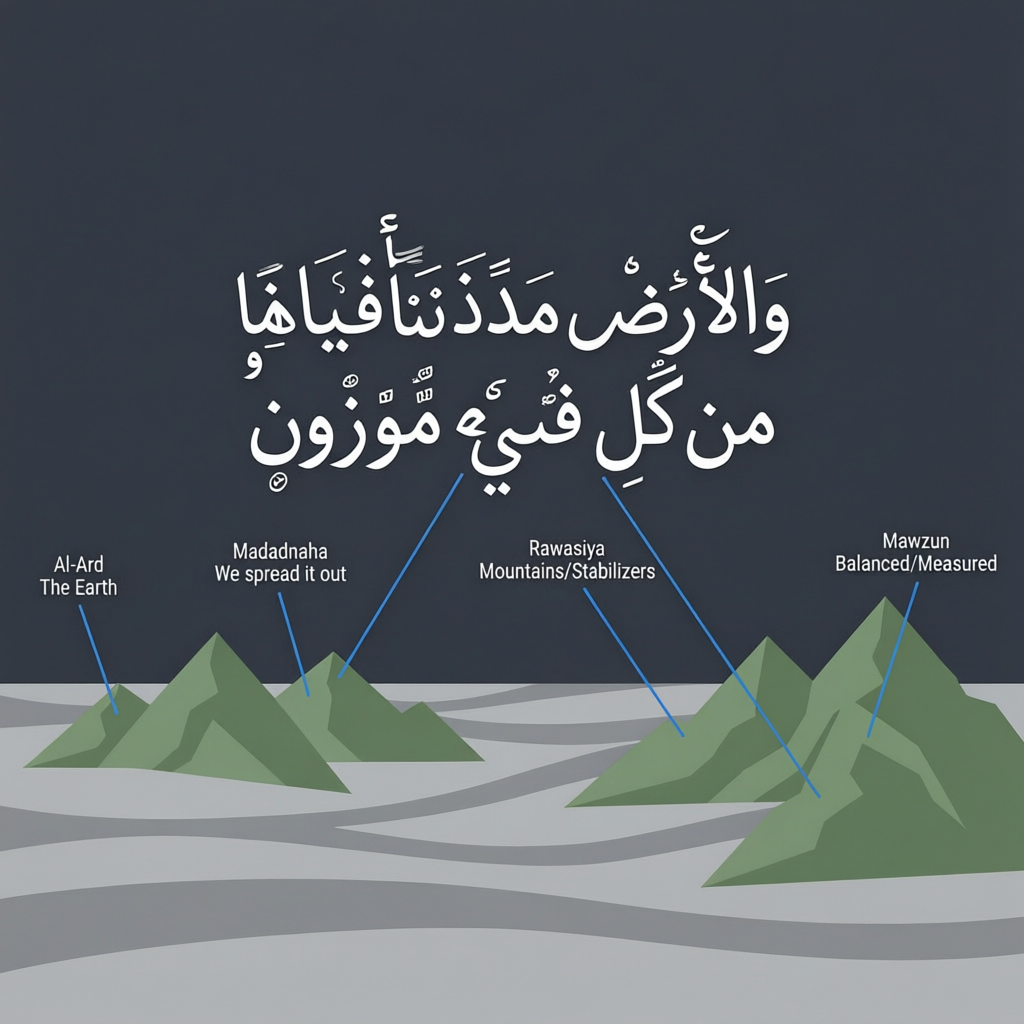
The verse most frequently cited to support the claim that the Quran teaches a flat Earth is 15: 19. In Arabic, it reads. وَالْأَرْضَ مَدَدْنَاهَا وَأَلْقَيْنَا فِيهَا رَوَاسِيَ وَأَنبَتْنَا فِيهَا مِن كُلِّ شَيْءٍ مَّوْزُونٍ.A literal translation is. And the earth We spread it out, and cast therein firm mountains, and caused to grow therein every balanced thing. The key word is مَدَدْنَاهَا (madadnāhā), derived from the root م-د-د (m-d-d), which carries the core meaning of to extend, stretch, spread, or expand. In classical Arabic, this verb does not inherently imply a flat surface; it can describe extending something in any direction, such as unrolling a carpet or stretching a rope. The context of the verse immediately connects this spreading with making the earth habitable. Casting mountains to stabilize it and causing vegetation to grow. This suggests the focus is on the earth's provision for life, not its geometric shape. To understand the nuance, we must examine how the same root is used elsewhere in the Quran.
The Root م-د-د Across the Quran: Consistency and Range
The root م-د-د appears in various forms throughout the Quran, and its usage consistently conveys the idea of extension, provision, or abundance, never a specific shape. For example, in 2: 61, Allah says he will extend (يَمُدُّهُم) for the transgressors in their rebellion. In 71. 12, and extend you (يُمْدِدْكُم) with wealth and children. In 26. 132, He extended you (أَمَدَّكُم) with livestock and children.These verses use the same root to describe God's provision and expansion of blessings, not literal physical stretching. In 13. 3, the earth is described as spread out (مَدَّهَا) alongside the creation of mountains and rivers.Once again, the pairing with mountains suggests a habitable landscape, not a flat disk. In 79: 30, a parallel passage uses a different verb. دَحَاهَا (daḥāhā), which lexically means He spread, smoothed, or extended it. The fourteenth-century scholar Ibn Kathir, in his tafsir, explained that this means He made the earth spread out for dwelling. No classical commentator interpreted these verses as teaching flatness. The consistent thread is that the earth was made spacious and livable, not that its shape is flat. The Quran itself says in 55. 33 that the heavens and earth are bounded by regions (أَقْطَار), which implies an enclosed, structured cosmos, not a flat plane. The claim of flatness rests on an assumption about the verb مَدَّ, but the lexical evidence does not support that assumption.
Context, Scientific Understanding, and Logical Implications
The surrounding verses of 15: 19 reinforce that the passage is about God's signs of provision and power, not cosmology. Verse 15. 16 speaks of constellations in the sky; 15. 17 mentions protection from devils; 15:18 describes shooting stars; 15:19 (our verse) shifts to the earth; 15:20 adds that God provided livelihoods; and 15:21 says all treasures are with Him.The theme is divine provision and control. If the Quran intended to teach a flat Earth, it would need to explicitly state or consistently imply flatness across all relevant verses. Instead, other verses use language compatible with a round Earth, for example, 39: 5 describes God wrapping the night over the day and wrapping the day over the night (يُكَوِّرُ), a verb used for winding a turban, implying a spherical wrapping motion. The same verse says He created the heavens and earth in truth. In 31. 29, the alternation of night and day is attributed to God's design, without specifying a flat or round shape. The Quran never says the earth is flat in clear, unambiguous terms. The burden of proof lies on those who claim it does. To make that case, one must show that the Arabic word مَدَدْنَاهَا explicitly means made flat in a geometric sense, and that the context supports a flat-Earth cosmology. The evidence shows neither. The Quran describes the earth as spread out for habitation, which is a functional description, not a geometric one. This aligns with modern understanding of a spherical Earth being experienced as flat at local scales.
Conclusion: What the Evidence Shows
After examining the verse, the Arabic root, the context, and parallel passages, the claim that the Quran teaches a flat Earth is not supported by the evidence. The verb مَدَدْنَاهَا means We spread it out in the sense of making it spacious and habitable, not in the sense of a geometric flatness. The root م-د-د is used elsewhere for extension and provision, never for shape. The Quran's description of the earth in 79: 30 uses a different verb (دَحَاهَا) with similar meaning. Other verses like 39. 5 use wrapping language that suggests spherical motion. The Quran does not make a cosmological claim about the earth's shape; it focuses on its function as a dwelling place. The investigation demonstrates that the text does not contradict established science, and the accusation of flat-Earth teaching arises from reading modern assumptions into an ancient word. The reader is invited to verify these findings by examining the Quran directly, using the same tools. Primary Arabic, lexical analysis, and context. The evidence is there for anyone who looks.