The Popular Claim: Stars as Projectiles
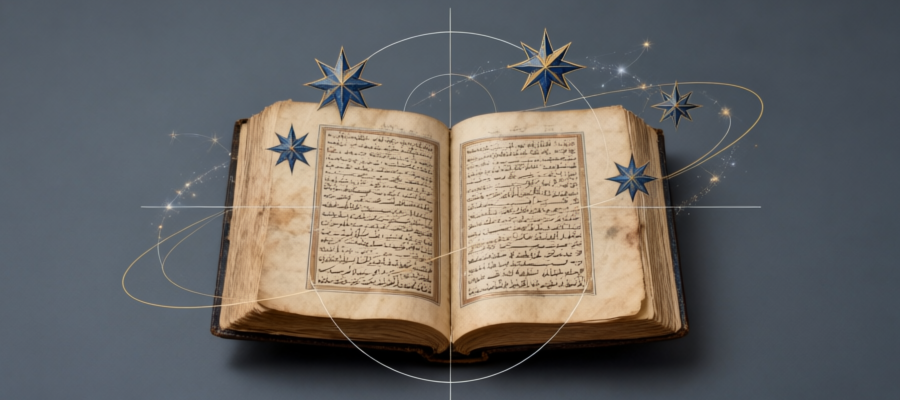
A common claim among critics of the Quran is that it teaches stars are physical missiles used to stone demons. This idea is often cited as an example of scientific error or primitive cosmology. The verse usually referenced is Surah Al-Mulk, verse 5: And indeed, We have adorned the nearest heaven with lamps and have made them missiles for the devils. (67. 5, Sahih International). At first glance, the phrase 'made them missiles' sounds like stars are being thrown like stones. But as with any investigation, we must examine the original Arabic and the immediate context before drawing conclusions.
The Arabic word translated as 'missiles' is 'rujuman' (رُجُومًا), from the root R-J-M (ر ج م). This root carries the meaning of stoning, pelting, or driving away. However, in Arabic, words can have multiple layers of meaning. The same root is used in the Quran for 'stoning' in the legal sense (e.g., 11: 91), but also for 'conjecture' or 'guesswork' (e.g., 18. 22). So the word itself does not automatically imply a physical projectile. The context and the broader usage in the Quran will determine the precise meaning.

Also, the verse is not talking about all stars. It says the nearest heaven (al-samaa al-dunya), the lowest heaven, which is adorned with 'lamps' (masabih). The word 'masabih' (مَصَابِيح) is plural of 'misbah', meaning a lamp or a source of light. This is the same word used for the sun in 71: 16. And made the moon therein a light, and made the sun a lamp (siraj). So the 'lamps' of the nearest heaven are luminous objects, not solid rocks.
Critics often ignore the word 'adorned' (زَيَّنَّا) at the beginning of the verse: We have adorned the nearest heaven with lamps. The primary purpose of these lamps is decoration, not warfare. The 'stoning' function is secondary, and it applies specifically to the 'nearest heaven', not the entire universe. This distinction is crucial because it suggests the 'missiles' are not the stars we see in the night sky (which are in various heavens), but rather specific luminous objects in the lowest heaven.
So the initial evidence points to a figurative or specialized meaning. But we need to look at other verses that describe the same phenomenon to build a fuller picture.
What Do Other Verses Say About Demons and the Heavens?
The Quran mentions the stoning of demons in several places. In Surah Al-Hijr, verses 16-18: And We have placed within the heaven great stars and have beautified it for the observers. And We have protected it from every devil, accursed. Except one who steals a hearing, and there pursues him a clear burning flame (15. 16-18). Here, the word used for 'burning flame' is 'shihab' (شِهَاب), which means a meteor or a shooting star, not a fixed star. This is a different term from 'kawkab' (star) or 'najm' (star). A 'shihab' is a transient flash of light in the sky, not a permanent celestial body.
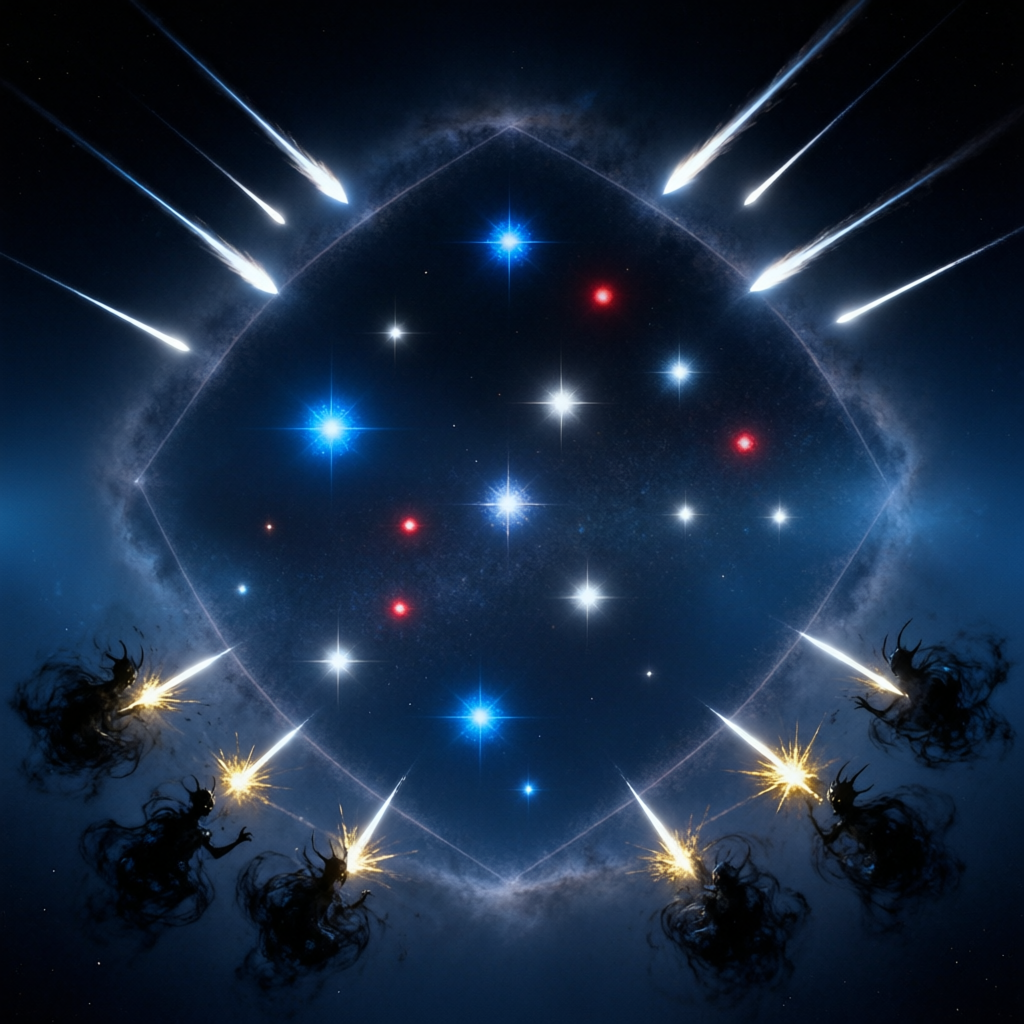
Similarly, in Surah As-Saffat, verses 6-10: Indeed, We have adorned the nearest heaven with an adornment of stars. And as protection against every rebellious devil. They cannot listen to the exalted assembly, and they are pelted from every side. Repelled; and for them is a constant punishment. Except one who snatches a fragment, and he is pursued by a piercing flame (37. 6-10). Again, the 'piercing flame' (shihab thaqib) is a meteor, not a star.
So the consistent picture is that the 'missiles' are not the fixed stars (nujum/kawakib) but rather meteors or shooting stars (shihab). The 'lamps' of 67: 5 are likely these same meteors, luminous objects that adorn the nearest heaven and also serve to drive away eavesdropping devils. This makes perfect sense observationally. Meteors appear as bright streaks in the sky, they are in the Earth's atmosphere (the nearest heaven), and they can be seen to 'chase' something across the sky.
But what about the word 'rujuman'? Could it be metaphorical? In Arabic, the phrase 'rujuman bi al-ghayb' means 'to conjecture about the unseen' (e.g., 18: 22. They will say, [They were] three, the fourth of them being their dog; and they will say, [They were] five, the sixth of them being their dog, guessing (rujman) about the unseen). This shows that the root R-J-M can mean 'to drive away' or 'to repel' in a figurative sense. So 'rujuman' could mean 'a means of repelling' the devils, not necessarily physical stones.

However, the other verses clearly mention a 'flame' (shihab) pursuing the devils. This indicates a physical phenomenon, but it is a meteor, not a star. The Quran Also describes a specific mechanism: devils attempt to steal information from the heavens, and they are chased away by meteors. This is not a statement about the composition or purpose of all stars.
We must also consider the possibility that the 'lamps' of 67: 5 are the fixed stars that appear in the night sky, and the 'missiles' are separate entities, perhaps the meteors mentioned elsewhere. The Arabic grammar of 67. 5 could be interpreted as having two separate clauses. We have adorned the nearest heaven with lamps, and We have made them missiles for the devils. The pronoun 'them' (haa) could refer back to the 'lamps' or to an implied object. But the parallel verses suggest that the 'missiles' are the meteors, not the lamps themselves.
To resolve this, let's examine the word 'masabih' (lamps) in other Quranic contexts.

Lexical and Contextual Analysis of 'Lamps' and 'Missiles'
The word 'misbah' (lamp) is used in the Quran for the sun in 71: 16. And made the moon therein a light (noor), and made the sun a lamp (siraj). Notably, 'siraj' is a different word from 'misbah', though both mean a source of light. In 25. 61, Allah says. Blessed is He who has placed in the heaven great stars (buruj) and has placed therein a lamp (siraj) and a moon giving light. Here, 'siraj' refers to the sun. So 'lamp' in the Quran can refer to a celestial light source, but not specifically to a fixed star.
In 67: 5, the word 'masabih' is plural. Could it refer to planets? Some classical commentators like Ibn Abbas and Qatada said the 'masabih' are the stars (but not the fixed stars we see at night, but rather the 'nearest heaven' stars which are meteors). Other commentators said they are 'shooting stars' (shuhub). Al-Tabari, the great mufassir, explained that the 'lamps' are the stars that adorn the sky, and the 'missiles' are what the devils are chased with, which are the flames (shuhub) that break off from them. This interpretation reconciles the two. The 'lamps' are the fixed stars, and the 'missiles' are meteors that appear to come from them.
Modern critics often assume that the Quran claims stars are thrown at demons. But this ignores the careful distinction the Quran itself makes. In 15: 18, the devil is pursued by a 'shihab mubin' (clear flame), not a star. In 37. 10, it is a 'shihab thaqib' (piercing flame). The word 'shihab' never refers to a fixed star in the Quran. It is always a meteor.
Also, the purpose of these meteors is not to punish the devils but to prevent them from eavesdropping on the heavens. In 72: 8-9, the jinn say. And we have sought [to reach] the heaven but found it filled with strong guards and burning flames. And we used to sit in positions for hearing, but whoever listens now finds for him a burning flame lying in wait. This confirms that the 'flames' are guards that block eavesdropping, not weapons for random stoning.
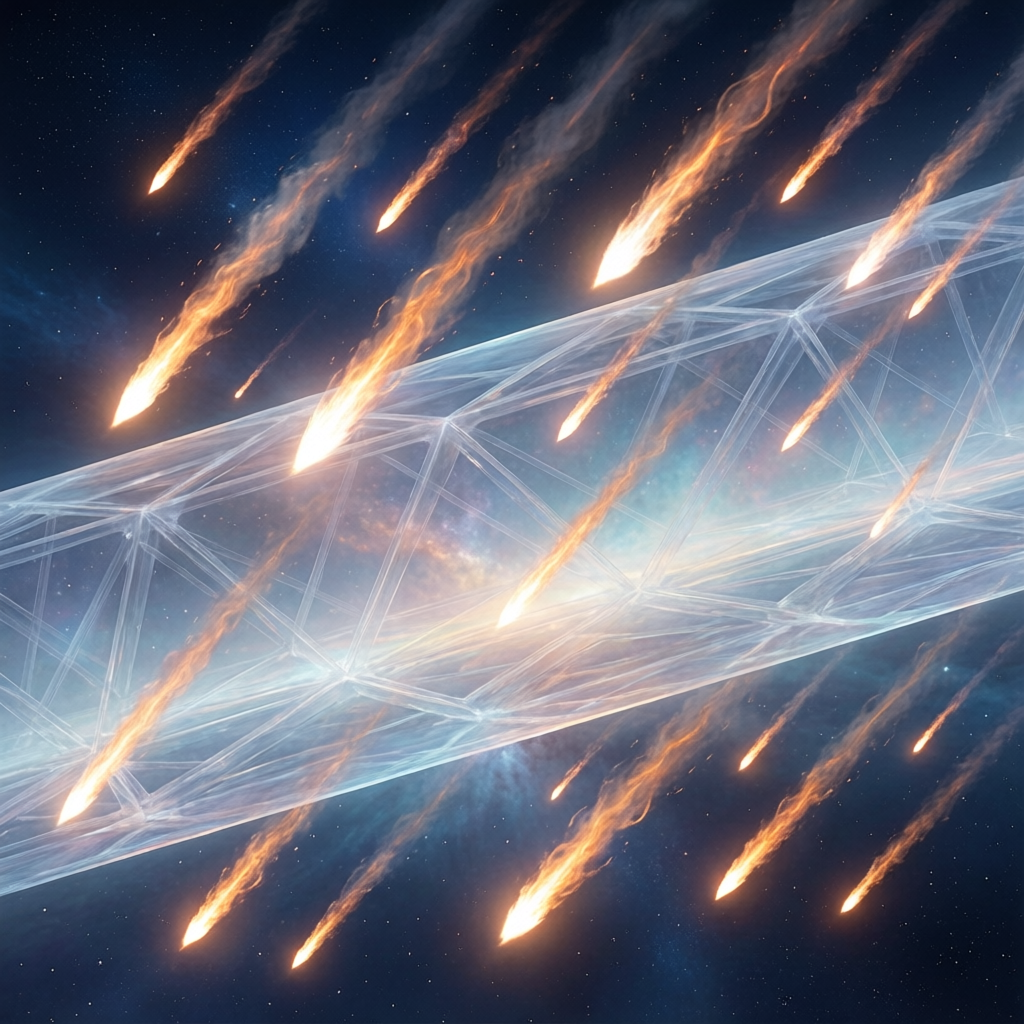
Also, the claim that the Quran teaches stars are missiles for stoning demons is a misinterpretation. The Quran describes meteors as a barrier to protect the heavens from spiritual eavesdroppers. This is a metaphysical claim, not a physical description of stellar composition. It is comparable to the concept of a 'force field' or 'guard' protecting the divine realm.
But does this contradict science? Not necessarily. The Quran does not specify the material nature of these 'flames'; it only says they are observed as shooting stars. Science explains meteors as small particles burning up in Earth's atmosphere. The Quran does not deny this; it only adds a metaphysical layer, that these same phenomena serve to repel devils. There is no logical contradiction.
Finally, the word 'rujuman' (missiles) can also be interpreted as a verbal noun meaning 'stoning', the act of throwing. In 67:5, the phrase 'ja'alnaha rujuman' means 'We made them (something used for) stoning.' This does not require the objects to be solid rocks; meteors are fiery projectiles. The usage is consistent with the Arabic language.

the Quran's description of stars and meteors is coherent and internally consistent. The apparent problem vanishes when the text is examined in its original language and full context.