The Claim: A Blurred Distinction
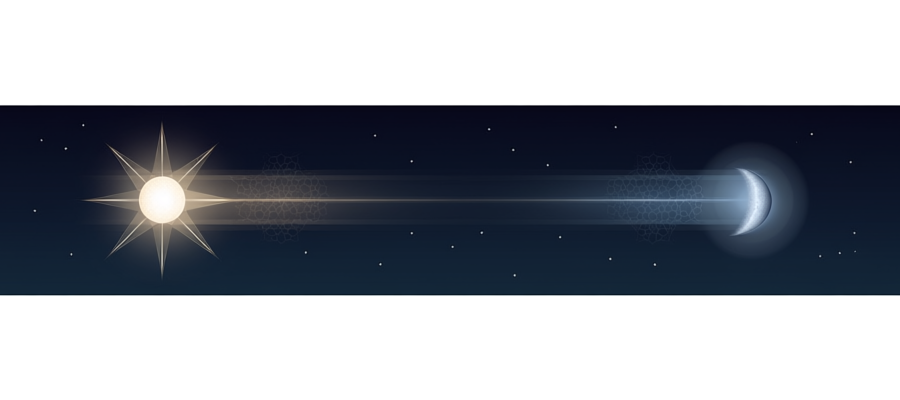
A common criticism leveled against the Quran is that it confuses the nature of the sun and the moon. The charge goes something like this: in verse 71:16, the Quran says God made the moon a 'light' (nur) and the sun a 'lamp' (siraj). Critics argue that this is scientifically inaccurate because the moon does not produce its own light; it merely reflects the light of the sun. By calling both 'lights' in some verses, they claim, the Quran fails to distinguish between a luminous body and a reflective one.
But is this accusation fair? To answer that, we must go directly to the Arabic text of the Quran. The words used for the sun and moon are not interchangeable. The Quran uses distinct terms for each: 'siraj' for the sun and 'nur' for the moon in 71:16. However, critics point to other verses like 25:61, where both the sun and moon are described as 'nur.' Does this create a contradiction? Or does the Arabic resolve the issue?
This is not a matter of opinion or apologetics. It is an investigation of the evidence. The Quran itself invites this kind of scrutiny: 'Then do they not reflect upon the Quran? If it had been from other than Allah, they would have found within it much contradiction' (4:82). So we take that challenge seriously. We examine the lexical meaning of the key words, the context of each verse, and the overall usage of these terms throughout the Quran.
Let us begin by laying out the specific verses in question. Verse 71:16 states: 'And made the moon a light (nur) therein, and made the sun a lamp (siraj)?' Verse 25:61 says: 'Blessed is He who has placed in the sky great stars and placed therein a lamp (siraj) and a moon giving light (munir).' At first glance, both verses use 'siraj' for the sun and a derivative of 'nur' for the moon. So where is the confusion?
The confusion arises only if one assumes that 'nur' always means 'self-generated light.' But that assumption is not supported by Arabic lexicography. Classical Arabic dictionaries, such as Lisan al-Arab, define 'nur' as 'the radiance that is perceived by the eye, and it may be from a source or reflected.' The word 'nur' does not inherently specify the origin of the light; it simply refers to the luminous appearance.
In contrast, 'siraj' is defined as 'a lamp that burns and gives light from itself'—in other words, a self-illuminating source. This is a crucial distinction. When the Quran calls the sun a 'siraj,' it highlights that the sun produces its own light. When it calls the moon a 'nur,' it describes the moon as a body that gives light, without specifying the source. This is consistent with the scientific fact that the moon's light is reflected, because the word 'nur' covers both direct and reflected light.
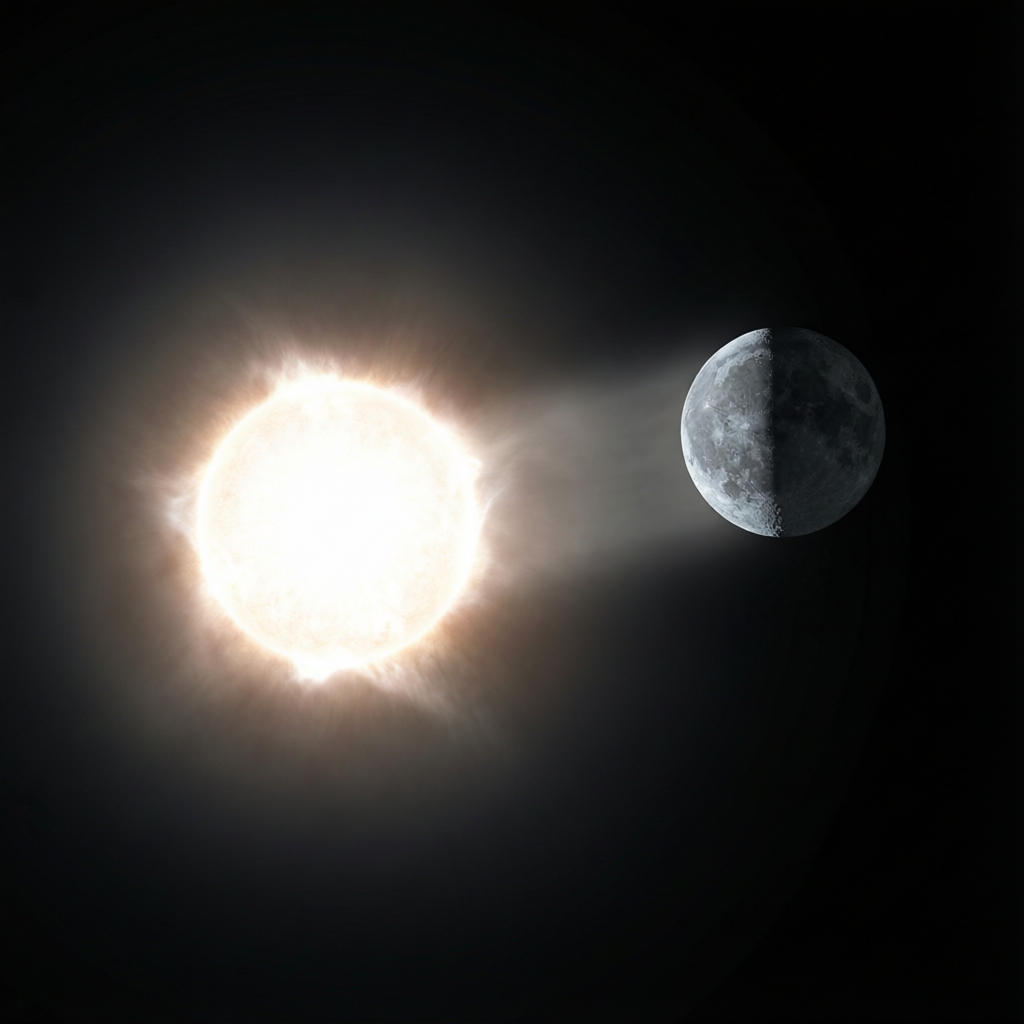
But critics might respond that in verse 25:61, the moon is called 'munir,' which is derived from the same root as 'nur' and means 'giving light.' This again does not specify the origin. The point is that the Quran consistently uses different terms for the sun and moon, and never once calls the moon a 'siraj.' If the Quran were truly confused, we would expect to find the moon described as a 'siraj' at some point—but we do not.
This lexical evidence alone refutes the claim of confusion. However, the investigation does not stop here. We must also consider the broader context of these descriptions within the Quran's cosmology and see if any other verses use different language. This will be the focus of the next section.
Lexical Analysis: Siraj vs. Nur
To understand the precision of the Quran's language, we need to examine the Arabic roots in detail. The word 'siraj' (سراج) appears in the Quran four times: 71:16, 25:61, 78:13, and 33:46. In all cases, it refers either to the sun or to a metaphorical lamp. The root S-R-J means 'to shine' or 'to illuminate,' and it specifically connotes a source of fire or light that is self-generated. Classical lexicographer Ibn Manzur in Lisan al-Arab writes: 'Al-siraj: the lamp that gives light by burning oil or the like.' This is not a passive reflector.
On the other hand, the word 'nur' (نور) appears in many verses. Its root N-W-R means 'to be bright' or 'to give light,' but it does not specify the mechanism. In the Quran, 'nur' is used for the moon, for fire, for guidance, and even for God Himself (24:35). The word 'nur' is flexible: it can refer to light that is generated or reflected. The moon is called 'nur' because it gives light, not because it generates it.

Furthermore, the Quran uses the word 'munir' (منير) for the moon in 25:61 and for the sun in 25:61? Actually, in 25:61, it says 'siraj' for the sun and 'qamaran munira' (a moon giving light). The word 'munir' is the active participle from the same root as 'nur.' It means 'giving light' or 'illuminating,' again without specifying source. If the Quran wanted to say the moon produces its own light, it could have used 'siraj'—but it never does.
Let us examine every instance where the Quran describes the sun and moon together. In 10:5, it says: 'It is He who made the sun a shining light (diya') and the moon a light (nur).' The word 'diya'' is another term for light, but it is derived from the root D-W-', which means 'to shine brightly' and often implies a source of light. Again, the sun is given a term that emphasizes its luminous power, while the moon is given the general term 'nur.' This pattern is consistent.
Critics might object that in 10:5, the sun is called 'diya'' and the moon 'nur,' but 'diya'' is not the same as 'siraj.' However, both terms share the connotation of being a source. 'Diya'' is used for the sun in 10:5 and for the blazing fire in 27:8. The point is that the Quran does not simply use one word for both celestial bodies. It reserves distinct vocabulary for the sun, whether 'siraj' or 'diya',' and uses the more general 'nur' for the moon.
This lexical precision is not accidental. It reflects a careful choice of words that aligns with observable reality: the sun is a self-luminous body, while the moon shines by reflection. The Quran never claims otherwise. The charge of confusion evaporates once the Arabic is examined directly.
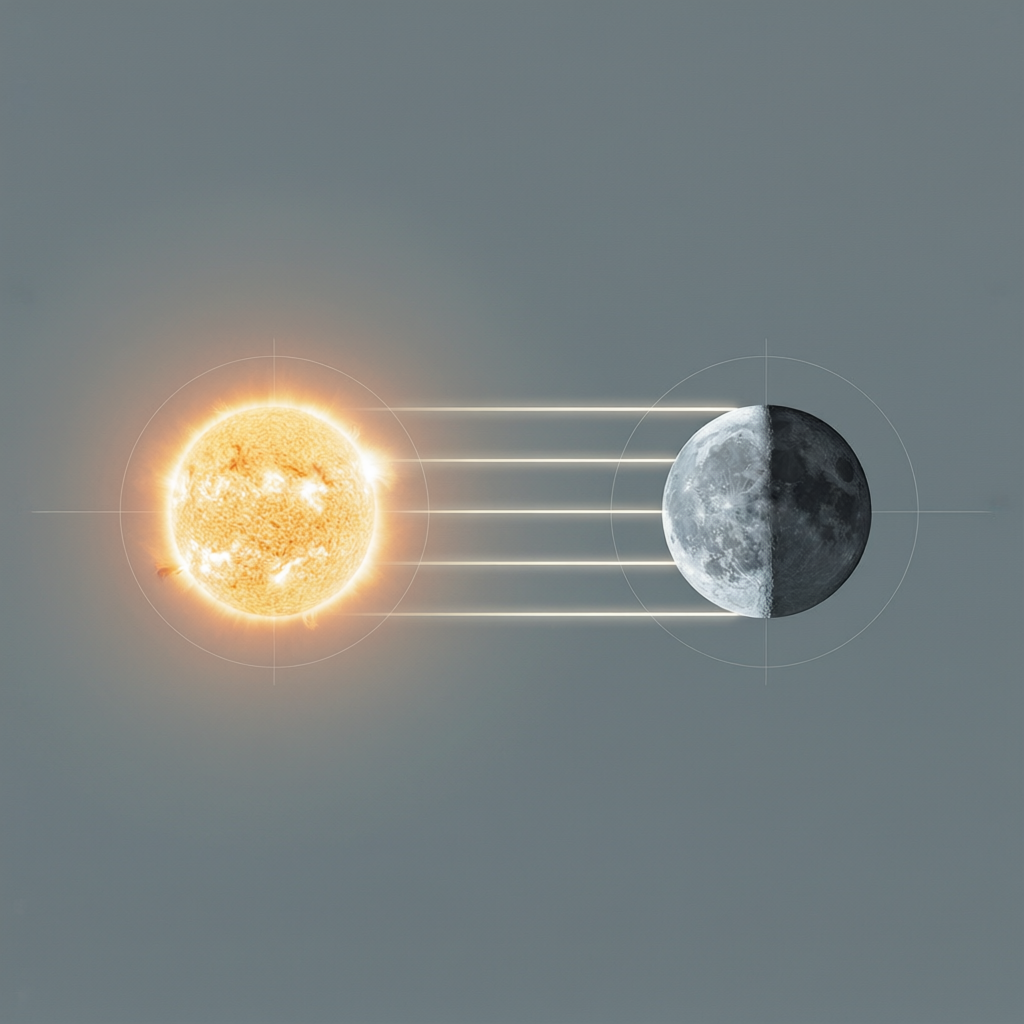
Moreover, the Quran's description of the moon as 'nur' is perfectly consistent with how we perceive the moon. We say 'moonlight' in English, even though we know it is reflected sunlight. The word 'light' in English does not distinguish source unless specified. Similarly, 'nur' in Arabic is a general term. The Quran uses it appropriately for the moon's appearance.
Thus, the evidence from the Arabic lexicon is clear: the Quran distinguishes the sun as a self-illuminating source (siraj/diya') and the moon as a luminous body (nur/munir). No verse contradicts this. The claim of confusion is based on a superficial reading that ignores the specific connotations of the Arabic words. The Quran's language is both scientifically and linguistically sound.
Addressing the Objection: Are Both Called 'Nur' in Some Verses?
Some critics point to verse 25:61, which says 'Blessed is He who has placed in the sky great stars and placed therein a lamp (siraj) and a moon giving light (qamaran munira).' They argue that here the moon is called 'munir,' which is from the root of 'nur,' and the sun is called 'siraj.' So there is no problem. But the objection often shifts to verses like 71:16, where the moon is 'nur' and the sun is 'siraj.' Still no problem. So where exactly is the confusion?
The real challenge comes from a different angle: some claim that the Quran calls the moon 'nur' and the sun 'siraj' but then also uses 'nur' for the sun in verses like 10:5? Actually, 10:5 says 'ja'ala al-shamsa diya'an' (made the sun a shining light) and 'al-qamara nuran' (the moon a light). So the sun is called 'diya',' not 'nur.' Others might refer to 25:61 again, but the sun is 'siraj,' not 'nur.' In fact, I challenge anyone to find a single verse where the sun is called 'nur' in the Quran. It does not exist.
Let me state this clearly: the Quran never calls the sun 'nur.' It calls the sun 'siraj' or 'diya'.' Both terms emphasize being a source of light. The moon is called 'nur' or 'munir,' which are terms for light without specifying source. This is a consistent pattern across all relevant verses. Therefore, the claim that the Quran blurs the distinction is false.
But what about the argument that 'nur' is applied to both in some verses? For example, in 24:35, 'Allah is the Light (nur) of the heavens and the earth.' Here, 'nur' is used for God, but that is metaphorical. In the same verse, a lamp (mishkat) is described, but that lamp is called a 'misbah' (lamp) and 'zujajah' (glass). The word 'nur' appears multiple times in that verse, but it is referring to the light emitted, not the lamp itself. So again, 'nur' is the effect, not the source.
When the Quran wants to talk about a source of light, it uses words like 'siraj,' 'diya',' 'misbah.' When it talks about the light itself, it uses 'nur.' The moon is a light (nur) because it gives light. The sun is a lamp (siraj) because it generates light. This distinction is maintained throughout the Quran.
Thus, the objection that the Quran confuses the sun and moon is not supported by the Arabic text. The evidence shows a precise, consistent use of vocabulary that aligns with observable reality. The Quran is not a science textbook, but its descriptions are accurate. This investigation demonstrates that the text is coherent and free from the alleged contradiction.
In conclusion, the reader is invited to verify this for themselves. Open the Quran, examine the Arabic of 71:16, 25:61, 10:5, and 78:13. Check the lexicons. The pattern is clear. The truth is in the text.