Introducing the Investigation: What Does the Root k-t-b Actually Show?
You've heard the Qur'an mentions 'writing' hundreds of times, but does that actually prove anything about its historical context? The claim often runs: a text that talks about writing so frequently must have emerged in a literate environment, and therefore the Qur'an's own vocabulary betrays a 7th-century Arabian setting. That is an inference, not a fact. Before we accept it, we need to separate what the text itself says from what commentators add.
The Arabic root k-t-b, from which we get kataba, 'to write,' appears throughout the Qur'an in forms like kitāb (book), kataba (he wrote), and maktūb (written). The exact count varies with counting conventions, but the root is undeniably frequent. The question, however, is not how many times the root occurs, but what the text actually claims about writing. Does the Qur'an ever claim that its own community was literate? Or does it repeatedly distinguish between an oral revelation and a written scripture?
We must begin with the primary evidence: the Qur'an itself. The root k-t-b appears in verses such as 2. 2, which describes the Qur'an as 'thālika l-kitābu lā rayba fīhi,' meaning 'This is the Book about which there is no doubt.' Here 'book' does not necessarily refer to a physical codex; it signifies a complete revelation, whether delivered orally or in written form. Classical Arabic lexicons, such as Lisān al-ʿArab, give the root's core sense as 'gathering' or 'joining together', a written text gathers letters into words, and a divine decree gathers events into a determined whole.

So the presence of the root alone cannot settle questions of historical context. It can only show that the Qur'an repeatedly uses a vocabulary of writing to describe revelation, law, and destiny. That observation is textual fact. The inference that this implies a specific social or historical setting is a separate claim that must be tested against other evidence, beginning with the earliest manuscripts.
In this investigation, we will examine the root k-t-b in its literal occurrences, then turn to the physical manuscripts that survive from the first centuries of Islam. We will consider what carbon dating actually reveals about the Birmingham manuscript, often cited as the 'oldest Qur'an manuscript found.' The goal is not to prove or disprove any hypothesis in advance; it is to follow the evidence and see whether the writing vocabulary of the Qur'an corresponds to the material record.
What Does the Text Say About Writing? Moving Beyond Frequency Counts
To move beyond frequency counts, we must ask a more precise question: in what contexts does the Qur'an use the root k-t-b? One clear pattern is the description of revelation itself as a 'kitāb.' In 2. 2 and many other verses, the Qur'an calls itself a book even though it was revealed progressively in oral form. This usage does not require that a physical volume existed at the moment of revelation; it underscores the concept of a complete, authoritative message.
Another pattern is the mention of written records of deeds. Verse 18: 49 speaks of the 'kitāb' in which every action is recorded, and 83. 9 refers to 'kitābun marqūm,' a written record. Here the root conveys the idea of a definitive record, not a manual production process. The action of 'writing' belongs to God, as in 7. 156, where God says 'katabnā', 'We prescribed.' This theological use of k-t-b suggests that the root functions as a metaphor for divine determination, not as a description of human scribal activity.
There is also a recurring contrast between oral recitation and written scripture. Verse 75:16-17 instructs the Prophet not to hasten his tongue in recitation, promising that God will collect and recite it, implying an oral process of revelation. Meanwhile, 29. 49 states that the revelation is 'clear signs in the breasts of those who have been given knowledge,' distinguishing between internal knowledge and written transmission. These verses suggest that the primary medium was oral, with writing as a later, corroborating step.

So the text itself does not claim that its audience was predominantly literate. Instead, it frequently addresses 'those who can neither read nor write' (al-ummīyīn) as a distinct group, as in 3:20. This is a textual fact. The claim that the Qur'an's frequent use of k-t-b proves a literate Arabian society is an inference that goes beyond what the text states. It may be true, or it may not; we need external evidence to decide.
In short, the Qur'an's own usage distinguishes between written records, divine decrees, and the physical act of writing. Frequency alone cannot settle the historical question. We must now examine the material evidence from the earliest manuscripts to see what it can tell us about when and where the Qur'an was written down.
The Oldest Qur'an Manuscript Found: What Carbon Dating Actually demonstrates
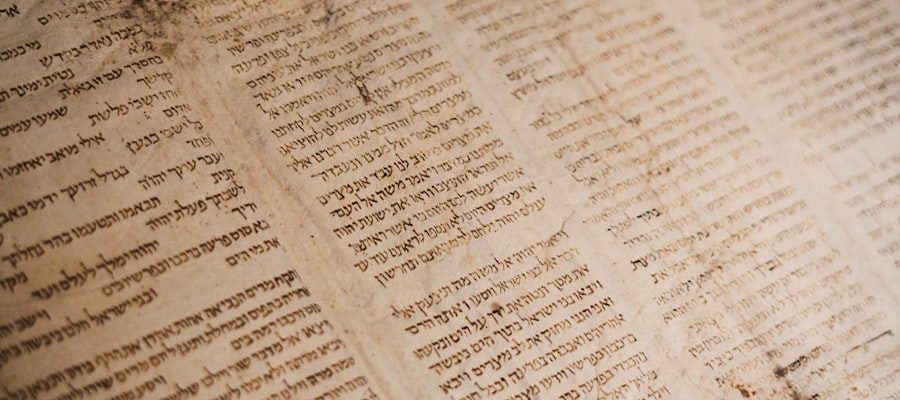
The most widely cited candidate for the 'oldest Qur'an manuscript found' is a set of parchment leaves held by the University of Birmingham, England. In 2015, the university announced that radiocarbon dating of two leaves placed them between 568 and 645 CE with 95.4% probability. That range straddles the traditional date of the Prophet Muhammad's death in 632 CE, meaning the manuscript could have been produced during his lifetime or shortly after. The announcement triggered global headlines claiming the world's oldest Qur'an had been discovered.
But we must read the dates carefully. Radiocarbon dating measures the age of the animal skin from which the parchment was made, not the date the ink was applied. There can be a gap of years or decades between the death of the animal and the writing event. Also, the dating range is statistical, not absolute; a 95.4% probability window is not a single year. The Birmingham samples fell largely within the expected range for early Islamic manuscripts, but they do not conclusively demonstrate a specific production date.
Another point often overlooked is that the Birmingham leaves share handwriting features with other early manuscripts, such as the Codex Parisino-petropolitanus, which scholars generally date to the mid-7th century. Paleographic analysis, the study of letter shapes and script styles, suggests a similar period. This corresponds to the carbon dates, but it does not prove that the manuscript was written in the Prophet's lifetime. It demonstrates that the text we have today closely parallels what was being copied in the first decades after the revelation.

Critically, the Birmingham manuscript contains verses from Surah 18 (Al-Kahf) and Surah 20 (Ta-Ha). Its text matches the standard Qur'anic text (the ʿUthmānic recension) with very minor orthographic variations that are expected in early copies. This correspondence is significant: it indicates that the Qur'anic text was transmitted with high fidelity already in the first century of Islam. The question of whether the manuscript is 'the oldest Qur'an' depends on definitions; it is certainly among the earliest surviving witnesses.
So the material evidence from the Birmingham manuscript does not force a single conclusion. It is consistent with the traditional narrative of early compilation, but it also allows for the possibility of a slightly later date. What it does show is that a manuscript that can be tested today contains essentially the same text as that recited today. That is a concrete result of investigation, not an inference.
Other Early Manuscripts and the Textual Corpus
The Birmingham leaves are not an isolated find. Scholars have identified dozens of early Qur'anic manuscripts from the first two centuries of Islam, including the Codex Ṣanʿāʾ 1, discovered in Yemen in 1972. This palimpsest features an undertext that differs from the standard ʿUthmānic text in certain spellings and even in a few verse sequences. Its carbon dating ranges from 578-669 CE, placing it in the same early period. These variant readings have fueled debates about the Qur'an's textual history.
However, a distinction must be made between the undertext of the Ṣanʿāʾ manuscript, which represents a non-standard tradition, and the vast majority of early manuscripts that conform to the standard text. The Birmingham manuscript, for example, demonstrates no such divergences. Scholars like François Déroche have emphasized that early codices exhibit a range of orthographic styles, but the consonantal skeleton remains consistent. This consistency is interesting given the absence of dotting in the earliest scripts, where many letters could be ambiguous.
The existence of variant manuscripts does not undermine the Qur'an's preservation narrative; rather, it enriches our understanding of how the text was transmitted. The standard text that emerged under Caliph ʿUthmān (r. 644-656) was a political and scholarly consolidation, not a new invention. The early manuscripts that predate or overlap with that process show that the underlying message was stable. The variations are mostly in spelling and dialectal pronunciation, not in substantive wording.

When we compare the writing vocabulary of the Qur'an with this material record, a logical coherence emerges. The Qur'an itself anticipates the importance of written preservation. Verses such as 80:11-16 describe the revelation as being in 'honored, raised, purified sheets, [written] by the hands of scribes who are noble and obedient.' This description matches the reality of parchment codices produced by professional scribes in the early centuries, a class of people the Qur'an acknowledges exists.
Also, the combination of internal textual references to writing and the external evidence of early manuscripts creates a consistent picture. The Qur'an speaks of writing as a means of preserving revelation, and the oldest physical evidence demonstrates that such writing was undertaken with interesting care. The investigation does not declare a single theory certain; it simply notes that the evidence points to an early, written record that closely matches today's text.
Addressing the Common Skeptical Objection: Does Writing Prove Borrowing?
A frequent skeptical argument runs as follows: since the Qur'an mentions writing so often, and since the earliest manuscripts appear within a century of the claimed revelation, the Qur'an must have been influenced by earlier scriptural traditions, most notably Jewish and Christian texts, which also emphasized written scripture. This is an inference from similarity to dependence, which violates the basic rule of evidence that similarity alone does not prove borrowing.
We must also note that the Qur'an itself acknowledges the existence of earlier scriptures. It calls the Torah and Gospel 'books' (kutub) and urges its readers to confirm them. If the Qur'an's vocabulary overlaps with earlier scriptures, that is expected, because it claims to be a continuation and confirmation of the same divine message. This is a direct textual claim, and it cannot be dismissed as anachronistic without evidence.
Also, the direction of influence cannot be determined by vocabulary alone. The Qur'an could have drawn from a shared cultural milieu that included both oral and written traditions, or it could have arisen independently and coincidentally used similar terms. The internal consistency of the Qur'an's own writing references, which we have outlined, suggests a coherent conceptual system rather than a patchwork of borrowed phrases.

The material evidence from the earliest manuscripts also speaks against a late, oral-only transmission theory. The physical copies we possess are too early and too consistent to support the idea that the Qur'an was transmitted purely by word of mouth for centuries before being written down. That theory applied to the Bible, but the Islamic case is different in kind.
Also, the skeptical objection that the Qur'an's writing vocabulary proves borrowing does not survive scrutiny. It mistakes a commonality of themes for evidence of dependence. The investigation demonstrates that the Qur'an's use of k-t-b is internally consistent, and the manuscript record supports a very early written tradition. The conclusion is not forced, but the evidence corresponds to the Qur'an's own self-description.
What Does This Mean for the Question of Authenticity?
At this point, we have separated the facts from the inferences. The root k-t-b appears throughout the Qur'an, but its usage is diverse: it refers to revelation, divine decree, records of deeds, and the physical act of writing. The text never claims that its audience was fully literate; in fact, it distinguishes 'the unlettered prophet' (al-nabī al-ummī) in 7. 157. This is internal textual evidence that should not be ignored.
The earliest manuscripts, including the Birmingham leaves, date to within a few decades of the traditional revelation period. Their content matches the standard text with only minor orthographic differences. This is a fact that must be weighed seriously. Radiocarbon dating gives a range, not a certainty, but even the most generous reading places these manuscripts within the first Islamic century.
When these two lines of evidence are combined, the textual references to writing and the physical copies, a coherent picture emerges. The Qur'an describes itself as a book that is both recited orally and written down. The material record demonstrates that writing did occur early and with high fidelity. This does not 'prove' divine origin by itself, but it does strengthen the case for the authenticity of the text as we have it today.
The broader themes that skeptics often raise, such as quran verses about mercy and forgiveness or the quran's description of the big bang, are separate investigations. But the root k-t-b investigation illuminates a foundational aspect: the Qur'an's relationship to its own written form. It is a text that insists on accurate transmission, and the early manuscripts corroborate that claim.
This investigation does not end with a definitive assertion. It ends with a clear-headed assessment that the evidence does not contradict the Qur'an's own narrative. If the Qur'an is right to call itself a 'preserved book' (15:9), the earliest manuscripts offer a concrete sign of that preservation. The reader is invited to weigh the evidence and investigate further, because the Qur'an itself repeatedly calls for reflection and verification.