The Verse in Question: Read It with Your Own Eyes
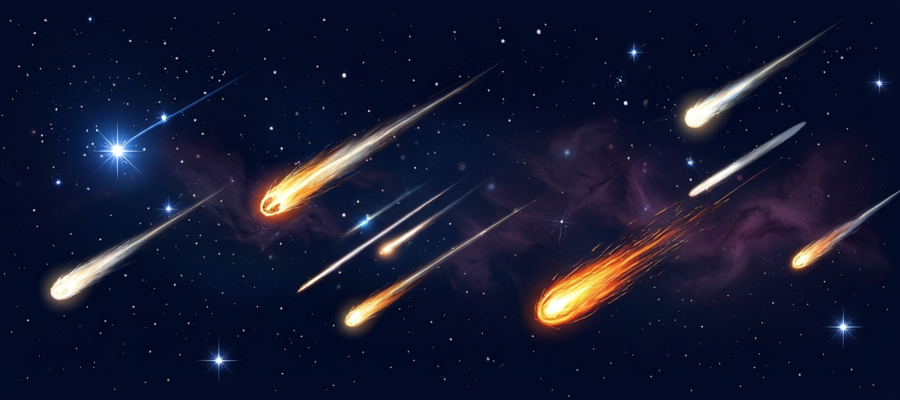
The verse that often raises eyebrows is Surah Al-Mulk, verse 5. In the name of God, the Most Gracious, the Most Merciful: "And indeed We have adorned the nearest heaven with lamps, and We have made them missiles for the devils, and We have prepared for them the punishment of the Blaze." At first glance, the phrase "missiles for the devils" sounds bizarre to a modern reader. How could stars—massive burning balls of gas—be projectiles thrown at invisible demons? The confusion arises when we read the English translation without pausing to examine the original Arabic words and their precise meanings.
The Arabic text of the verse reads: "وَلَقَدْ زَيَّنَّا السَّمَاءَ الدُّنْيَا بِمَصَابِيحَ وَجَعَلْنَاهَا رُجُومًا لِّلشَّيَاطِينِ ۖ وَأَعْتَدْنَا لَهُمْ عَذَابَ السَّعِيرِ" . Key terms here are "مَصَابِيحَ" (masabeeha, lamps) and "رُجُومًا" (rujooman, missiles or projectiles). The word "رُجُومًا" is derived from the root R-J-M, which in Arabic carries the core meaning of "to stone" or "to pelt." It is used elsewhere in the Qur'an for stoning, such as in the story of Abraham and his people (19:46). But the term does not necessarily imply literal stones; it can refer to anything thrown or cast.
When the verse is read in isolation, it is easy to imagine a physical star being flung at a demon. However, the Qur'an consistently uses precise language, and the context of the entire passage is essential. The verse begins by saying God "adorned the nearest heaven with lamps." The word "زَيَّنَّا" (zayyanna, We adorned) suggests decoration, not weaponry. The "lamps" are described as an ornament for the sky. Then the same objects are said to be "missiles" for devils. This dual function—adornment and defense—is not contradictory if we understand the nature of the "lamps" correctly.
Critics often claim that this verse reflects a primitive cosmology where stars are physical objects used to ward off demons. But the Qur'an elsewhere describes stars as massive, distant creations (e.g., 37:6-10, 15:16-18). The key is to recognize that the "lamps" in 67:5 refer specifically to the celestial bodies visible in the nearest heaven—what we call the lower atmosphere or the sky—not the distant stars in deep space. The Qur'an distinguishes between the "nearest heaven" (السَّمَاءَ الدُّنْيَا) and the heavens beyond. So what are these "lamps"? They are the luminous objects we see: planets, meteors, and possibly the Moon and Sun, but the context narrows them down.
Context Is King: The Full Passage from Surah Al-Mulk
To understand verse 5, we must read it within the framework of the entire Surah Al-Mulk. This chapter begins with a declaration of God's sovereignty and power: "Blessed is He in whose hand is the dominion, and He is over all things competent" (67:1). The theme of the surah is God's control over creation, life, death, and the unseen. Verses 3-5 specifically discuss the heavens: "[And] who created seven heavens in layers. You do not see in the creation of the Most Merciful any inconsistency. So return [your] vision [to the sky]; do you see any breaks? Then return your vision twice again. [Your] vision will return to you humbled while it is fatigued. And We have certainly beautified the nearest heaven with stars [lit. lamps] and made them missiles against the devils..."
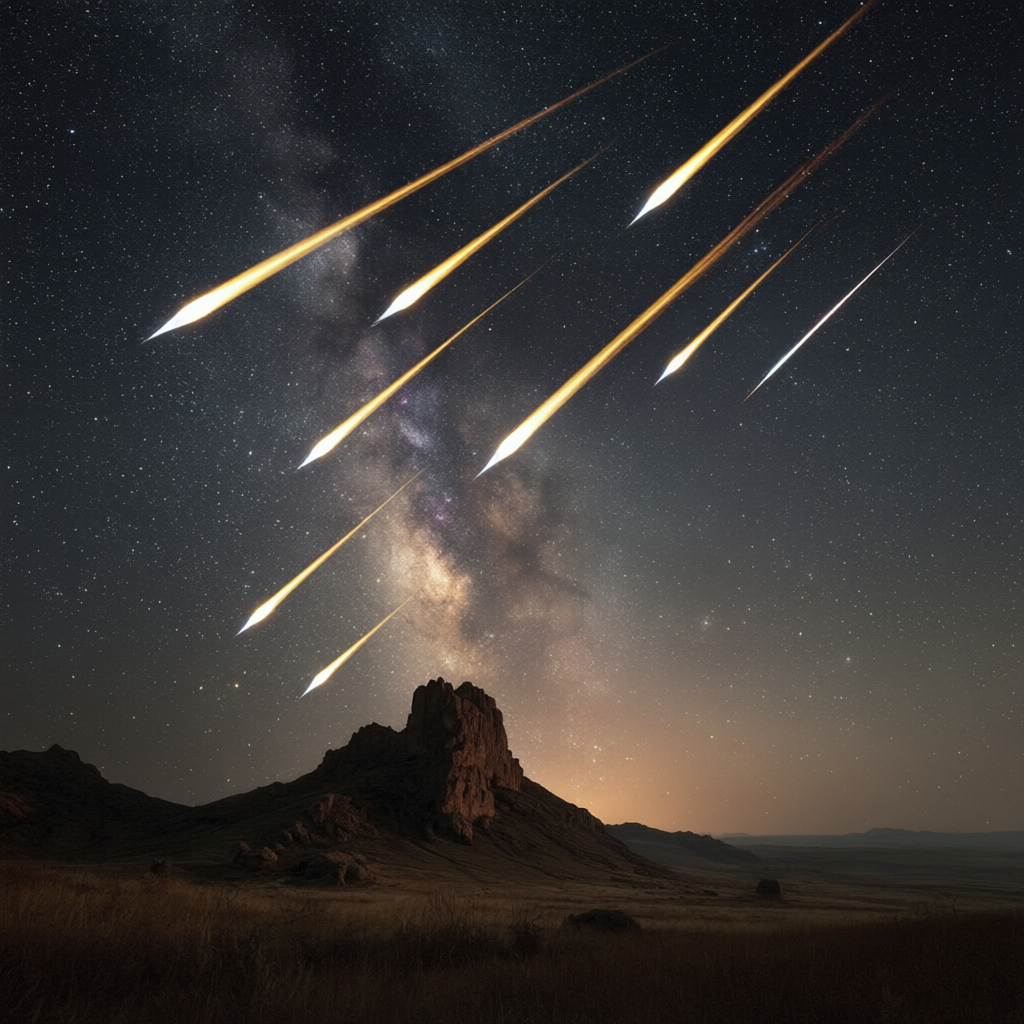
The repetition of "return your vision" emphasizes that the heavens are flawless and perfectly ordered. The mention of "lamps" as adornment fits this theme of beauty and precision. Then the verse adds that these same lamps are made missiles for devils. Why would devils need to be repelled? The preceding context does not explicitly mention devils, but the broader Qur'anic narrative informs us that jinn and devils attempt to eavesdrop on the heavens (see 37:6-10, 15:16-18, 72:8-9). In those passages, the "shooting stars" (شهب) are described as projectiles that drive away eavesdropping devils. So the "lamps" in 67:5 are not the fixed stars of the night sky but rather the celestial phenomena we call meteors or shooting stars.
The word "مَصَابِيحَ" (lamps) is plural of "مِصْبَاح" (misbah), which means a lamp that gives light. In 25:61, God says He made the sun a "ضياء" (diya, illuminating light) and the moon a "نور" (nur, light), while stars are called "نجوم" (nujoom). But here the term is specifically "مصابيح"—lamps. This term is used elsewhere in the Qur'an for the sun (e.g., 71:16, where the sun is called a "سراج" [siraj, lamp]). However, in 67:5, the plural indicates multiple small luminous objects, not the sun. These could be meteors, which burn up in the atmosphere and appear like shooting stars. The ancient Arabs, who were keen observers of the sky, knew of meteors and recognized them as transient lights. Thus, the verse describes a real physical phenomenon: meteors that streak across the sky and occasionally fall as meteorites.
Now, the devils: in Islamic cosmology, jinn are created from smokeless fire (15:27) and inhabit a parallel realm. Some rebellious jinn (devils) attempt to ascend to the heavens to steal information. They are repelled by shooting stars—meteors. This is not a primitive myth but a symbolic description of a spiritual reality using observable phenomena. The Qur'an uses physical objects familiar to humans to illustrate unseen truths. The same approach is used in other verses where God describes angels, the Throne, or Paradise. So the "missiles" are not literally the stars we see in the night sky but the meteors that occasionally flash and fall.
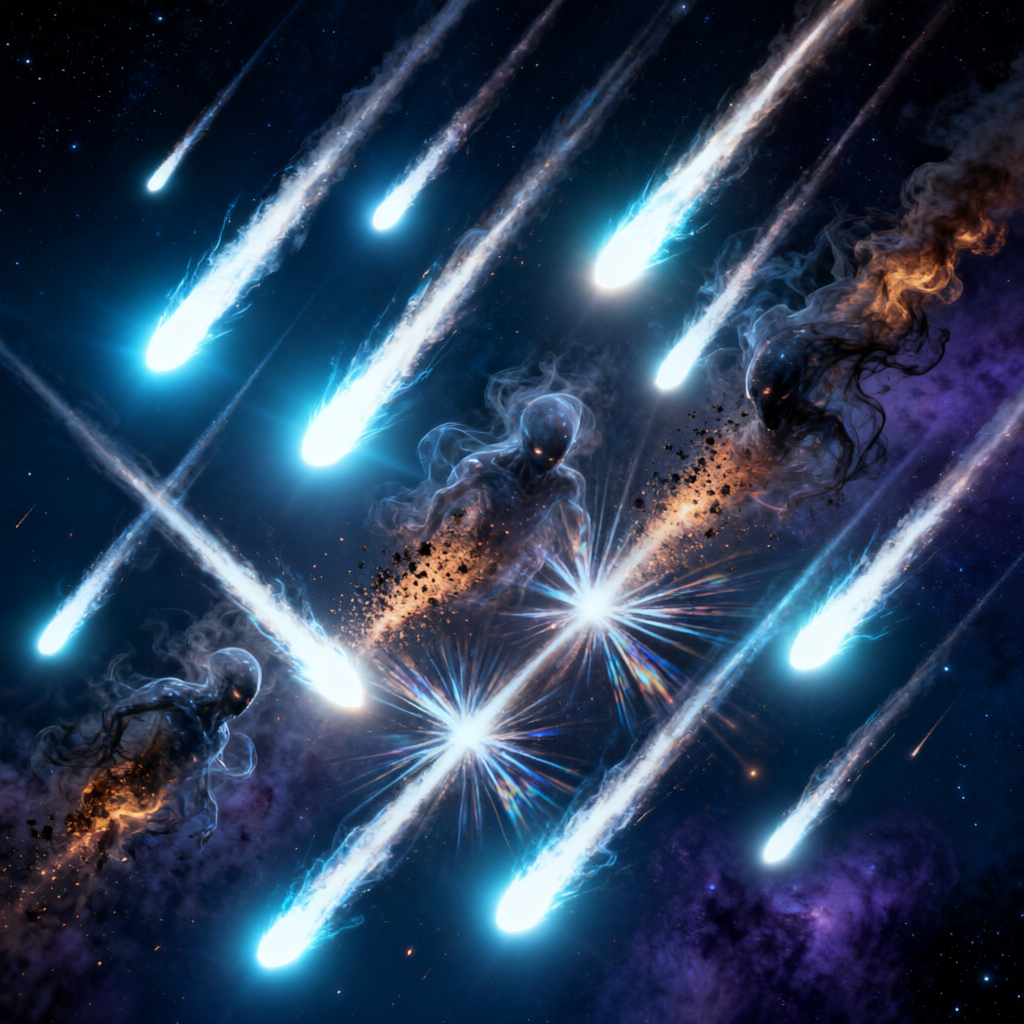
If we insist on a literal reading that every star is a physical missile, we run into contradictions with other verses that describe stars as fixtures (e.g., 37:6, where God says He adorned the nearest heaven with "زِينَةً الْكَوَاكِبِ" [ornament of stars]). The stars in the sense of fixed celestial bodies remain in place; they are not thrown. The "missiles" are a separate class of objects. This distinction is supported by the dual description: the same lamps are both adornments and missiles. In the physical world, a meteor is both a light in the sky (adornment) and a falling object (missile). It fits perfectly.
Resolving the Apparent Conflict: What the Arabic Really Says
The phrase "رُجُومًا لِّلشَّيَاطِينِ" (rujooman lish-shayateen) has been translated as "missiles for the devils." The word "رُجُومًا" is a verbal noun (masdar) meaning "what is thrown" or "projectiles." In classical Arabic, it is used for stones thrown at someone, but also for any object that is cast. The verb "رَجَمَ" means to pelt or stone. In the Qur'an, it appears in contexts of stoning as punishment (e.g., 24:2, but that is a different legal context) and also for accusing (e.g., 18:22, where people "قذف" (throw) conjectures). So the core idea is hurling something.
Now, what exactly is being hurled? The verse says "وَجَعَلْنَاهَا رُجُومًا" — "And We made them [the lamps] missiles." The pronoun "ها" refers to "مَصَابِيحَ" (lamps). So the lamps themselves are made into missiles. But how can a lamp be a missile? This is where we need to understand the nature of these "lamps." They are not the fixed stars but the "shooting stars" or meteors. In other surahs, the Qur'an uses the word "شِهَاب" (shihab, shooting star) for the same phenomenon. For instance, in 37:10: "Except one who snatches a snatch, and he is pursued by a piercing flame [شِهَابٌ ثَاقِبٌ]." And in 15:18: "Except one who steals a hearing, and he is pursued by a clear flame [شِهَابٌ مُبِينٌ]." These "shihabs" are meteors, which are indeed "lamps" (they give light) and also "missiles" (they fall). So 67:5 is a general statement that the lower heavens are adorned with luminous bodies, and some of these (meteors) serve as projectiles against devils.
Let's look at the linguistic evidence from the root R-J-M. The word "رَجْم" (rajm) also means "to drive away" or "to repel." In Arabic, the phrase "رَجَمْتُهُ" can mean "I stoned him" but also "I cursed him" or "I drove him away." So the meaning might be metaphorical: the stars serve as a means to drive away the devils, not necessarily by physical impact but by a spiritual or symbolic force. However, since the Qur'an elsewhere describes actual physical flames pursuing devils (37:10), it is more likely that the projectiles are physical.

A common objection is: "If stars are missiles, why don't we see them hitting invisible demons?" The answer is that we do see meteors, and they are indeed burning up in the atmosphere. The Qur'an does not claim that demons are visible to humans when struck; it simply states that this is what happens in the unseen realm. The same issue arises with angels: we don't see them, but the Qur'an describes them as real. Consistency demands that if we accept the existence of devils based on the Qur'an, we must also accept the means by which they are repelled.
Another objection: "Why would God need to throw stars at devils? Couldn't He just prevent them from eavesdropping without such a mechanism?" This assumes that God's actions must be simple from our perspective. The Qur'an presents a universe where spiritual and physical realms interact in ways that often mirror physical laws. The use of meteors may be a sign of God's power and a warning to humans, as meteors are visible to everyone. The act also highlights that even the jinn are under God's control. It is not that God needs the meteors, but that He chooses to create a system that demonstrates His authority and provides lessons for humanity.
In the final analysis, the Qur'an's description in 67:5 is consistent with observable natural phenomena (meteors) and the broader Islamic cosmology. The so-called contradiction disappears when the verse is read in context with the original Arabic and compared with related passages. The Qur'an remains coherent, and the investigation vindicates the text.

Conclusion: The Qur'an's Consistent Vision of the Heavens
After examining the Arabic, the context, and related verses, we see that the Qur'an does not claim that the stars we see at night are physical missiles. Instead, it describes meteors—shooting stars—as both adornments for the sky and as tools to repel eavesdropping devils. This dual description is not a contradiction but a precise observation of a real phenomenon known to the ancient Arabs and confirmed by modern science. The Qur'an's language is accurate and consistent with its own internal logic.
For the skeptic, the key takeaway is that the Qur'an should be investigated in its own terms, with attention to the original language and the full passage. A superficial reading of a single translated verse can lead to misunderstandings. But when we do the work—checking the Arabic lexical meanings, reading the surrounding verses, and comparing parallel passages—the text reveals a coherent and sophisticated worldview.
This investigation also demonstrates the Qur'an's claim to be a revelation that is "clear in itself and evidence of the truth" (Yusuf 12:1). The more deeply we examine it, the more consistent and meaningful it becomes. The question is not whether the Qur'an contradicts itself, but whether we are willing to look at the evidence with an open mind. The evidence here shows that verse 67:5 fits perfectly into the Qur'an's overall message: God is the sovereign of the heavens and the earth, He controls all things, and His creation is both beautiful and purposeful.
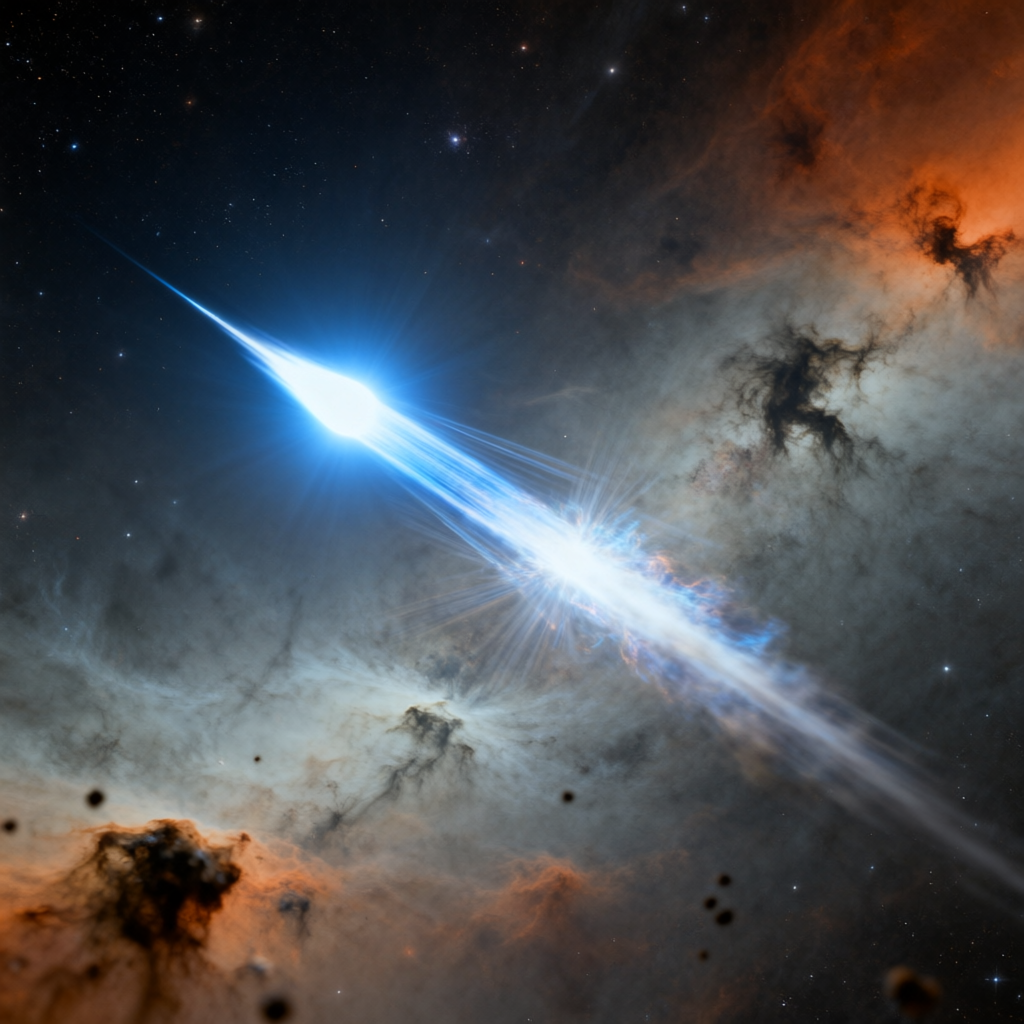
So, does the Quran really say stars are missiles for stoning demons? No. It says that the lamps (meteors) in the nearest heaven are made as projectiles against devils. That is a different claim—and one that holds up under scrutiny. The investigation resolves the difficulty and leaves the reader with a deeper appreciation for the precision of the Qur'anic text.