
The Verse in Its Full Context
To understand what the Quran says about testimony, we must begin with the text itself. Surah Al-Baqarah 2:282 is the longest verse in the Quran, dealing specifically with financial transactions on credit. The verse begins: 'O you who have believed, when you contract a debt for a specified term, write it down...' The context is immediately clear: this is not a general statement about all testimony, but a practical guideline for recording debts. The verse goes on to instruct that two men should serve as witnesses, and if two men are not available, then one man and two women. The wording is precise: 'And bring to witness two witnesses from among your men. And if there are not two men [available], then a man and two women from those whom you accept as witnesses.' The condition is explicit: the two-woman alternative is only when two men are not available. This is a contingency, not a default.
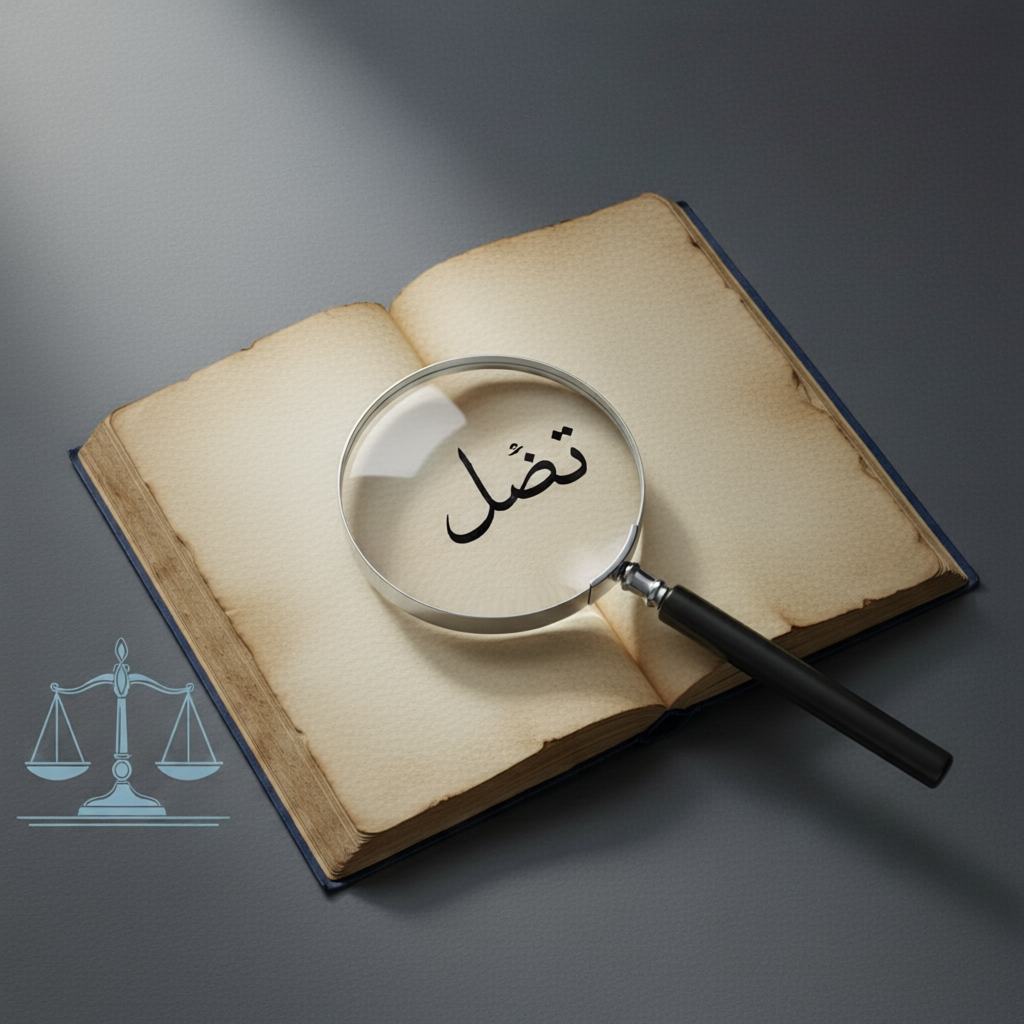
The verse continues with the reason: 'so that if one of them [i.e., the two women] errs, then the other can remind her.' The Arabic word used is 'tadhalla,' which literally means 'to stray' or 'to forget.' Importantly, this same root is used elsewhere in the Quran for both men and women. For example, in Surah Ta-Ha 20:115, Adam is described as having 'forgotten' ('nasī') a covenant, and in Surah Al-A'raf 7:53, people are described as having 'forgotten' ('nasū') the reminder. The concept of forgetfulness is a human trait, not a gendered one. The measure here is practical: in a largely illiterate commercial society, women were less familiar with financial transactions, so a second woman was recommended as a backup to ensure accuracy. This is not about inherent intellectual capacity, but about social experience and reliability in a specific context.

Furthermore, the verse explicitly states that the witnesses are to be 'those whom you accept as witnesses,' indicating that the community's trust in the individual's integrity is paramount. The gender dynamic is secondary to the goal of reliable documentation. The Quran reinforces this elsewhere: in Surah Al-Mumtahanah 60:12, the Prophet accepts the pledge of women directly without male intermediaries, showing that women's testimony and commitment are fully valid in matters of faith. Similarly, in Surah An-Nur 24:6-9, a woman's testimony alone can avert punishment against her husband's accusation. These examples demonstrate that the Quran does not universally devalue women's testimony; rather, it contextualizes it within the practical realities of seventh-century Arabian commerce.
Thus, when skeptics claim that 2:282 teaches women's testimony is worth half a man's, they are reading the verse outside its context. The verse does not say 'a woman's testimony is half a man's'; it says that when two male witnesses are unavailable, two women can substitute for one man to guard against forgetfulness in financial records. This is a procedural safeguard, not a theological statement about gender worth. The Quran itself, in the same verse, emphasizes the importance of written documentation and reliable witnesses, whether male or female. Ignoring this context leads to a distorted understanding that the text does not support.

Finally, it is crucial to note that Islamic jurisprudence historically expanded the application of this verse beyond financial contracts, but that is a matter of human interpretation, not Quranic mandate. The Quran itself limits the instruction to debt contracts, and even within that, it provides an exception rather than a rule. Any extrapolation to all types of testimony is an inference made by scholars, not a claim of the text. The question for the honest investigator is: What does the Quran actually say? The answer is clear: it addresses a specific practical scenario with a specific solution, not a general devaluation of women's testimony.
Lexical Analysis of Key Arabic Terms
The verse contains several key Arabic terms that are essential to understanding its meaning. First, the word 'tadhalla' (تَضِلَّ) comes from the root ض-ل-ل, which means 'to go astray,' 'to err,' or 'to forget.' In the context of the verse, it refers to a mistake in recalling the details of the contract. This term is not gender-specific; it is used in the Quran for both men and women. For example, in Surah Al-Baqarah 2:64, God says to the Children of Israel, 'Then you turned away after that, and had it not been for the grace of God upon you, you would have been among the losers.' The verb 'tawallaytum' (you turned away) is masculine plural, showing that forgetfulness or error is a human frailty, not a feminine one. The choice of two women is therefore a practical solution to a common human problem, especially given that women in that society were less likely to be engaged in financial transactions and thus more prone to error in that specific domain.
Another important phrase is 'min rijalikum' (مِن رِّجَالِكُم), 'from among your men.' This implicitly defines the preferred witnesses as men, but the context is commercial transactions where men were the primary participants. The society was patriarchal, and business dealings were conducted by men. The Quran's guidance reflects that social reality without endorsing it as an eternal ideal. The verse does not say women cannot be witnesses in other matters; it simply addresses the norm of the time. Moreover, the phrase 'man tardawna mina al-shuhada'i' (مَن تَرْضَوْنَ مِنَ الشُّهَدَاءِ), 'those whom you approve as witnesses,' places the emphasis on community trust rather than gender. The witnesses must be acceptable to the contracting parties, which implies that a woman could be accepted if she were trusted and knowledgeable.

Furthermore, the verse includes the instruction 'walā taʼsā' (وَلَا تَأْسَوا), 'and do not be unwilling' to write the contract or call witnesses. This underscores the importance of documentation for justice, not for gender hierarchy. The entire verse is about protecting rights and preventing disputes. The two-woman provision is a safeguard against error, not a statement about testimony's value. If a woman's testimony were inherently half, why would the Quran allow one woman's testimony in other contexts, such as in 24:6-9, where a woman's oath alone is sufficient to dismiss her husband's accusation? This inconsistency with the 'half-value' claim shows that the general interpretation is flawed.
To fully grasp the linguistic nuance, consider the word 'shuhada' (شُهَدَاء), plural of 'shahid' (شَاهِد), meaning witness. The same word is used for both men and women in the Quran. There is no feminine form of this noun used in the verse; the word itself is grammatically masculine but refers to both genders. When the verse says 'a man and two women,' it uses the masculine 'rajul' (رَجُل) and the feminine 'imra'atayn' (ٱمْرَأَتَيْن), specifically 'two women.' The numerical substitution is a ratio, not a value judgment. The ratio of one man to two women is a recommended minimum to ensure accuracy, not a measure of inherent worth. This is akin to asking two witnesses to corroborate a fact, not because each is half a witness, but because the double check reduces the chance of error.

In summary, the lexical analysis reveals that the verse is concerned with practical reliability in a specific context. The key term 'tadhalla' applies universally, and the ratio is a procedural recommendation. The Quran's own consistent use of witnesses elsewhere shows that women's testimony is valid and valued. The claim that the Quran says women's testimony is worth half a man's does not survive a careful reading of the Arabic in its full context.
Common Misinterpretations and Their Refutation
One common misinterpretation is that 2:282 establishes a general rule that a woman's testimony is always half as valuable as a man's. This is not supported by the text. The verse explicitly limits its application to financial contracts when two men are not available. Other verses in the Quran show women's testimony being accepted on its own. For instance, in Surah An-Nur 24:6-9, when a husband accuses his wife of adultery, and there are no witnesses, the wife's testimony (her oath) alone can avert punishment. If her testimony were inherently half, it could not stand against the husband's multiple oaths. Yet the Quran accepts her oath as sufficient defense. This directly refutes the idea that the Quran devalues women's testimony universally.
Another misinterpretation is that the verse implies women are intellectually deficient. The word 'tadhalla' does not mean intellectual deficiency; it means to make a mistake or forget. Everyone, male or female, can forget. The verse's provision is a practical measure to ensure accuracy in a domain where women had less experience. In societies where women are more involved in commerce, a different ratio could be derived from the principle behind the verse — ensuring reliable testimony. The Quran itself does not prescribe a fixed ratio for all contexts; it gives one example. The principle is the preservation of justice through reliable evidence.
Some critics also claim that the verse shows the Quran's view of women as inferior. However, the same verse emphasizes justice, fairness, and protecting rights. The instruction to write down debts and call witnesses is for the benefit of all parties, including women. The verse begins with 'O you who have believed,' addressing both men and women. The provision for two women is an exception, not the norm. In Islamic history, women have served as witnesses in other matters, including hadith transmission and even legal rulings. The early Muslim community did not interpret this verse as a blanket devaluation of women.
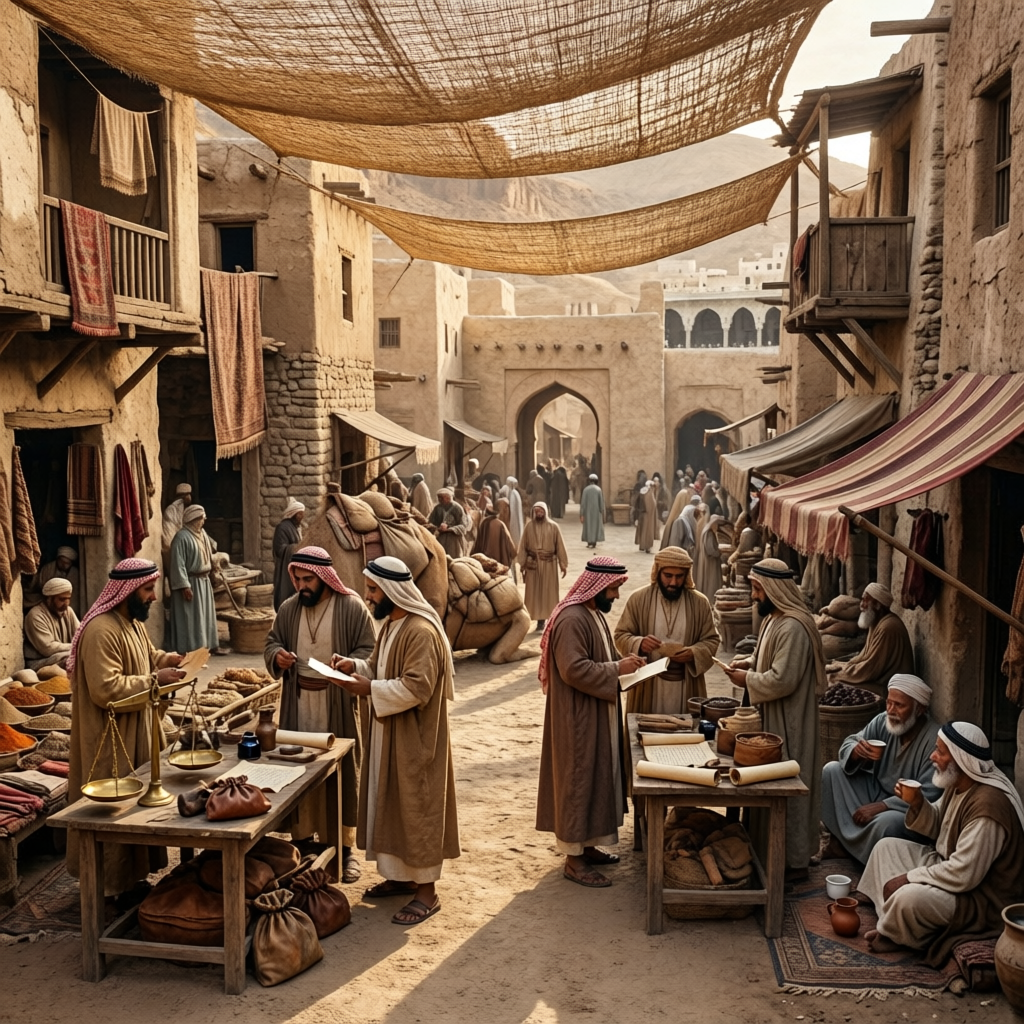
Furthermore, the context of revelation is crucial. The verse was revealed in Medina, a commercial hub where men primarily handled trade. Women of that time rarely participated in complex financial deals, so they were more likely to be unfamiliar with the details. The Quran's guidance was practical: if two male witnesses are not available, bring a woman with another woman to ensure accuracy. This does not mean that women are incapable of giving testimony alone; it means that in that specific situation, an extra safeguard was recommended. Today, in societies where women are equally involved in business, one woman's testimony could be just as reliable as a man's. The verse's underlying principle is justice through accurate testimony, not gender hierarchy.
Finally, it is important to note that the Quran never says 'a woman's testimony is half a man's.' That phrase is a human interpretation, not a direct quote. The verse says 'a man and two women' as a substitute when two men are not available. The ratio is a numerical description of a recommended practice, not a value judgment. The Quran's consistent message is that righteousness is based on faith and good deeds, not gender. As it says in Surah Al-Hujurat 49:13, 'Indeed, the most noble of you in the sight of God is the most righteous.' This principle applies to all aspects of life, including testimony. The verse 2:282, when examined with the Arabic and context, does not diminish women; it provides a practical safeguard for financial justice.