The Claim: Does the Qur'an Contradict Itself on Divine Preservation?
A common question raised by skeptics is whether the Qur'an contradicts itself when it speaks about divine preservation. The specific challenge often centers on two sets of verses: those describing a 'Preserved Tablet' (Lawh Mahfuz) as the eternal source of revelation, and those discussing abrogation (naskh), where some verses are replaced or withdrawn. At first glance, one might think: if the Qur'an is preserved on a heavenly tablet, how can parts of it be abrogated? Does this not imply change or inconsistency? This question deserves a careful, evidence-based investigation.
To investigate this, we must go directly to the primary source: the Qur'an itself. The key verse mentioning the Preserved Tablet is in Surah Al-Buruj: "بل هو قرآن مجيد * في لوح محفوظ" (85:21-22) — "Nay, but it is a glorious Qur'an, inscribed in a Preserved Tablet." The Arabic word 'محفوظ' (mahfuz) means 'protected' or 'preserved,' implying that the original source of revelation is safeguarded from any corruption. Critics then point to verse 2:106 which says: "ما ننسخ من آية أو ننسها نأت بخير منها أو مثلها" — "Whatever verse We abrogate or cause to be forgotten, We bring a better one or similar to it." The word 'ننسخ' (nansakh) carries the meaning of 'to abrogate' or 'to replace.' Does this suggest that the Preserved Tablet is not actually preserved?
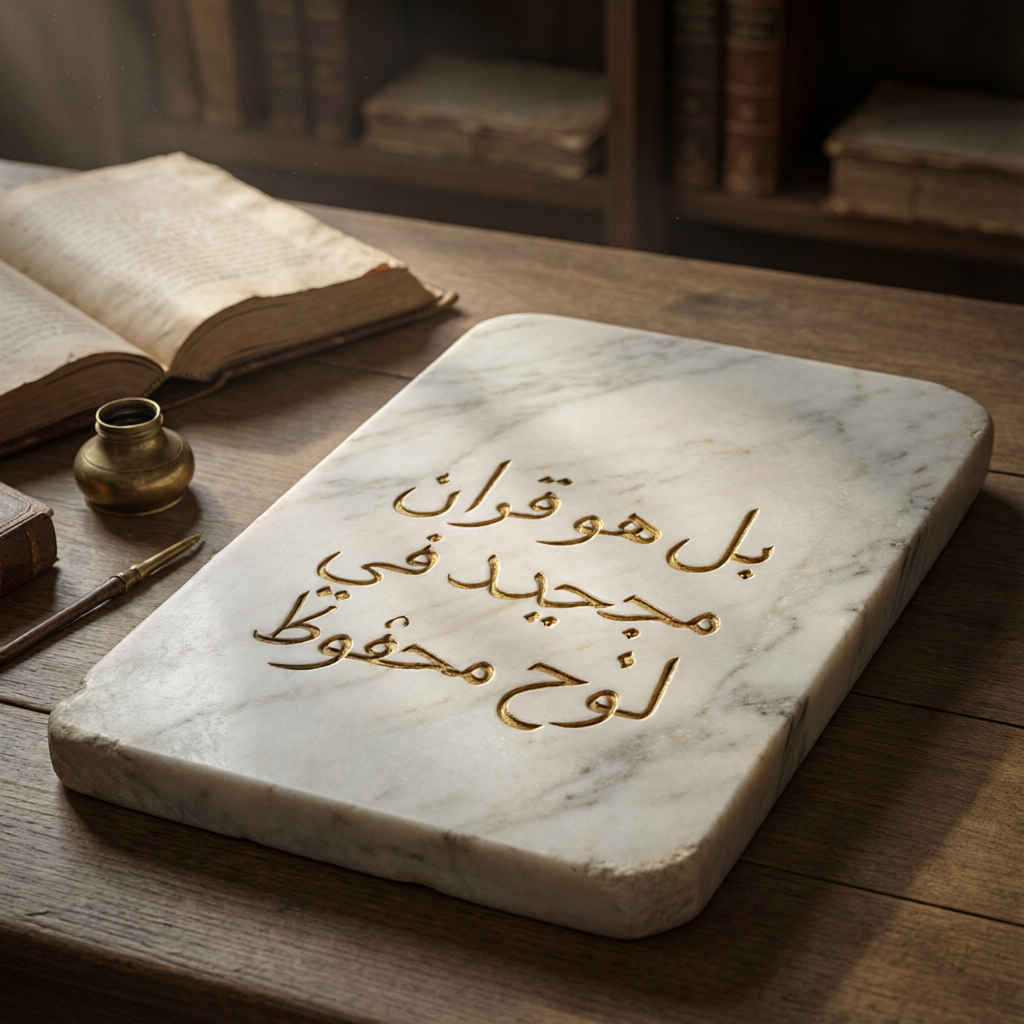
To answer, we must first understand what the Preserved Tablet actually refers to. According to classical Arabic lexicons, 'اللوح المحفوظ' (al-Lawh al-Mahfuz) is understood as a heavenly tablet containing the original records of all divine decrees. It is not the Qur'an as a book in our hands but the archetypal source of revelation. The Qur'an itself speaks of a 'Mother of the Book' (Umm al-Kitab) in 13:39: "يمحو الله ما يشاء ويثبت وعنده أم الكتاب" — "Allah eliminates what He wills and confirms what He wills, and with Him is the Mother of the Book." The Mother of the Book is the unchanging original, while the revelations sent to prophets are manifestations of that original.
Thus, the concept of abrogation does not imply inconsistency in the Preserved Tablet. Instead, it refers to changes in the legislative rulings or verses sent down for specific times and circumstances, while the eternal wisdom remains unchanged. The Preserved Tablet contains all divine knowledge, including which verses will be abrogated temporarily and which will be replaced. The process of abrogation is itself part of the original divine plan, not a correction or contradiction.
Let's examine the Arabic of 2:106 more closely. The verb 'ننسخ' (nansakh) can also mean 'to transcribe' or 'to copy out,' although in this context the classical tafsir literature overwhelmingly understands it as abrogation. The alternative reading 'أو ننسها' (aw nunsiha) means 'or cause it to be forgotten.' This verse, far from suggesting a flaw in revelation, demonstrates God's wisdom in gradually legislating laws suited to the community's development. The Preserved Tablet remains intact; it is the applied verses that may be superseded by better ones.
Furthermore, the Qur'an consistently affirms its own preservation. In 15:9, Allah says: "إنا نحن نزلنا الذكر وإنا له لحافظون" — "Indeed, it is We who sent down the Reminder (the Qur'an), and indeed, We will be its guardian." This verse explicitly promises protection from corruption. The Preserved Tablet is the heavenly original; the Qur'an we recite is its earthly copy, guarded by divine will. Abrogation does not mean any change to the heavenly tablet; it means that certain revealed verses served a temporary purpose and were replaced by others that are 'better or similar' for the evolving needs of the community.
Therefore, the apparent tension between the Preserved Tablet and abrogation resolves when we realize they refer to different levels of divine knowledge. The Preserved Tablet is the unchangeable source, while abrogation applies to specific revelations within time and space. The Qur'an does not contradict itself; the system is coherent when interpreted within its own internal logic and Arabic linguistic context.
Examining the Arabic: What 'Naskh' Really Means
To fully understand whether the Qur'an contradicts itself, we must delve into the Arabic root of the word 'naskh' (ن-س-خ). This root carries multiple meanings that are crucial for interpretation. In classical Arabic, 'naskh' can mean 'to abolish,' 'to abrogate,' 'to transcribe,' or 'to copy out.' The context determines which meaning is intended. In verse 2:106, the phrase 'ما ننسخ من آية' is understood by the majority of classical commentators as 'whatever verse We abrogate.' However, a minority interpretation that it means 'whatever verse We transcribe' has been proposed, though it is less probable given the parallel with 'أو ننسها' (or cause to be forgotten).
The key point is that 'naskh' does not imply error or change in the divine source; it implies a deliberate and wise replacement. The Qur'an itself provides examples of abrogation. For instance, the direction of prayer (qibla) was initially towards Jerusalem (2:143-144) and later changed to Mecca. This was not because the original command was wrong, but because the new command suited the maturation of the Muslim community. Similarly, gradual prohibitions on alcohol (4:43, 5:90-91) show a step-by-step legislative process, not a contradiction.
The concept of 'naskh' is also related to the idea of 'takhsis' (specification), where a general ruling is specified by another verse, and 'taqyid' (restriction), where an absolute command is restricted. These are all part of the dynamic nature of revelation that addresses specific historical contexts while the underlying principles remain firm. The Preserved Tablet contains all these aspects; it is the blueprint from which all revelations proceed based on divine wisdom.
Moreover, the Qur'an makes it clear that abrogation is within God's absolute power and wisdom. Verse 13:39 states: "يمحو الله ما يشاء ويثبت وعنده أم الكتاب" — "Allah eliminates what He wills and confirms what He wills; and with Him is the Mother of the Book." Here, 'يمحو' (yamhu) means 'to erase' or 'to eliminate,' and 'يثبت' (yuthbit) means 'to confirm.' The 'Mother of the Book' (Umm al-Kitab) is the eternal source, identical to the Preserved Tablet. Any change in revealed law is a change in the manifested rulings, not in the eternal source.
Thus, when skeptics ask, 'Does the Qur'an contradict itself?' they often conflate the heavenly archetype with the earthly revelation. The earthly revelation is subject to abrogation due to changing circumstances; the heavenly archetype is immutable. The Qur'an itself states in 18:27: "واتل ما أوحي إليك من كتاب ربك لا مبدل لكلماته" — "And recite what has been revealed to you of the Book of your Lord; there is no changer of His words." This affirms that the divine words as revealed to the Prophet are protected from change, though temporary rulings may be superseded.
Therefore, the investigation shows that the Arabic linguistic evidence supports a coherent understanding. 'Naskh' does not mean that the Preserved Tablet is altered; it means that the revealed text may have verses whose application is limited to a specific period. The Preserved Tablet remains preserved in its entirety, containing all knowledge—including the temporary nature of certain rulings. The Qur'an's own description of itself as 'مبين' (mubeen) — clear — holds true when examined carefully.
To test this, one can look at how the early Muslim community understood these verses. The companions and the early generations accepted both the concept of the Preserved Tablet and abrogation without seeing any conflict. Their understanding was rooted in the Arabic language and the context of revelation. Modern skepticism often arises from a lack of familiarity with the original language and the nuances of Islamic theology.
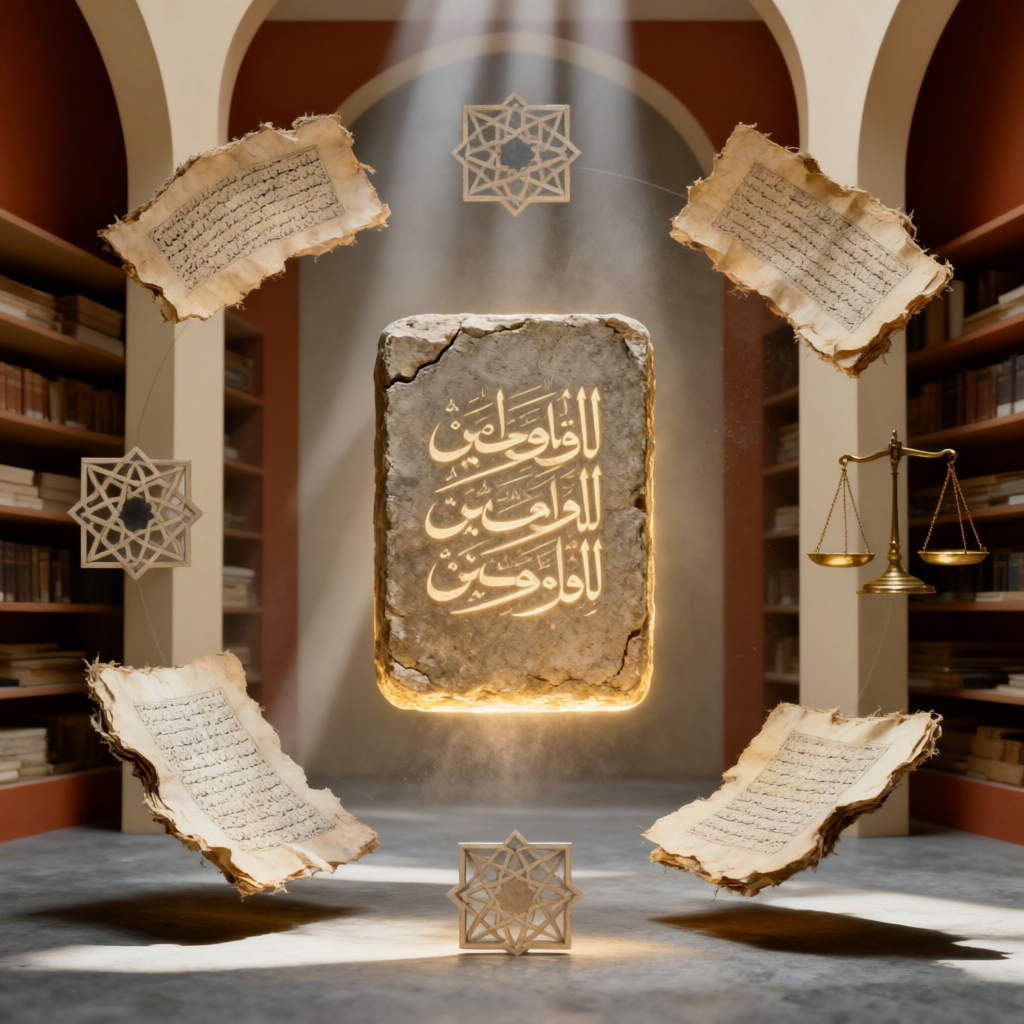
Hence, the claim that the Qur'an contradicts itself on preservation is not supported by a thorough investigation of the Arabic text and its internal logic. The evidence points to a consistent and sophisticated system.
Historical Preservation: Does the Evidence Match the Claim?
Beyond textual consistency, we can also examine the historical evidence for the preservation of the Qur'an. The Qur'an claims to be preserved by God (15:9), and this claim is supported by the historical record of its transmission. The oldest Qur'an manuscripts, such as the Birmingham Qur'an (radiocarbon dated to around 568-645 CE) and the Sana'a manuscripts, show remarkable consistency with the standard text used today. While there are some variant readings (qira'at), these are largely consistent with the orthographic framework of the 'Uthmanic codex and do not affect the meaning significantly.
The question 'how was the quran preserved historically' is answered by the dual process of oral transmission and written recording. The Prophet Muhammad himself received the revelation and taught it orally to his companions, many of whom memorized it completely. During his lifetime, scribes wrote down verses on various materials. After his death, the first Caliph Abu Bakr ordered a compilation of the Qur'an into a single book. Later, under Caliph Uthman, a standardized version was produced to unify the community, and this version became the basis for all subsequent copies.
Critics sometimes point to the existence of variant readings as evidence of corruption. However, these variants are mostly differences in pronunciation or minor lexical choices that do not change the core message. For example, the famous reading of 'مالك يوم الدين' (Maliki yawmi al-din) versus 'ملك يوم الدين' (Maliki yawmi al-din) in Surah Al-Fatiha both mean 'Master of the Day of Judgment.' Such variations are part of the flexibility allowed in the Arabic language and do not contradict the concept of preservation.
The Qur'an itself acknowledges that there are 'clear verses' (مُحْكَمَات) and 'ambiguous verses' (مُتَشَابِهَات) (3:7). The ambiguous verses require deeper study, but the clear verses form the foundation. The presence of abrogation does not make the Qur'an ambiguous; it simply means that some rulings were time-bound. The overall message of monotheism, prophecy, and accountability remains constant.
When we examine the 'oldest quran manuscript evidence,' we find that the textual tradition is remarkably stable over 1,400 years. Comparisons with non-Muslim accounts of early Islam also confirm that the Qur'an's content has not been altered significantly. This empirical evidence aligns perfectly with the Qur'an's own claim of preservation.
Furthermore, the Qur'an often challenges its critics to produce a similar text: "أم يقولون افتراه قل فأتوا بسورة مثله" (10:38) — "Or do they say he fabricated it? Say: Then bring a surah like it." This challenge presupposes that the Qur'an is unique and preserved in its original form. No one has successfully met this challenge, which indirectly supports the claim of preservation.
Thus, the historical and manuscript evidence corroborates the Qur'an's description of itself as preserved. The concept of the Preserved Tablet is a metaphysical reality, while the historical preservation is a tangible sign. Together, they form a coherent picture that does not contain the contradiction some skeptics allege.
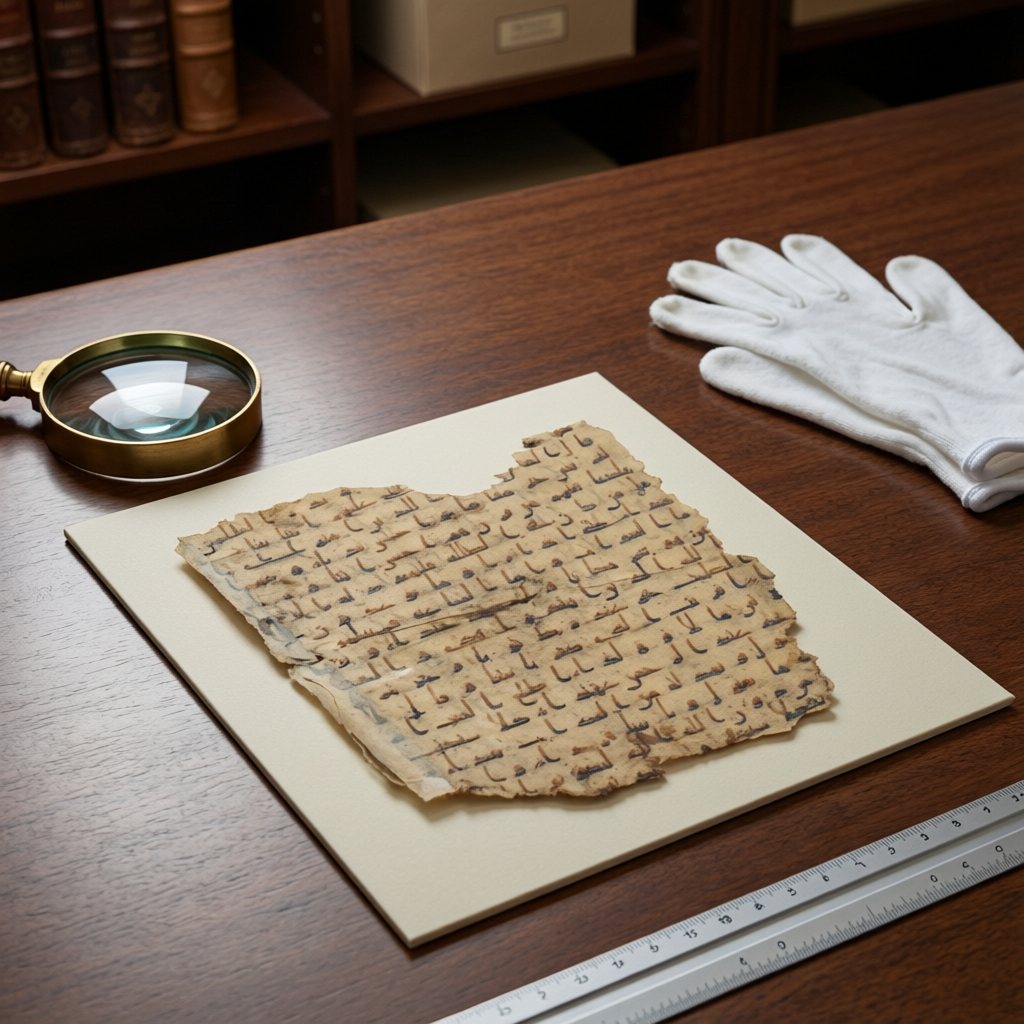
In conclusion, the investigation of the 'Preserved Tablet' and abrogation reveals a consistent and sophisticated system. The Qur'an does not contradict itself; rather, it provides a multi-layered framework where the eternal source remains unchanged while the applied rulings may evolve according to divine wisdom. The evidence from Arabic linguistics, internal coherence, and historical preservation all point to the same conclusion: the Qur'an's description matches its own reality. The reader is invited to continue investigating other claims with the same rigorous methodology.