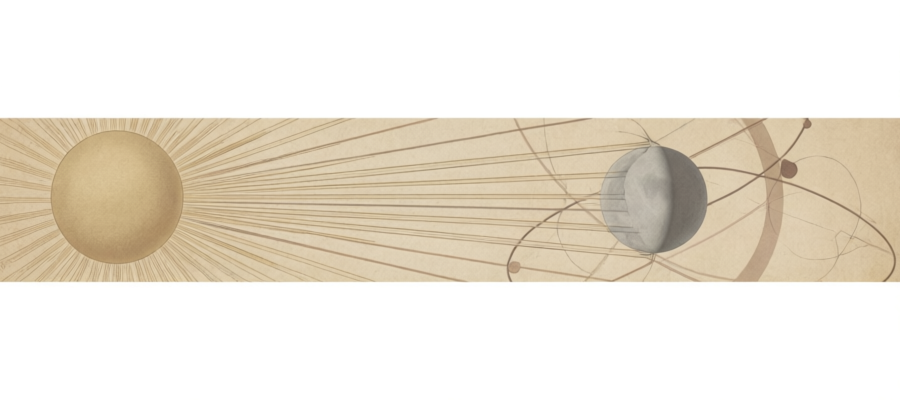
The Claim: Does the Qur'an Confuse the Sun and Moon's Light?
You may have encountered the argument that the Qur'an fails to distinguish between the sun and the moon as sources of light. The claim typically goes like this: the Qur'an calls the sun a 'lamp' (siraj) and the moon 'light' (nur), but then it also uses the word 'nur' for the sun in other verses. Critics assert this shows confusion, suggesting that the Qur'an treats both celestial bodies as emitting their own light. But does the Qur'an actually do that? Or is the criticism based on a misunderstanding of the Arabic?
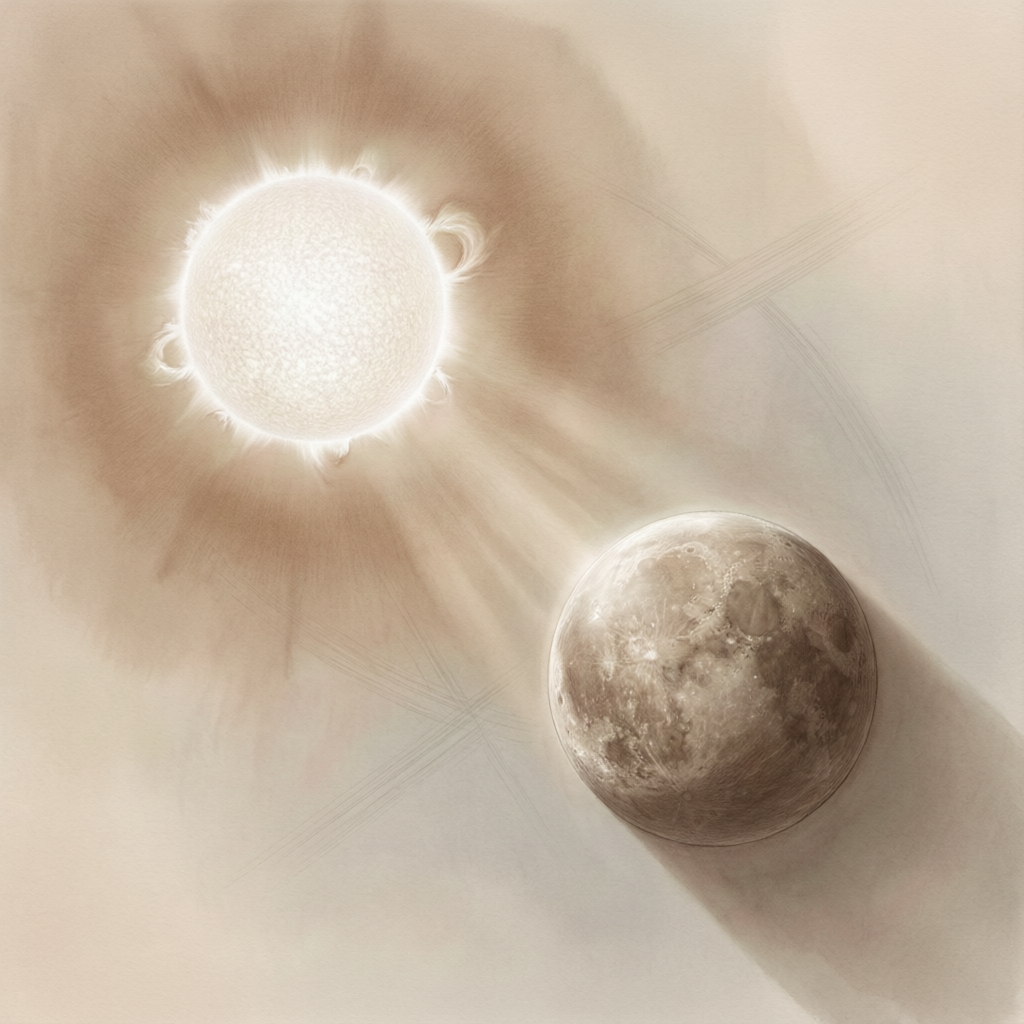
Let's begin by examining the verses directly. In Quran 71:16, Allah says: "And made the moon therein a [reflected] light (nur) and made the sun a burning lamp (siraj)." Here, the Arabic word for the moon's light is 'nur', while the sun is described as 'siraj', which classical lexicons define as a self-illuminating, burning source—what we today call a star. The distinction is clear: the moon's light is not its own; it is reflected. The sun's light is generated from within.
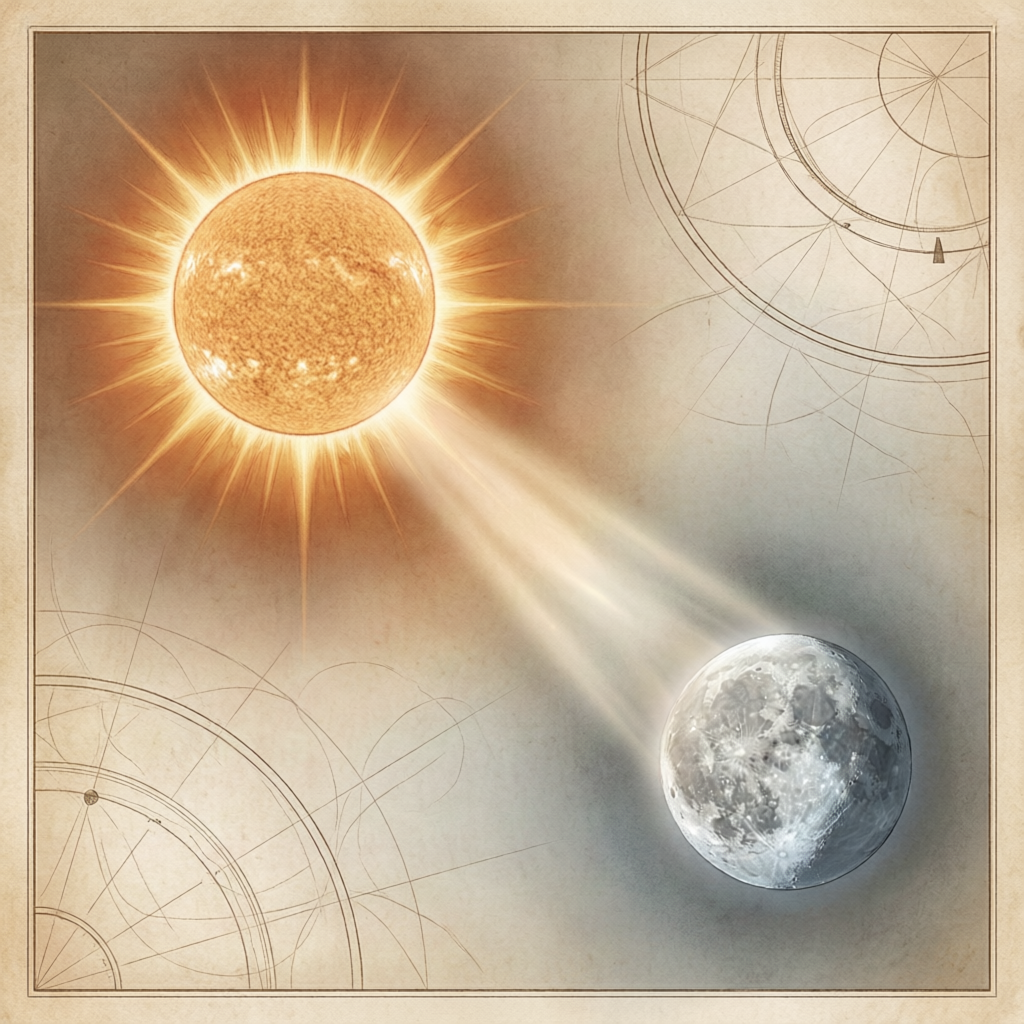
But the critic might point to Quran 25:61, where Allah says: "Blessed is He who placed in the sky great stars and placed therein a [burning] lamp (siraj) and a moon giving light (munir)." Here the moon is described as 'munir', which comes from the same root as 'nur'. Both 'nur' and 'munir' indicate light that is received or emitted? The key is to compare the exact Arabic wording and the lexical range of these terms.
In 71:16, the moon is called 'nur' (light), which is a noun. In 25:61, it is called 'qamaran munira'—a moon that gives light, using a participle form. But critically, the sun is never called 'nur' in the Qur'an. It is always described as 'siraj' (lamp) or 'diyah' (a derivative meaning glowing, see 10:5). The sun is consistently presented as the source of light, while the moon is always described with terms that, in the Arabic, denote light that is not self-generated.
The claim of confusion, then, relies on an English translation blurring the distinct Arabic terms. To investigate properly, we go to the Arabic itself, where the consistent differentiation emerges.
The Arabic Roots: Siraj vs. Nur – A Lexical Investigation
To understand the Qur'an's precise language, we must examine the root meanings of 'siraj' and 'nur' as defined by classical Arabic lexicons. 'Siraj' (from the root s-r-j) refers to a lamp that produces light through burning—an external source of illumination that consumes fuel. The famous lexicon Lisan al-Arab defines 'siraj' as 'the lamp that gives light through fire.' This term connotes heat and active combustion. In the Qur'an, it is used exclusively for the sun (25:61, 71:16, 78:13), never for the moon or any other celestial body.
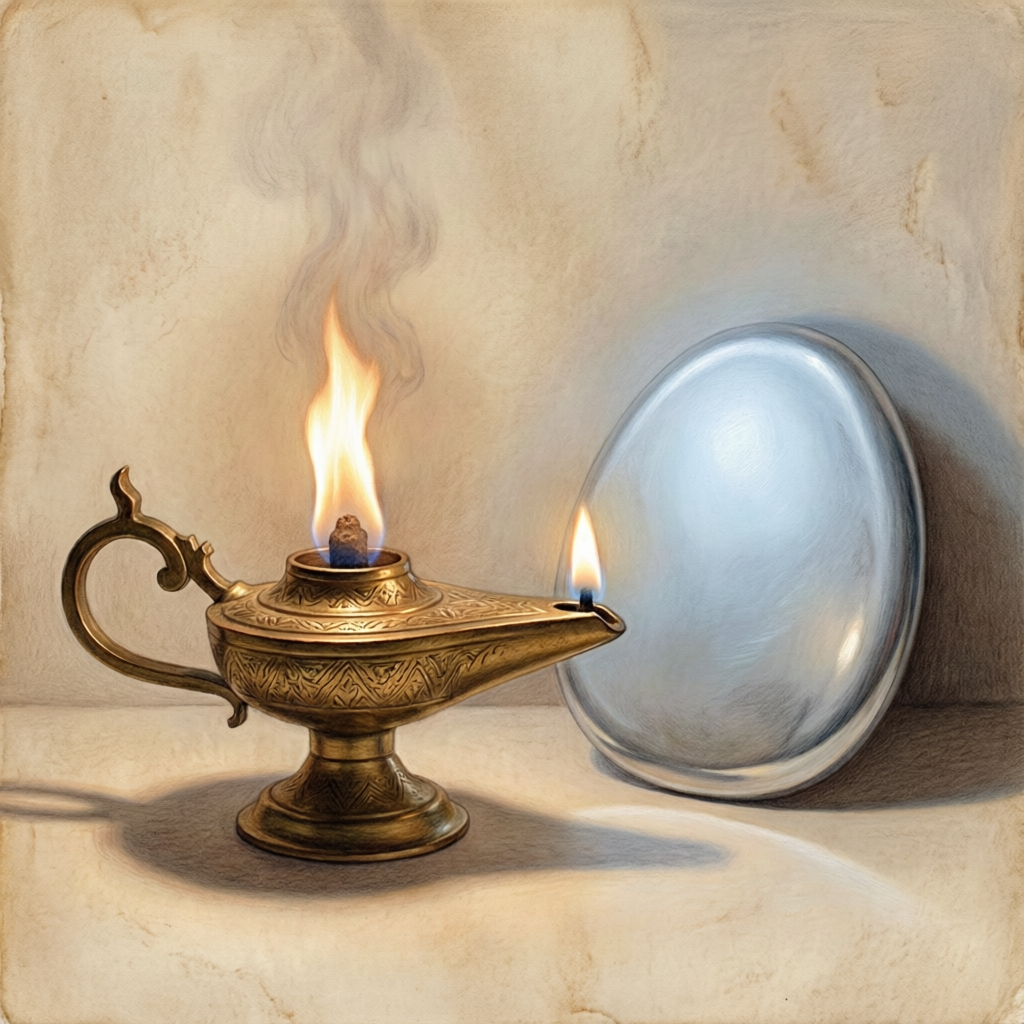
By contrast, 'nur' (root n-w-r) is a broader term meaning light in general, but critically, it does not inherently specify origin. In Arabic usage, 'nur' can refer to the light of the moon or a lamp, but its lexical range includes borrowed or reflected light. For example, in Quran 10:5, Allah says: "It is He who made the sun a shining light (diyah) and the moon a reflected light (nur)." Here, 'diyah' is another term for self-generated light (related to 'duha', morning brightness), and 'nur' is the moon's light. The contrast is explicit and systematic.
Furthermore, the word 'munir' (active participle of anara, to give light) in 25:61 describes the moon as 'giving light.' But the same word can describe the light of the sun in other contexts? Actually, in the Qur'an, 'munir' is used for the moon (25:61) and also for the lamp (35:44 describing the stars? No, it says 'sirajan munira' in 33:46 for the Prophet as a lamp? Wait, check: 33:46 says "sirajan munira" meaning 'a lamp giving light,' but that is metaphorical, not for the sun. The point is that 'munir' does not specify the source; it simply describes the emission of light. The sun is called 'sirajan muniran' in 33:46? No, that is the Prophet. The sun is never called 'munir' alone.
Thus, the Arabic lexical evidence shows a deliberate and consistent pattern. The sun is always associated with terms that denote intrinsic, heat-generating illumination (siraj, diyah). The moon is always associated with terms that allow for reflected light (nur, munir). The Qur'an never calls the moon a 'siraj,' nor does it call the sun 'nur' without qualification in a physical sense? The word 'nur' appears for Allah (God is light) and for guidance, but not for the physical sun. This lexical precision refutes the claim of confusion.
Examining the Contexts: What the Verses Say Together
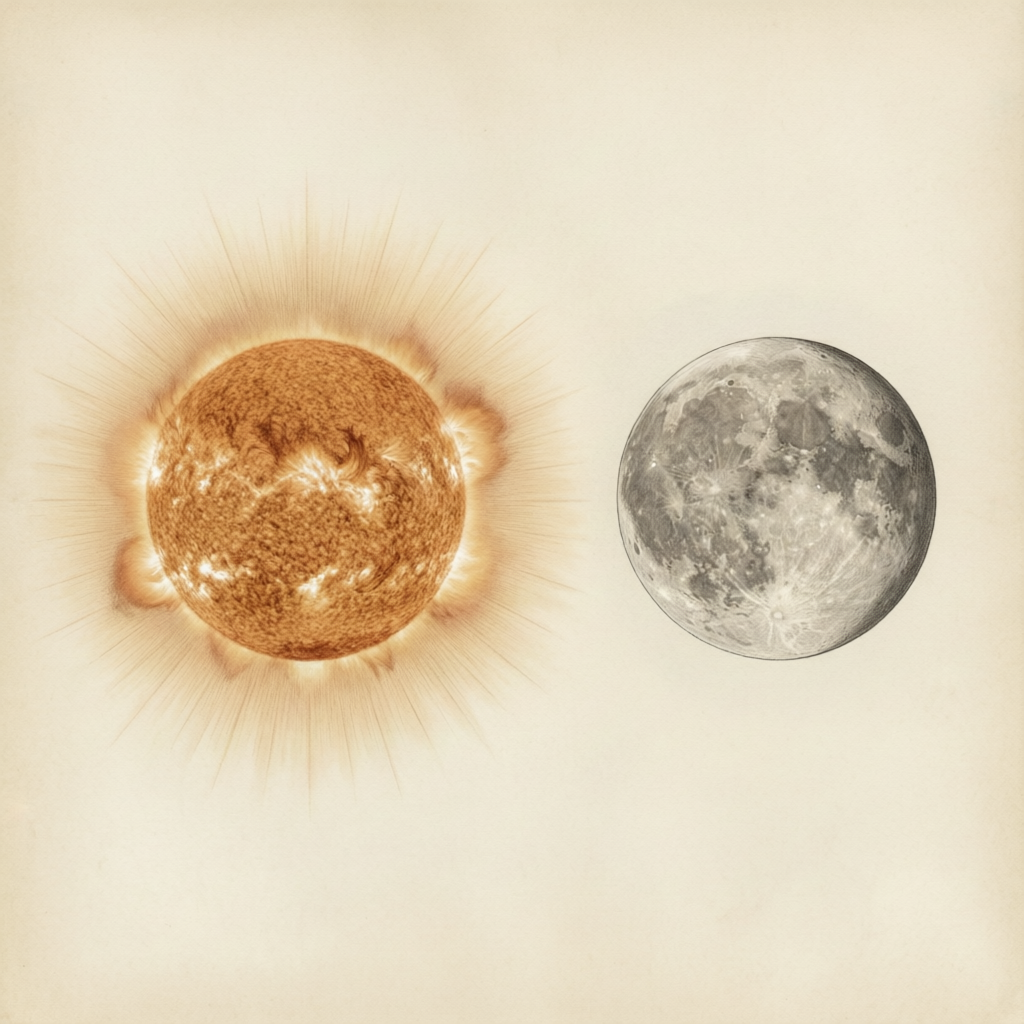
Now, let's look at the broader context of these verses. In Quran 71:16, the verse is part of Noah's preaching to his people, reminding them of Allah's creation: "And made the moon therein a light (nur) and made the sun a lamp (siraj)." The verse contrasts the two in a single sentence, highlighting their different functions. The moon is placed in the heavens (the sky) as a 'nur,' which in this context means a light that does not produce its own illumination but reflects the sun's light—a scientific fact unknown to 7th-century Arabia.
Quran 25:61 is part of a passage describing Allah's blessings in creation: "Blessed is He who placed in the sky great stars and placed therein a lamp (siraj) and a moon giving light (munir)." Here, 'siraj' again refers to the sun, and 'munir' to the moon. The structure mirrors 71:16: both present the sun and moon as distinct, with the sun as the lamp and the moon as the giver of reflected light.
Critics might point to Quran 10:5, which says: "It is He who made the sun a shining light (diyah) and the moon a light (nur)." They might argue that 'nur' here is used for the moon but also for the sun? No, the sun's light is 'diyah,' not 'nur.' The verse explicitly distinguishes: 'diyah' for the sun, 'nur' for the moon. This is consistent with the pattern.
So, the Qur'an never says the moon emits its own light, nor does it say the sun's light is reflected. Every description aligns with modern understanding: the sun is a self-luminous star (siraj), the moon reflects sunlight (nur/munir). The alleged confusion arises only when readers ignore the specific Arabic terms and their contextual nuance. The evidence demonstrates that the Qur'an's language is precise and scientifically coherent.
Resolving the Criticism: Why the Accusation Fails
The criticism that the Qur'an confuses the sun and moon's light typically ignores the systematic lexical distinction in the Arabic. Critics often rely on English translations that render both 'siraj' and 'nur' as 'light,' obscuring the original differentiation. But when we go to the primary source, the pattern is undeniable: the sun is consistently a 'siraj' (self-luminous lamp) or 'diyah' (shining), while the moon is consistently 'nur' or 'munir' (light that is not necessarily self-produced).
A secondary argument might be that the word 'nur' is used for the moon in 71:16, but in other verses, 'nur' is used for guidance (e.g., 5:44, 64:8), which is non-physical. Critics might claim this shows inconsistency. However, 'nur' is a polysemous word in Arabic, meaning both physical light and metaphorical guidance, just as English uses 'light' for both. The Qur'an uses it in both senses, but within the physical context of celestial bodies, it consistently distinguishes the sun from the moon.
Another potential counterpoint: In Quran 24:35, Allah is described as the 'Nur' of the heavens and earth. Critics might argue this blurs the physical and metaphysical. But even here, the lexical root 'nur' indicates light as a general concept, not as a specific physical source. The sun and moon are created phenomena, while God is the source of all light—linguistically and theologically, this distinction holds.
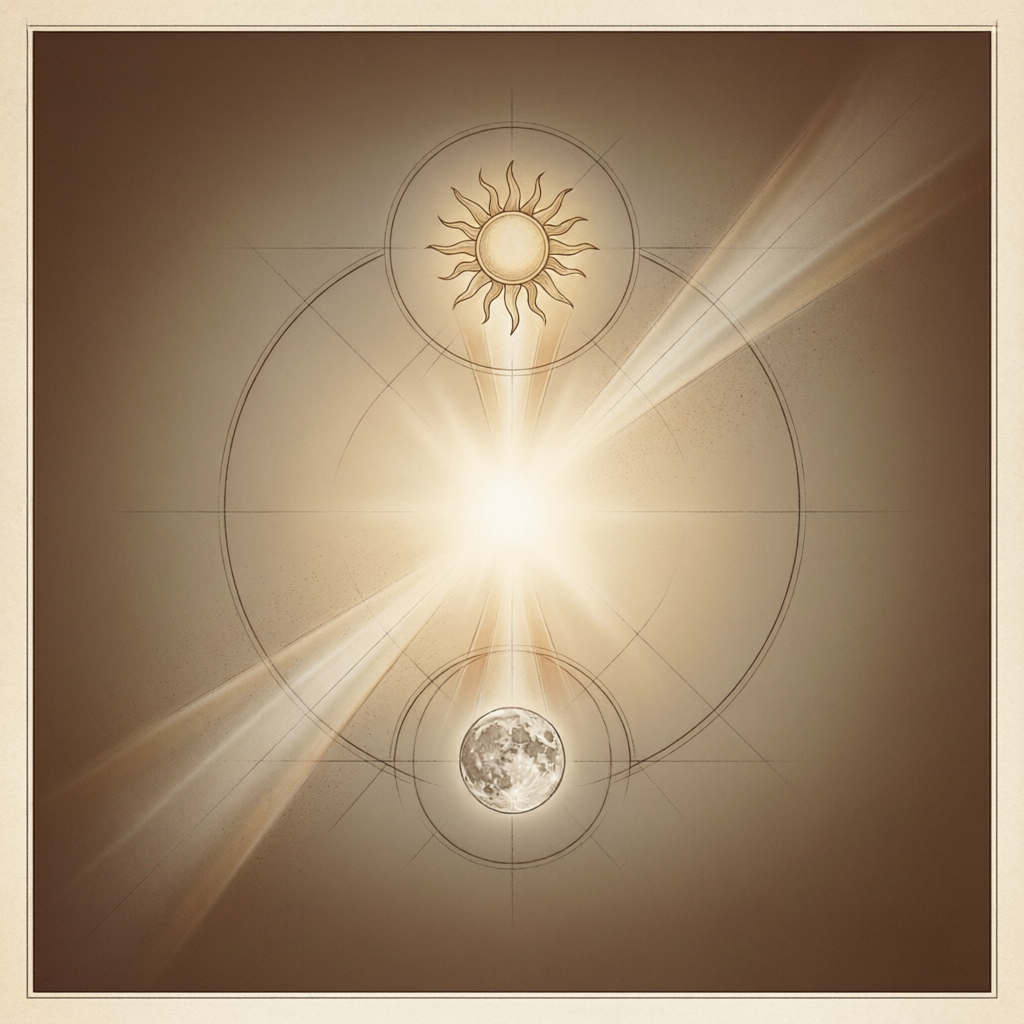
Finally, no verse in the Qur'an calls the moon a 'siraj' or the sun 'nur' (as a physical description without qualification). If the Qur'an truly confused the two, we would expect at least one verse where the moon is given a term reserved for the sun, or vice versa. The absence of such cross-contamination is strong evidence that the text is precise. The investigation, therefore, resolves the claim: the Qur'an's Arabic distinguishes the sun and moon's light clearly and consistently.
Practical Investigation: How to Verify from the Qur'an Yourself
If you want to verify the consistency of the Qur'an's descriptions of the sun and moon, you can perform your own investigation using the primary source. The easiest method is to use a word search tool on a concordance of the Qur'anic Arabic. You can search for the root s-r-j (siraj) and n-w-r (nur). You will find that 'siraj' occurs five times in the Qur'an: four times for the sun (25:61, 71:16, 78:13, and one metaphorical reference to a lamp in 33:46 for the Prophet, not the sun) and once for a lamp in a house (24:35). Never for the moon.
Similarly, search for 'nur' (moon as light) occurs in 10:5, 71:16, and 25:61 (as 'munir'). In each physical context, it refers to the moon's light, distinct from the sun's 'siraj' or 'diyah.' You can also check 10:5 where 'diyah' is used for the sun—a term that is never used for the moon. This lexical consistency is easily verifiable by any reader, regardless of background.
Additionally, classical Arabic dictionaries like Al-Mufradat by Raghib al-Isfahani or Lisan al-Arab confirm these definitions. 'Siraj' is defined as a lamp that burns with fire, thus generating its own light and heat. 'Nur' is defined as light that can be reflected or guided. The sun is hot and self-luminous; the moon is cold and reflects. The Qur'an's choices mirror this reality.
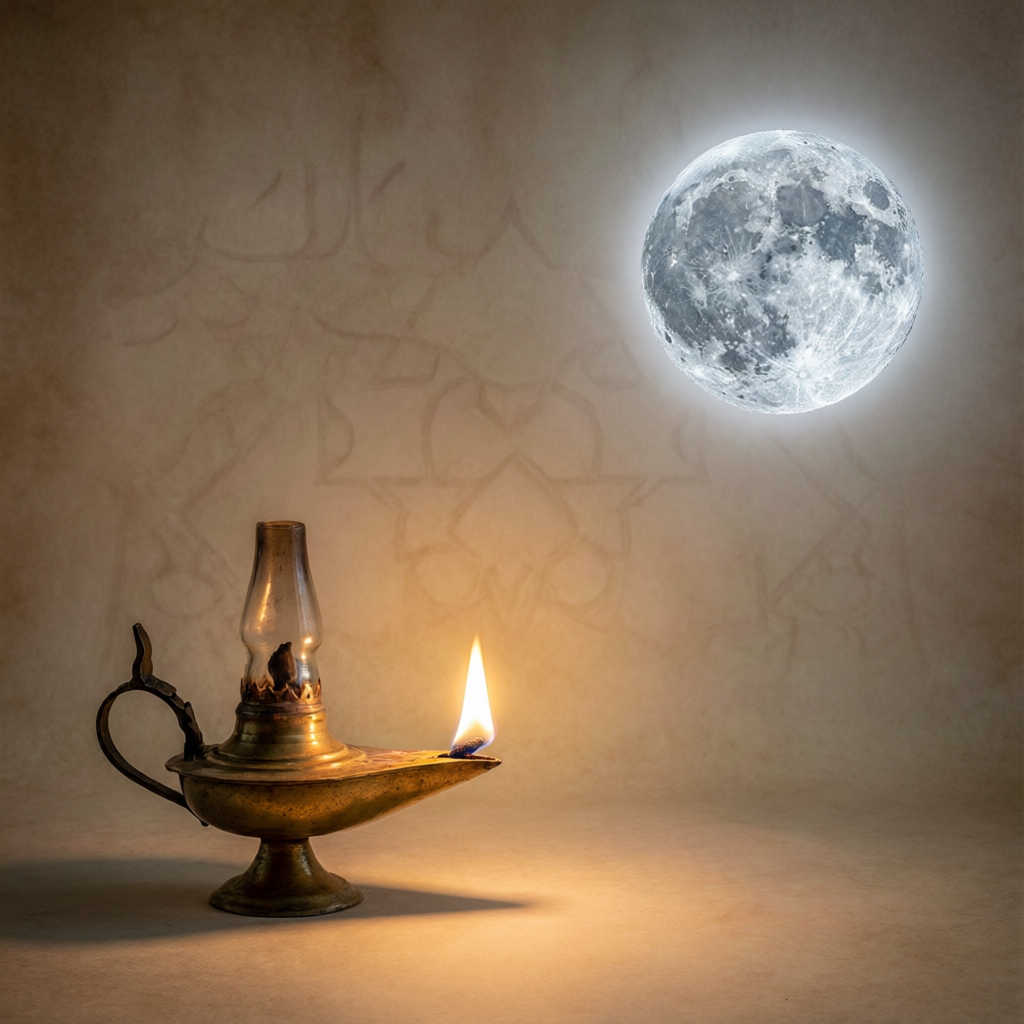
Thus, the investigation does not require blind acceptance of any scholar's claim. The evidence is in the text itself. Any honest seeker can confirm that the Qur'an distinguishes the light sources of the sun and moon through consistent terminology, and that the alleged 'confusion' is an artifact of translation or cursory reading. The Arabic text itself demonstrates precision.